
Nasdaq To Add a 7-Hour Night Shift as Wall Street Chases Crypto's 24/7 Edge
The new overnight session aims to narrow one of crypto's biggest advantages while testing whether traditional markets can deliver deep liquidity around the clock.
- Published:
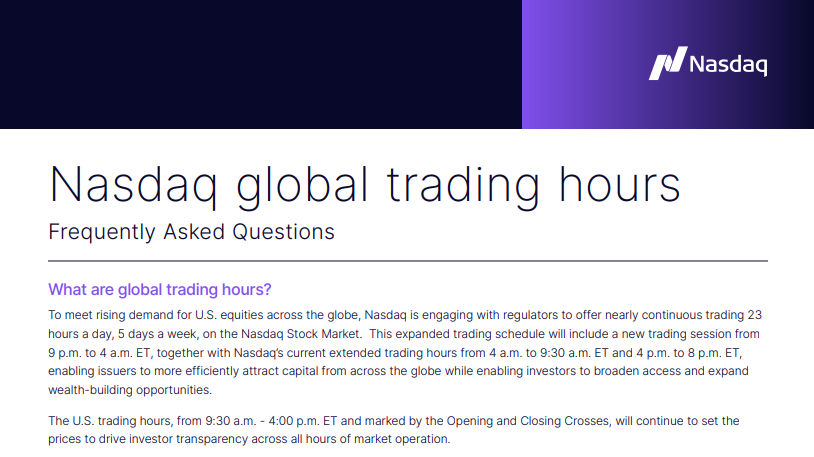
Nasdaq will add a 9 p.m. to 4 a.m. ET overnight session as it moves toward near-continuous U.S. stock trading, creating a 23-hour trading day, 5 days a week. The Securities and Exchange Commission approved Nasdaq's proposal on April 10, 2026, while Nasdaq expects the new schedule to begin on December 6, subject to Securities Information Processor readiness.
The move goes beyond a simple expansion of market hours.
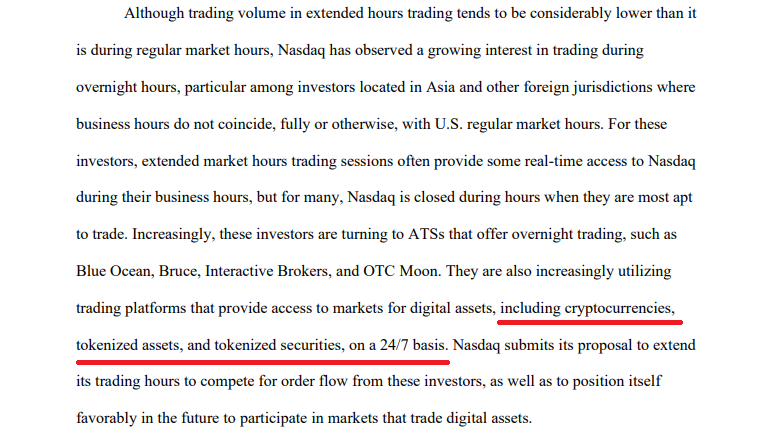
Nasdaq's regulatory filing explicitly says the exchange wants to compete for order flow from investors who increasingly use platforms offering cryptocurrencies, tokenized assets and tokenized securities around the clock. Nasdaq also says the change could position it for future participation in digital asset markets.
That puts the shift into a broader context. DeFi and crypto markets have normalized the idea that investors should not have to wait for a traditional exchange to reopen before responding to major events.
Wall Street's New Night Shift
Nasdaq currently operates from 4 a.m. to 8 p.m. ET through pre-market, regular, and post-market sessions. The new structure will keep that 4 a.m. to 8 p.m. Day Session and add a Night Session from 9 p.m. to 4 a.m.
A 1-hour pause from 8 p.m. to 9 p.m. will give Nasdaq time to handle maintenance, testing, corporate actions, and trade processing. Trading will begin at 9 p.m. on Sunday and finish at 8 p.m. Friday, leaving weekends closed.
All NMS stocks will qualify for the Night Session, but investors will face tighter restrictions than during regular trading. Nasdaq will allow only limit orders, while market and several pegged, opening and closing order types will remain unavailable. Participants will also need dedicated Night Session ports.
Crypto's 24/7 Advantage Gets Smaller
Bitcoin, Solana and other crypto assets trade 24/7, giving them a major advantage when geopolitical, economic or corporate news hits outside U.S. equity hours.
Nasdaq's overnight session will reduce that gap during the week. An investor could potentially respond to an 11 p.m. ET development in a Nasdaq-listed stock instead of waiting for the next day's regular session.
Crypto will still retain its weekend advantage, however. Nasdaq will remain closed from Friday evening until Sunday night.
The bigger question concerns liquidity. Nasdaq acknowledges that extended-hours trading typically carries lower liquidity and greater volatility than regular trading. The SEC's approval also raises concerns about thin liquidity, fragmented markets, volatility, and potential harm to retail investors.
The Bigger Fight Is for Market Attention
Nasdaq's decision suggests traditional finance increasingly recognizes that 24/7 digital markets have changed investor expectations.
Foreign holdings of U.S. equities reached $17 trillion by June 2024, up 97% from 2019, according to a March 2025 LinkedIn post from Nasdaq president Tal Cohen introducing the proposed change. Investors across time zones already use alternative trading systems and digital asset platforms when U.S. exchanges close.
Nasdaq is now bringing more of that availability into regulated equity markets. The exchange is not becoming a 24/7 venue yet, but its overnight session marks another step toward a financial system where the old distinction between trading hours and non-trading hours matters less.
Read More on SolanaFloor
500K $ANSEM Burned in 2 Hours as Ansem Launches Ansem.io
Crypto CEOs Head to the White House as Open Interest Reaches Pre-10/10 Levels
The Case for $900 - $2000 $SOL