Solstice officially launched its long-awaited native token, $SLX, earlier today, May 25. The launch marked a major milestone for the Solana-native stablecoin issuer and delta-neutral yield protocol, which had spent months building anticipation through its Flares points campaign and ecosystem growth.
The token first went live on Binance Alpha before Solstice opened its claim portal roughly one hour later. Shortly after launch, the team announced additional exchange listings across several major centralized exchanges, including Kraken, Gate, and Bitget.
The launch initially gave Solstice strong visibility across the broader crypto market. However, excitement around the rollout quickly shifted into criticism as community members questioned how the launch mechanics unfolded.
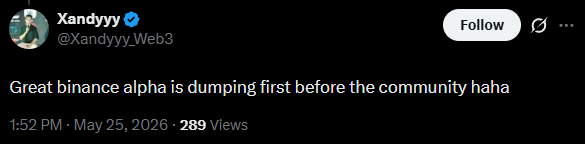
Several users complained that Binance Alpha traders gained an advantage by accessing liquidity before regular community participants could claim their tokens. Binance Alpha listings have historically triggered strong reactions during token launches, particularly when the platform is given early access. At the same time, projects often pursue these listings because Binance remains the world’s largest retail crypto exchange and offers unmatched liquidity and visibility. One X user wrote, “Great binance alpha is dumping first before the community haha”
Another user argued that the structure disadvantaged long-term protocol participants.
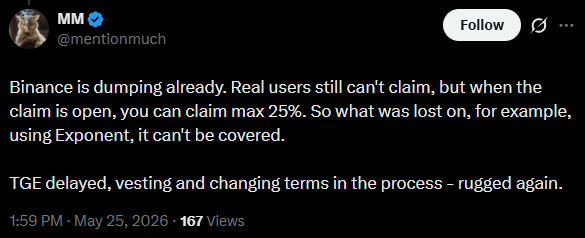
Vesting Terms Become the Center of Controversy
Much of the backlash centered around confusion over Solstice’s vesting terms. During the registration phase in April, Solstice stated: “Most cohorts receive 100% of their SLX at claim. Larger allocations unlock a portion upfront, with the rest vesting.”
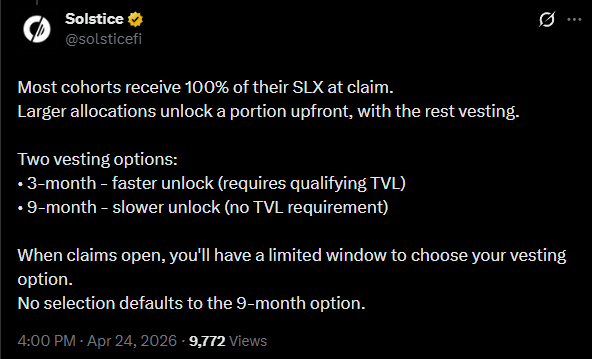
At launch, however, users discovered that vesting appeared to apply far more broadly than many initially expected. Solstice’s updated documentation stated: “Vesting scales with allocation size. Everyone who participated in Season 1 receives SLX at TGE. The split between what you receive upfront and what vests over time depends on the size of your allocation.”
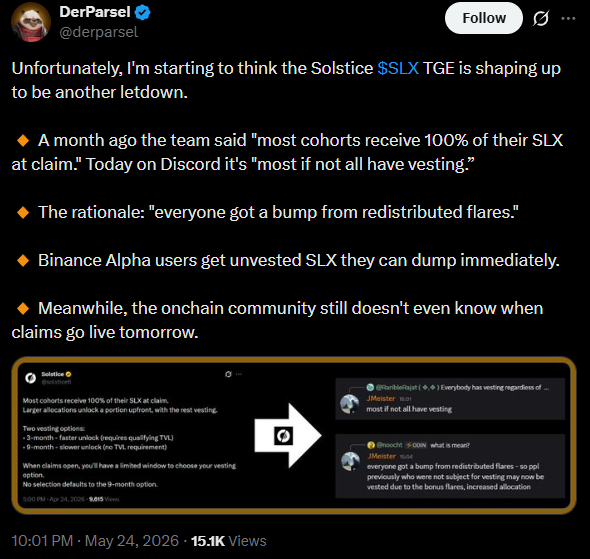
Community members quickly accused the project of changing expectations. One user posted, “A month ago the team said ‘most cohorts receive 100% of their SLX at claim.’ Today on Discord it's ‘most if not all have vesting.’”
Another user claimed the documentation regarding claim mechanics changed shortly before launch.
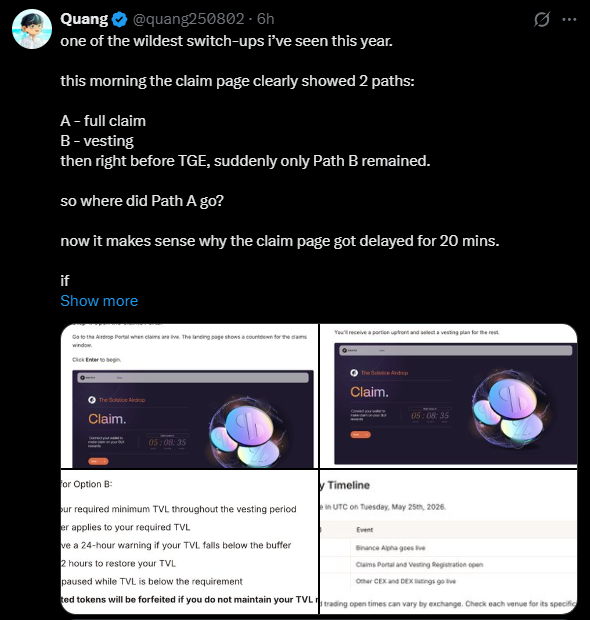
The user added, “If this was changed last minute, that’s a terrible look for the team.”
Earlier Registration Controversy Set the Stage
The TGE backlash did not emerge in isolation. In April, Solstice had already faced criticism over its airdrop registration process. Users received a 2-week registration window during which they needed to connect wallets, confirm eligibility, and pay a 0.075 $SOL registration fee handled by infrastructure partner Clique.
Critics argued that the window was too short and the fee unfairly targeted users who had spent months farming points. At the time, estimates suggested that Clique could collect up to $9.2M in registration fees if all eligible wallets completed the process.
Community frustration intensified after users learned that over 99.68% of participants fell into the lowest allocation tier. According to Solstice’s disclosures, 8.5% of the total supply was reserved for the airdrop, while the overwhelming majority of recipients received access to just 0.49% of the total distribution pool.
Some users missed the registration window entirely. One participant posted, “RIP my 20m flares. First proper farm and I missed out due to NOT registering. I didn't see it.”

Solstice defended parts of the system by arguing that the structure helped reduce sybil activity and reward committed participants rather than short-term extraction
When trading finally began today, skepticism intensified after some users claimed they saw selling activity before claims opened. One user wrote, “I don't know how true this is, but someone was busy dumping dozens of $SLX tokens even before the airdrop claims.”

Other participants criticized the way the unlock calculations were applied to bonus allocations. One user claimed, “Solstice Finance didn't apply the unlock to your total $SLX. They applied it only to your standard Allo. The bonus allos weren't included.”
TVL Continues to Rise Despite Community Criticism
Despite the backlash, Solstice’s protocol metrics remained relatively strong around key announcement dates. According to DefiLlama data, Solstice’s TVL climbed from approximately $361M on April 14 to roughly $378M by April 16 shortly after the registration window opened. TVL also increased again following the TGE delay announcement, rising from around $378M on May 20 to approximately $403M on May 21.
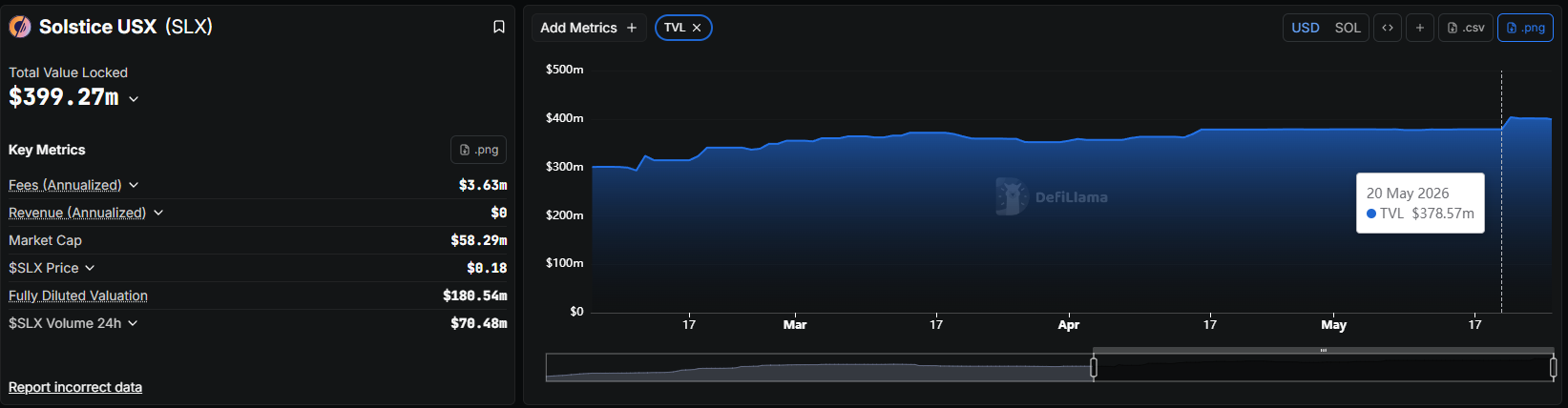
The steady TVL growth suggested that at least some users continued to deploy capital into the protocol despite growing dissatisfaction with the token rollout.
Price action, however, reflected far more volatility. According to CoinGecko data, $SLX launched around $0.355 with a fully diluted valuation of approximately $350M. Within hours, the token fell sharply and is trading near $0.184 at the time of writing.
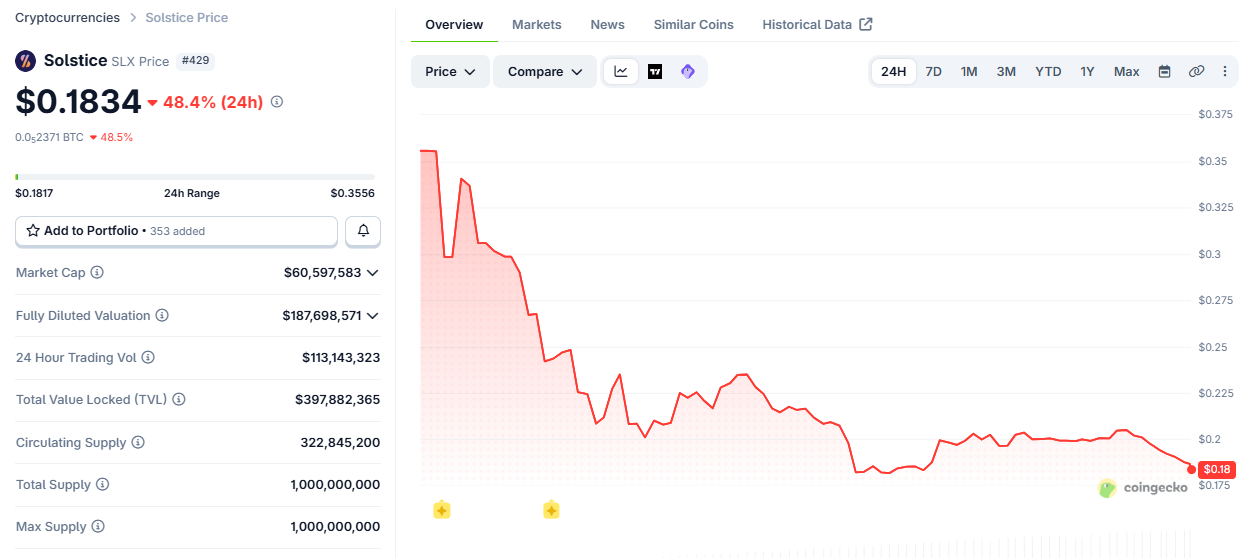
The decline fueled even more criticism from disappointed participants who had expected stronger post-launch performance.
Still, not every recipient viewed the launch negatively. One user reported making back prior protocol losses despite most of their allocation remaining vested.

Read More on SolanaFloor
Solana Hit Its Lowest Level in May Before Trump’s Iran Deal Comments Sparked Recovery
SIMD-0525 to Boost Solana Performance, But at What Cost?
How Will SpaceX’s $2T IPO Affect Crypto?