SIMD-0547: El ecosistema se moviliza en torno al cambio propuesto en la tokenómica de $SOL
Investigador temporal sugiere camino para devolver $SOL a $300
- Publicado:
Con $SOL sucumbiendo a las fuerzas bajistas del criptoinvierno en curso, la tokenómica y el calendario de inflación del activo han vuelto a ser objeto de escrutinio.
Cavemanloverboy, un investigador de Temporal, una empresa de investigación y desarrollo de blockchain, ha propuesto una posible solución para la tokenómica inflacionaria de $SOL. Bajo SIMD-0547, Temporal sugiere añadir una tarifa base variable a las transacciones en función de su complejidad, con tareas más intensivas en computación quemando efectivamente más $SOL.
El mecanismo propuesto prevé elevar la quema diaria hasta 64.800 $SOL, superando la emisión y haciendo que el activo se desinfle.
¿Qué es SIMD-547?
Presentada por Cavemanloverboy de Temporal, SIMD-547 es una propuesta diseñada para mejorar la tokenómica de $SOL mediante la introducción de una tarifa base basada en recursos para todas las transacciones.
En la actualidad, los costes de las transacciones se derivan en función de diversas variables, como el consumo de CU (unidades de cálculo), la carga de datos y los bloqueos de escritura. En SIMD-0547, Temporal sugiere añadir una tarifa base a cada transacción que se escala en función de su complejidad. Esta tasa se quema y se elimina permanentemente del suministro.
En concreto, la propuesta recomienda cobrar y quemar 0,1 lamport (unidad utilizada para representar la milmillonésima parte de un $SOL) por unidad de coste solicitada. En efecto, cuanto más compleja sea la transacción, mayor será la tasa de quema.
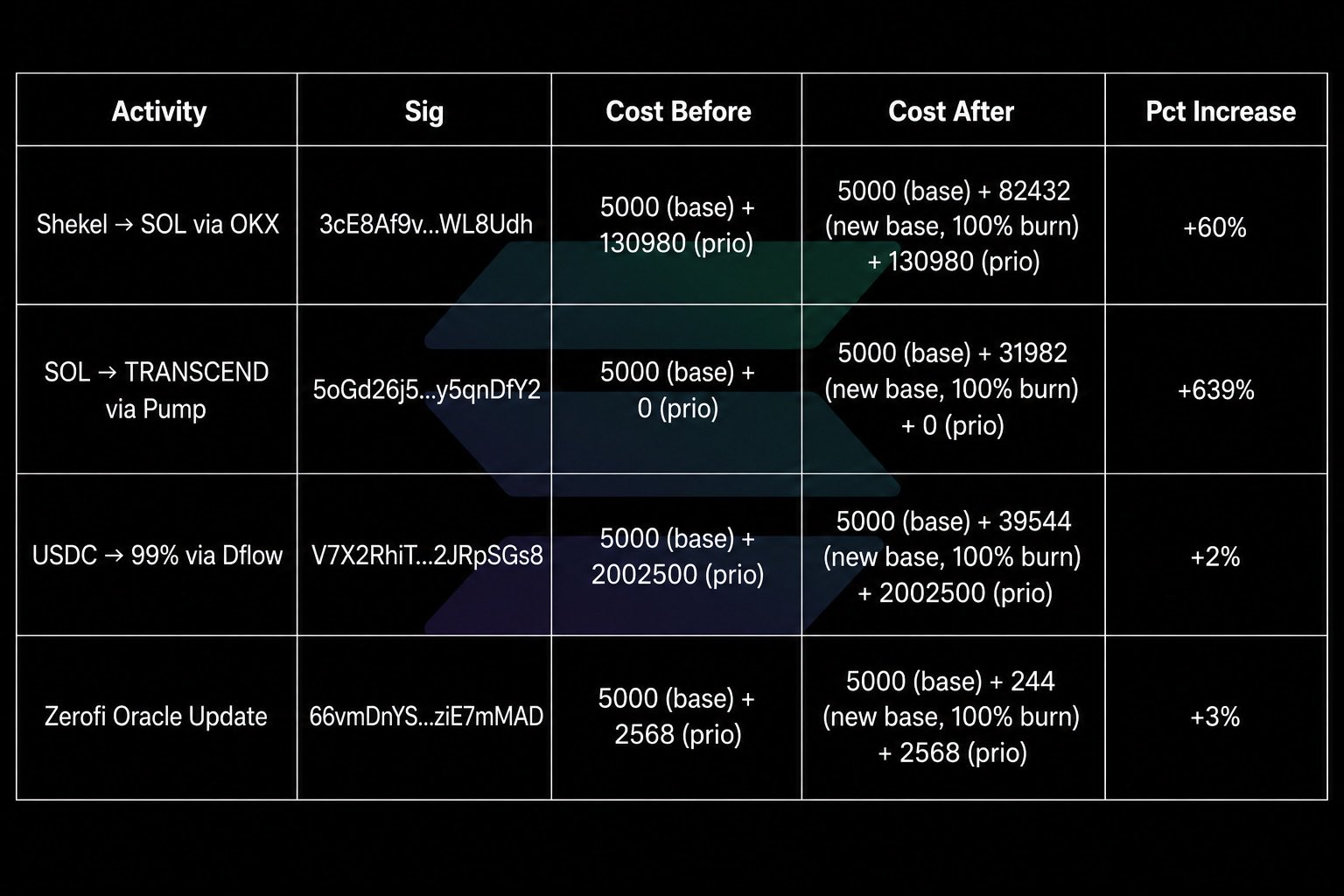
Las estimaciones muestran que la implementación de SIMD-0547 podría aumentar la tasa de consumo diario de la red de 648 $SOL al día a 10.800 $SOL al día. En los límites superiores de SIMD-0547, que proponen elevar la tasa a 1 lamport por unidad de coste, el índice de consumo diario de $SOL podría llegar a 64.800 $SOL al día.
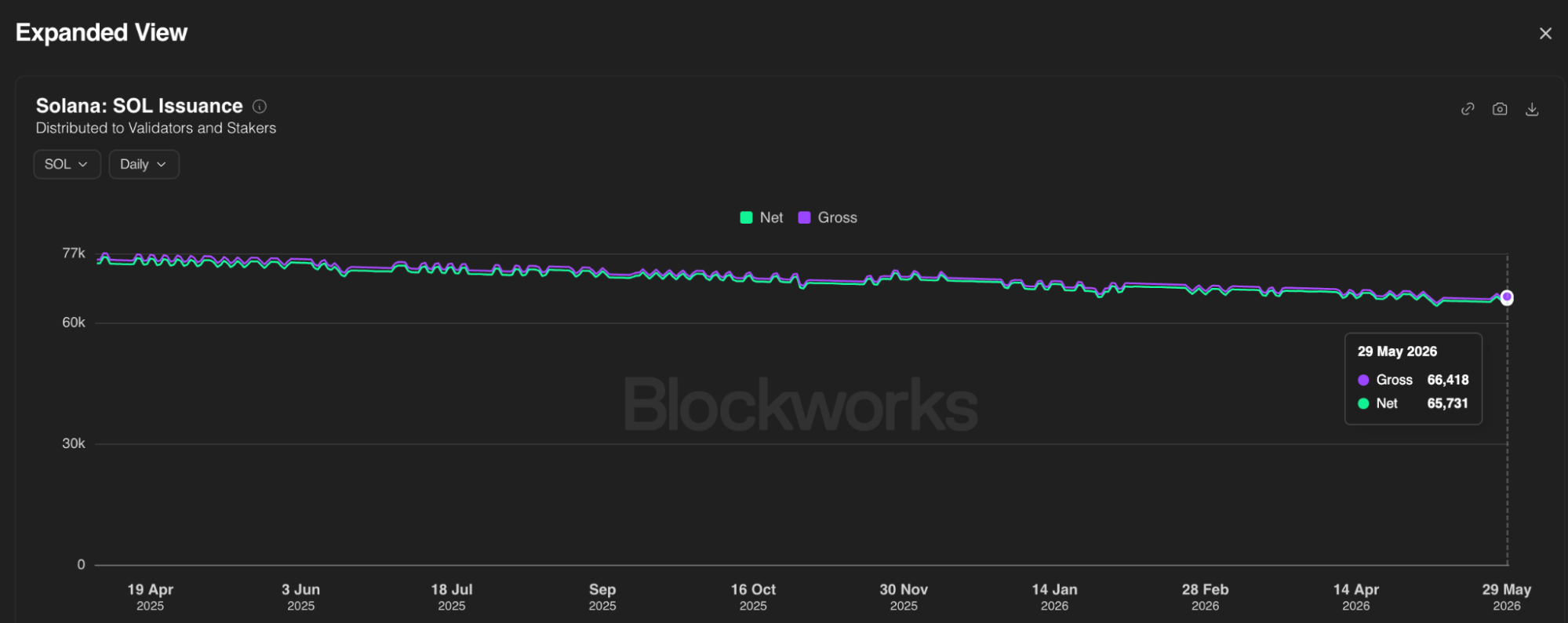
Sobre la base de la emisión actual, esto compensaría casi por completo las emisiones de $SOL, y sin duda inclinaría la balanza a favor de la deflación neta a medida que la emisión disminuye en línea con el calendario actual de la red.
Sobre todo, se espera que SIMD-0547 tenga un impacto limitado en las transacciones no intensivas en computación, como las actualizaciones de los creadores de mercado y los costes de votación de los validadores. Mantener bajos los costes de los creadores de mercado es fundamental para el éxito continuado de Solana y la eficiencia y el rendimiento de ejecución de sus mercados en cadena. Mientras tanto, los costes de votación del validador se suprimirán junto con el lanzamiento de Alpenglow, que casi con toda seguridad se implementará antes de SIMD-0547.
Los líderes del ecosistema apoyan la propuesta
El apoyo a la propuesta SIMD-0547 de Temporal ha sido abrumadoramente positivo. Líderes de opinión de todo el ecosistema de Solana han respaldado la propuesta, incluido el cofundador de Solana Labs, Anatoly Yakovenko.
La oposición a la propuesta ha sido insignificante. Sin embargo, un comentarista sugirió que a pesar de la afirmación de SIMD-0547 de que los creadores de mercado no se verían afectados en gran medida, la propuesta podría causar un aumento del 5% en los costes de actualización del oráculo pagados por los creadores de mercado.

Dada la escasa rentabilidad de los creadores de mercado en Solana, Nicholas Wenzel, antiguo director de BD de Soar, expresó su preocupación por la posibilidad de que el cambio redujera los beneficios de los creadores de mercado. En el límite superior, esto podría traducirse en un aumento del 50% de los costes operativos.
Un cambio más amplio en la tokenómica
La SIMD-0547 llega en medio de un debate reavivado sobre el estado de la tokenómica de $SOL, que volvió a encenderse después de que el consejero delegado de Helius , Mert Mumtaz, recordara a los participantes de la red que habían votado en contra de la reducción de emisiones durante la polarizante propuesta SIMD-0228 del primer trimestre de 2025.
En medio de una acción de precios rezagada y un rendimiento superior por parte de las redes rivales con mecánica deflacionaria, la tokenómica $SOL vuelve a estar bajo el microscopio.
Se espera que SIMD-0441, una propuesta de seguimiento diseñada para duplicar la tasa de desinflación de $SOL y llevar efectivamente a la red a su tasa terminal antes, se someta a votación en los próximos meses.
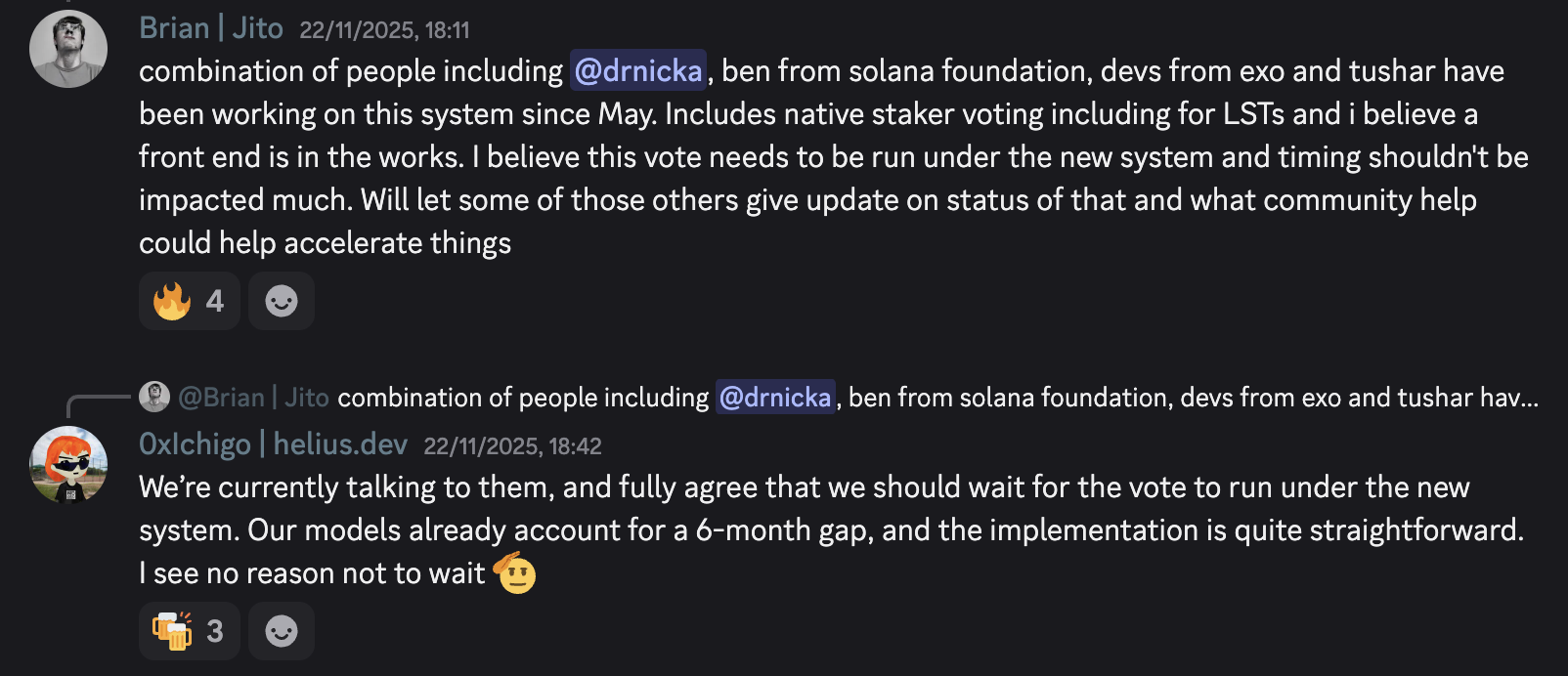
Se espera que el proceso de votación se lleve a cabo utilizando un nuevo marco, que se espera que permita a los stakers votar sobre la propuesta directamente, en lugar de depender de los validadores para votar en su nombre.
El sentimiento hacia la tokenómica $SOL ha cambiado drásticamente desde la SIMD-0228, una votación celebrada en marzo de 2025. En aquel momento, el precio de $SOL rondaba los 140 dólares, por debajo de la euforia de memecoin de enero, que llevó a $SOL hasta los 250 dólares. Con el precio languideciendo de nuevo, los participantes de la red están ansiosos por realizar cambios impactantes en la tokenómica de $SOL lo antes posible, impulsando el valor a nivel de protocolo del activo nativo de la red.
Más información en SolanaFloor
OG Solana DEX se apoya en la infraestructura RWA
Orca lanza una infraestructura de negociación de RWA autorizada en colaboración con Streamex
¿Qué significa la OPV de SpaceX para las criptomonedas?