
Sanctum's $INF bringt 8,2% höhere Renditen als Solana Network Median seit Einführung
$INF schneidet durchweg besser ab als die konkurrierenden LSTs von Solana
- Veröffentlicht:
- Bearbeitet:
In den 10 Wochen seit seiner Einführung hat das $INF der Version 2 von Sanctum seine ehrgeizigen Versprechen erfüllt und sich empirisch als Solanas bester LST für die Renditegenerierung etabliert.
On-Chain-Daten deuten darauf hin, dass die durchschnittliche APY von Sanctums $INF etwa 0,48 % über dem Netzwerkmedian aller LSTs lag, was den Inhabern einen wettbewerbsfähigen relativen Vorteil von 8,2 % gegenüber anderen Stakern verschaffte.
Bevorstehende Änderungen an der $SOL-Tokenomik könnten sich zugunsten von Sanctum auswirken, wobei einzigartige Mehrwerte wie die Swap-Gebühren des Infinity-Pools die Renditedifferenz von $INF gegenüber der Konkurrenz vergrößern werden.

Sanctums INF v2 hält, was es verspricht
Wie viele der führenden LSTs von Solana zielt auch Sanctums $INF darauf ab, optimierte Renditen zu liefern, indem es die nominale Rendite übertrifft, um den Markt zu übertreffen und den Inhabern einen höheren Wert zu bieten. Im Gegensatz zu vielen anderen LST-Betreibern auf Solana hat Sanctum diese Versprechen eingehalten, wobei On-Chain-Daten die messbaren Vorteile von $INF gegenüber der Konkurrenz belegen.
Laut einem aktuellen Blog-Artikels, in dem die Leistung von $INF v2 in den ersten beiden Monaten untersucht wurde, deuten die Daten darauf hin, dass $INF den Inhabern durchweg höhere Renditen beschert hat als seine Konkurrenten.
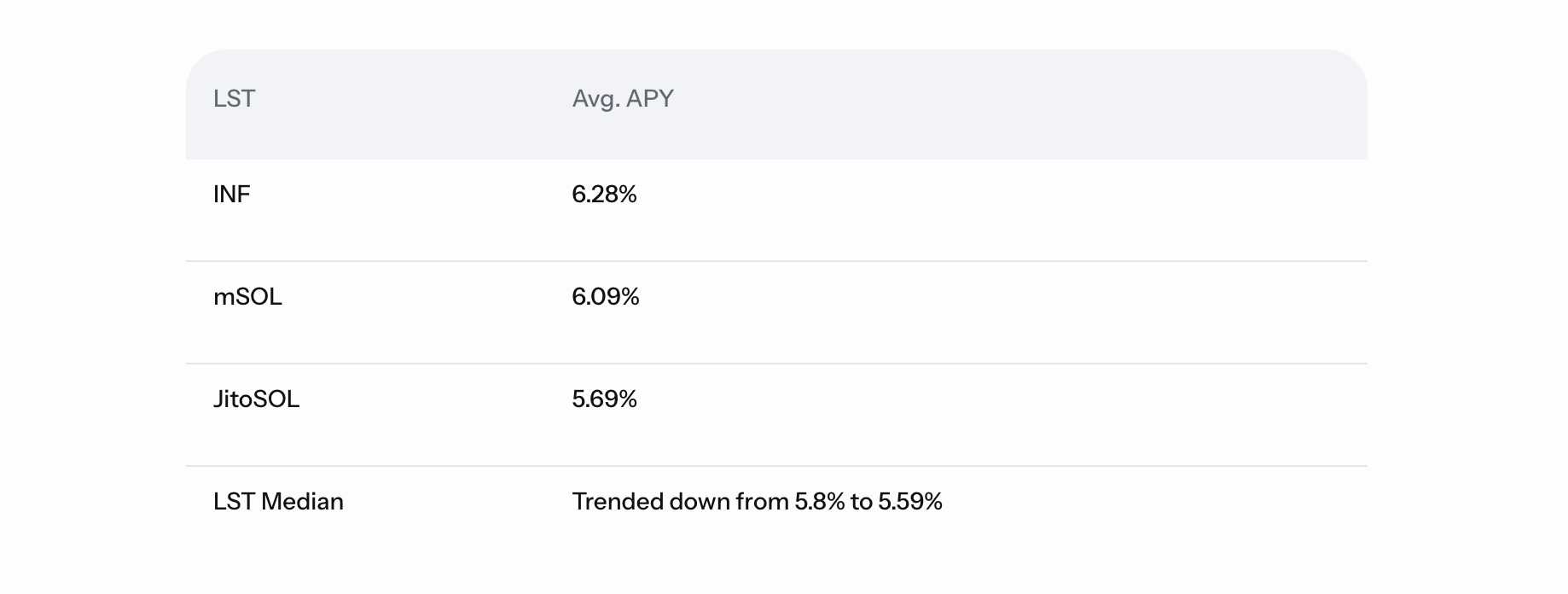
In den ersten acht Wochen seit dem Start lag der durchschnittliche APY von $INF bei 6,28 %, was einem Anstieg von 0,48 Prozentpunkten gegenüber dem durchschnittlichen APY des medianen LST des Netzwerks entspricht. Abgesehen von einigen Ausreißern, auf die im Blog von Sanctum eingegangen wurde, schneidet $INF im Vergleich zu alternativen LSTs durchweg besser ab, wobei Phasen intensiver Netzwerkaktivität die Belohnungen durch Swap-Gebühren im Infinity-Pool in die Höhe treiben.
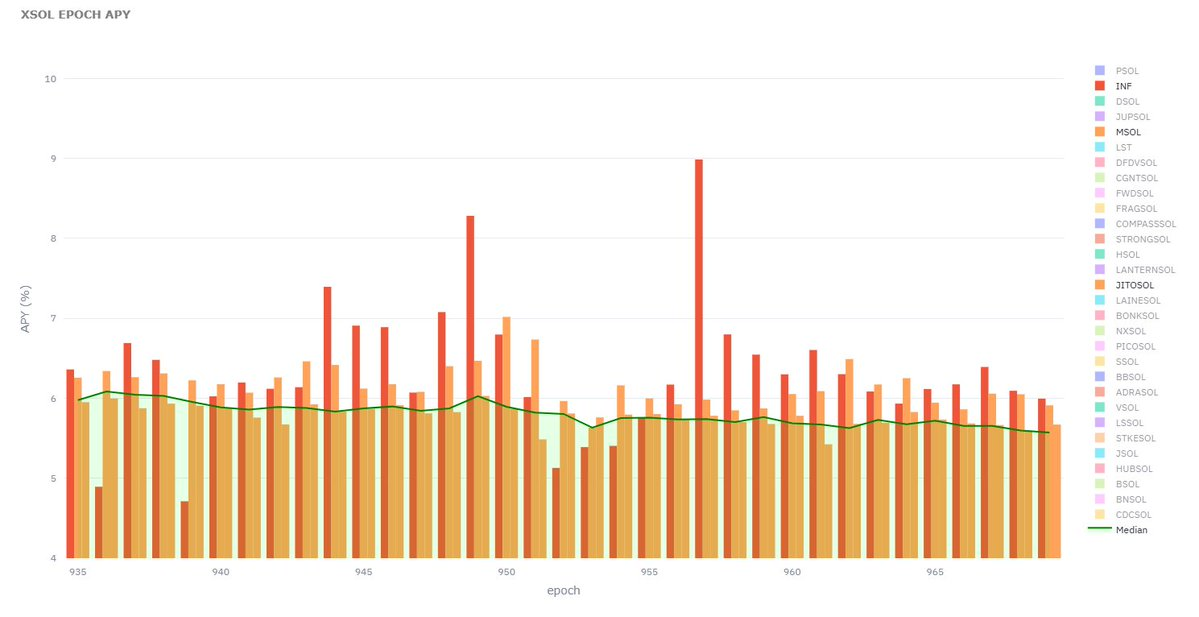
Extrapoliert man diesen Vorteil auf einen längeren Zeitraum, deuten die prognostizierten Belohnungen darauf hin, dass Inhaber mit $INF eine deutlich höhere Rendite erzielen könnten als mit vergleichbaren Token.
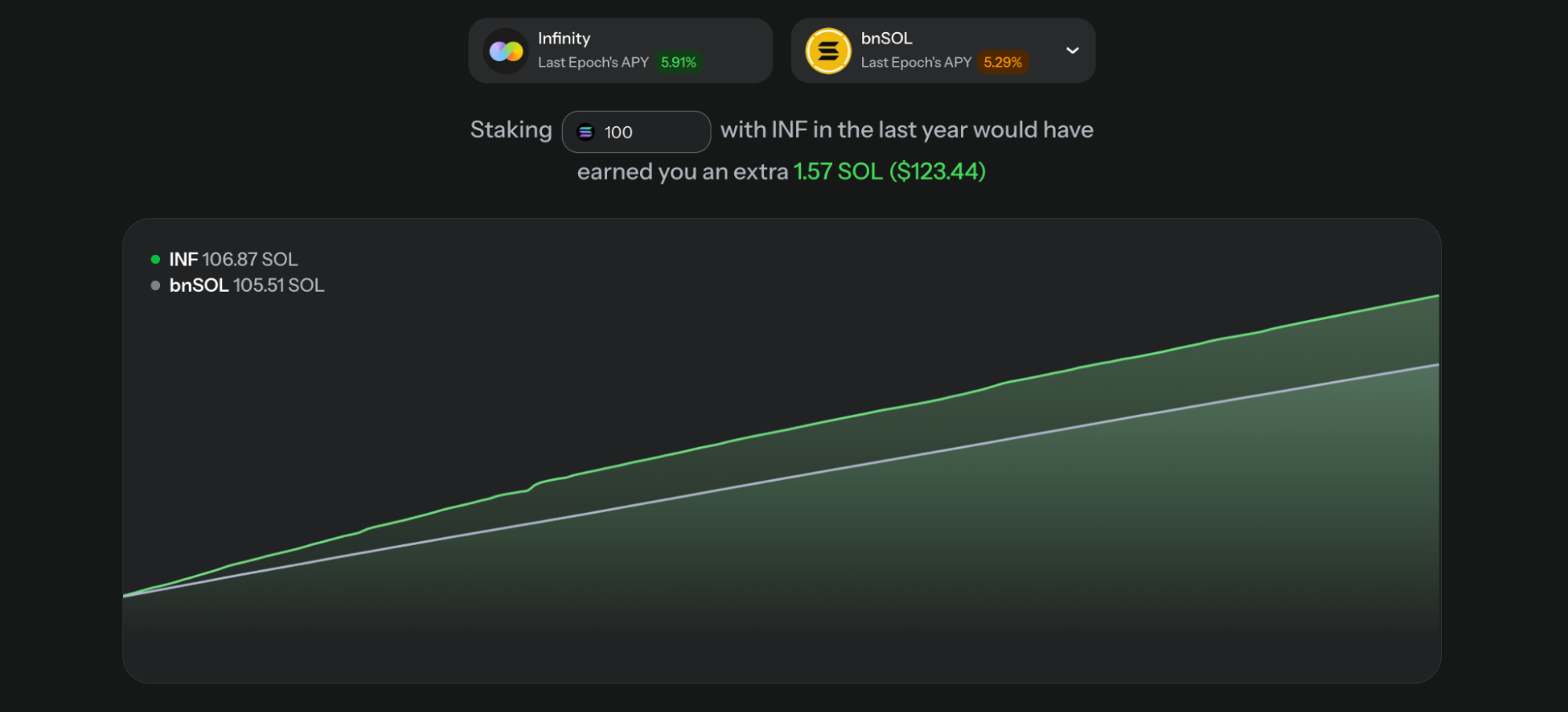
So wird beispielsweise erwartet, dass das Halten von 100 $SOL in $INF anstelle von $bnSOL den Nutzern in einem Jahr zusätzliche 1,57 $SOL einbringt, was einer 24,68 % Unterschied bei den Belohnungen.
Wird $INF unter der neuen $SOL-Tokenomics aufblühen?
Mögliche Änderungen an der bestehenden Tokenomics von Solana könnten die Leistungslücke zwischen $INF und anderen LSTs noch weiter vergrößern. Angesichts der schwächelnden Kursentwicklung haben führende Vertreter des Ökosystems erneut dazu aufgerufen, die aktuelle Emissionskurve von Solana zu reduzieren und die Inflation zu bekämpfen.
Ursprünglich im 4. Quartal 2025 eingereicht, SIMD-0441 eine Verdopplung der Disinflationsrate von $SOL vor und zielt darauf ab, den Rückgang der $SOL-Emissionen zu beschleunigen, um das Netzwerk bereits bis 2029 – statt erst 2032 – auf seine Endinflationsrate von 1,5 % zu bringen.
Da LSTs derzeit den Großteil ihrer Erträge durch Staking-Emissionen erzielen, wird eine Verringerung der Emissionen die nominale Rendite aller LSTs senken. Dies ermöglicht es jedoch bestimmten LSTs mit einzigartigen zusätzlichen Wertströmen, wie beispielsweise $INF, ihren Wettbewerbsvorteil zu nutzen und den Renditeabstand zu konkurrierenden Emittenten zu vergrößern.
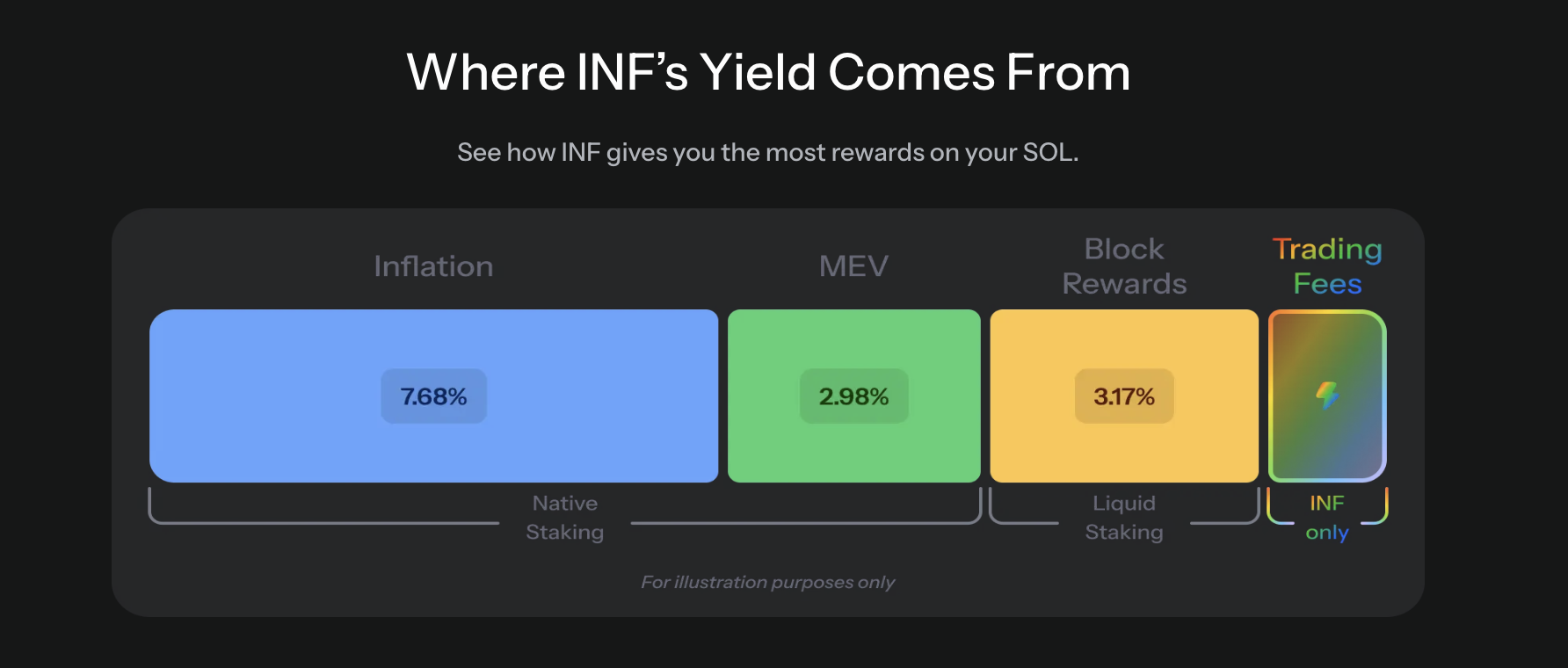
Im Gegensatz zu den meisten LSTs, die fast ausschließlich auf Staking-Belohnungen, MEV-Gewinne und Blockbelohnungen angewiesen sind, wird $INF zusätzlich durch Swap-Gebühren aus dem Infinity-Pool ergänzt. In einer Welt, in der die nominalen Staking-Renditen sinken, wird sich die Renditedifferenz zwischen LSTs mit geringem Mehrwert noch weiter vergrößern, was Vermögenswerte wie $INF für Inhaber langfristig attraktiver macht.
Sind LSTs steuerlich effizienter?
Über die erhöhten Belohnungen hinaus könnten $INF und andere LSTs zumindest in den Vereinigten Staaten eine überzeugendere und steuerlich effizientere Alternative zum nativen Staking darstellen. Nach der aktuellen steuerlichen Behandlung in den USA stellt natives Staking ein wiederkehrendes steuerpflichtiges Ereignis dar. Die Steuerverordnung 2023-14 besagt, dass Staking-Belohnungen als gewöhnliches Einkommen zum Marktwert gelten, sobald ein Steuerzahler die Kontrolle darüber erlangt – unabhängig davon, ob er selbst staket, delegiert oder über eine Börse staket.
Praktisch gesehen verbuchen native Staker jedes Mal steuerpflichtiges Einkommen, wenn Belohnungen gutgeschrieben werden – oft lange bevor sie auch nur einen einzigen Token verkaufen – und zwar zu den Sätzen für gewöhnliches Einkommen statt zu den niedrigeren Sätzen für langfristige Kapitalerträge.
LSTs hingegen sind wesentlich einfacher. Da die Belohnungen direkt dem Wert des Tokens zugerechnet werden, ändert sich die von Ihnen gehaltene Menge bei jeder Ausschüttung nicht. Da keine neuen Token in die Wallet gelangen, gibt es eine plausible Auslegung, nach der nichts besteuert wird, bis Sie tatsächlich verkaufen und damit einen Kapitalgewinn oder -verlust realisieren.
Die leistungsstarken Renditemechanismen von $INF haben Sanctum dabei geholfen, trotz schwieriger Marktbedingungen ein beständiges TVL-Wachstum aufrechtzuerhalten.
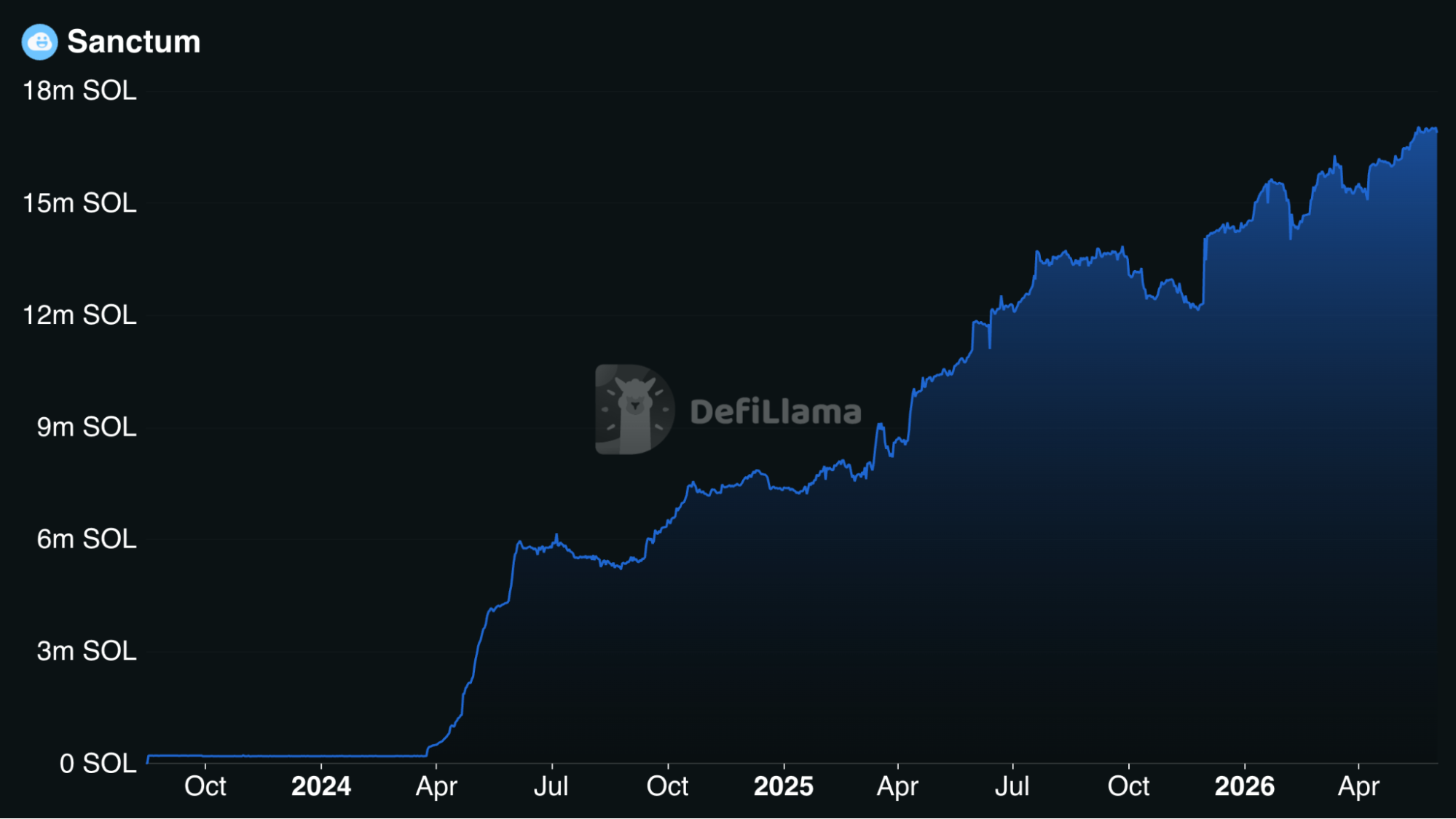
Inmitten der Kapitalflucht aus DeFi-Einlagen und des schwindenden Vertrauens in On-Chain-Märkte DefiLlama-Daten berichten, dass Sanctums in $SOL denominierte TVL bei einem Allzeithoch von 17,46 Mio. $SOL liegt, was einem Wert von über 1,33 Mrd. USD entspricht.
Mehr dazu auf SolanaFloor
Solanas beliebteste Wertanlage wird zukunftssicher
ORE bringt quantensichere Smart Wallet auf den Markt
Verdienen Sie bis zu 8 % APY auf Ihre $SOL