
Raiku, the reservation system for Solana blockspace, has launched $rkuSOL, a new LST designed to expand the sources of yield available to Solana stakers. The launch is powered by several ecosystem participants, including Sanctum, Exponent, Kamino, and Loopscale, and introduces a staking model that combines traditional staking rewards, MEV, and revenue generated from the sale of blockspace through Raiku's auction infrastructure.
While existing LSTs generally derive returns from staking rewards and MEV, $rkuSOL adds a third component through blockspace sales conducted on Raiku's network.
Expanding the Solana Liquid Staking Yield Model
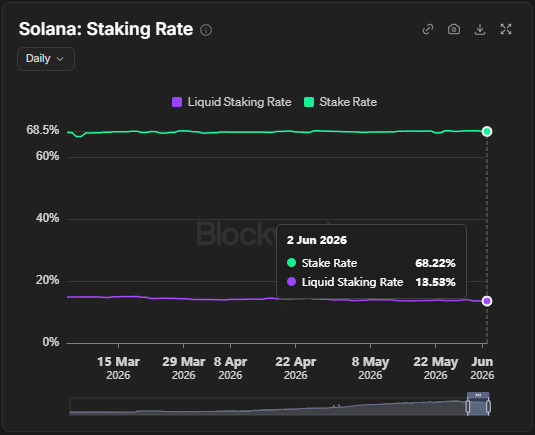
Liquid staking has become a core component of the Solana ecosystem, allowing users to stake $SOL while retaining liquidity through transferable staking receipts. According to Blockworks data, over 13% of all staked $SOL is parked in LSTs. With the introduction of $rkuSOL, Raiku aims to broaden the economic model behind these assets.
Robin Nordnes, Founder and CEO of Raiku, described the launch as an evolution in validator economics. "For forty years, TradFi venues have earned from a stack of revenue lines. Solana validators have only ever sold one, block production. With $rkuSOL, the validators behind it start selling a second: blockspace through Raiku's auctions, priced contractually before the trade happens. That revenue flows back to stakers. It's the first expansion of the Solana LST yield base since MEV arrived," he said.
How $rkuSOL Works
The staking process behind $rkuSOL follows the familiar mechanics of other Solana liquid staking products. Users deposit $SOL with validators integrated into the Raiku network and receive $rkuSOL in return at the prevailing exchange rate.
The token does not have a supply cap. Instead, the protocol mints $rkuSOL as a receipt representing deposited $SOL. Over time, the exchange rate adjusts as the underlying staking pool accumulates rewards and generates yield.
Raiku noted that both the underlying stake pool and the Sanctum LST contracts rely on existing Solana infrastructure and have undergone multiple audits. The launch does not introduce modifications to these foundational components.
A defining feature of $rkuSOL is its connection to Raiku's Ahead-of-Time (AOT) and Just-in-Time (JIT) auction systems. Both auction formats operate as first-price sealed-bid auctions, but they differ in timing. AOT auctions allow users to reserve up to 100 slots in advance, while JIT auctions clear for inclusion in the same slot.
Validators supporting $rkuSOL can sell compute capacity through these auctions, generating additional revenue beyond traditional staking and MEV opportunities. This creates a third yield source that behaves differently from broader market conditions and staking activity.
Sanctum Provides Core Infrastructure and Liquidity
Sanctum provides the underlying liquid staking infrastructure for $rkuSOL and routes the token through its Infinity liquidity pool from day one. The partnership builds on Sanctum's recent Infinity V2 upgrade, introduced in March.
Infinity V2 distributes rewards continuously at the slot level rather than issuing rewards on a per-epoch basis. This approach enables yield to compound more frequently while also supporting deeper liquidity across more than 1,000 Sanctum-powered liquid staking tokens.
"We're very happy to partner with Raiku to launch $rkuSOL. $rkuSOL is a first-class citizen of Sanctum's unified infrastructure; holders automatically earn autocompounding yields and can access instant liquidity via Sanctum. The relationships we have forged with partners in the space also allow $rkuSOL to be integrated and used throughout the Solana ecosystem from day one." - FP Lee, Co-Founder and CEO of Sanctum
DeFi Integrations Launch Alongside the Token
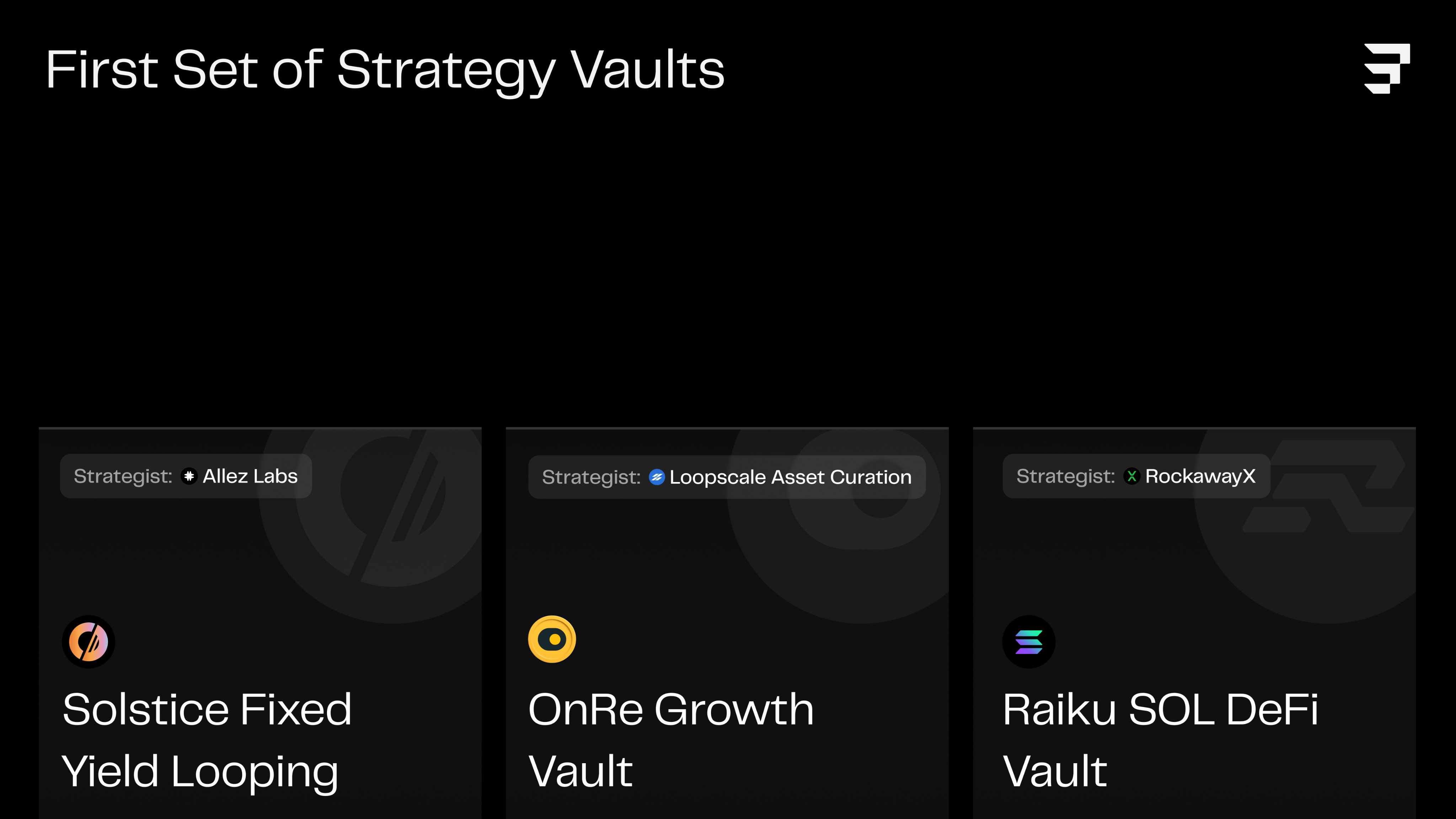
Several major DeFi platforms have integrated $rkuSOL at launch. Exponent has also listed the asset on its yield trading platform. The integration coincides with the launch of Exponent V2 and includes support through the Raiku SOL DeFi Vault, a flagship $SOL-focused vault curated by RockawayX. The vault aims to provide risk-adjusted returns by combining multiple DeFi strategies centered around $rkuSOL.
"It is great to have a differentiated Solana LST that brings a new source of yield to Solana staking. This makes rkuSOL a strong asset to add to a DeFi portfolio, while holders can use Exponent to tailor their exposure depending on their goals, whether they want to fix its rate or leverage it. The Raiku SOL DeFi Vault is also an easier way to gain blended exposure to rkuSOL, while still accessing some of the best opportunities for it available on Exponent." - Thomas Lefort, Co-Founder of Exponent
Ecosystem Support and Future Expansion
The launch begins with six external validator partners already committed to supporting the network. Raiku expects additional validators to join progressively throughout the third quarter of 2026. The company also plans to expand DeFi integrations over the coming quarters as adoption grows across the Solana ecosystem.
Consumer access arrives immediately through support from Phantom and Jupiter, two of Solana's largest user-facing applications. Their integration allows users to access and manage $rkuSOL directly from familiar wallets and interfaces.
Read More on SolanaFloor
Solana Tokenization Roundup: May 2026
Sanctum’s $INF Yields 8.2% Higher APY than Solana Network Median Since V2 Upgrade
How Raiku Fixes Solana's Biggest Problem!