$PUMP Buyback Position Back in Profit After 9 Months Underwater
$PUMP buybacks are in the green
- Published:
After funneling multiple millions of dollars into token buybacks every week, pump.fun is finally in the green on its $PUMP commitment.
While tokens acquired through pump.fun’s buyback mechanic are technically burnt, $PUMP’s price trajectory has reignited debate on the value of alignment signaling in the crypto economy.
Solana’s Biggest Buyback Program Up $12M
Despite dropping the allocation of protocol revenue to $PUMP buybacks from 100% to 50% in April, pump.fun’s buyback program appears to be showing the fruits of its labor. Blockworks research reports that after 9 months of languishing price action, pump.fun’s buyback spend has flipped positive, courtesy of a recent surge in token value.
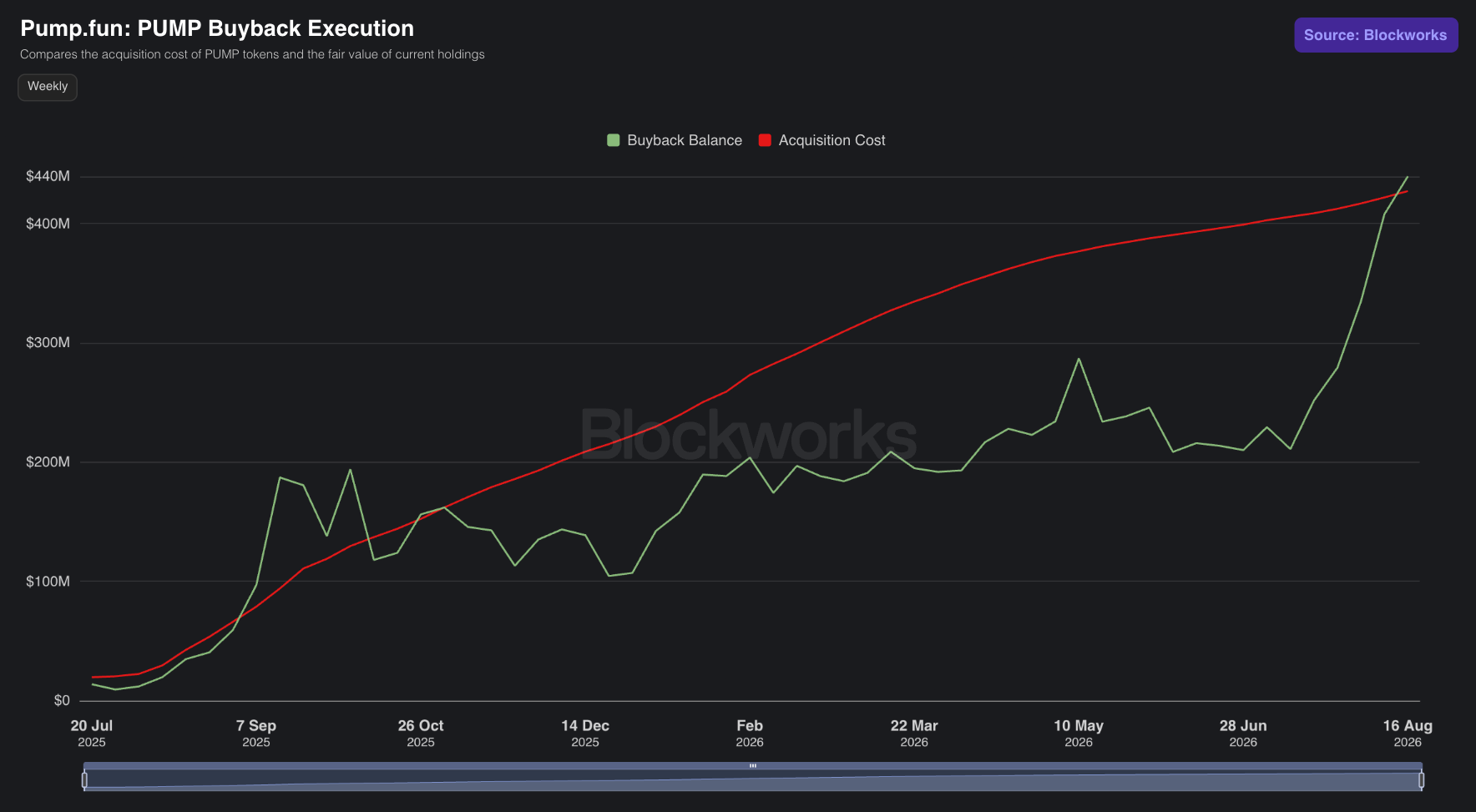
Pump.fun operates what is undoubtedly Solana’s biggest buyback program. Since launch, the memecoin and social trading behemoth has allocated over $430M to repurchasing $PUMP off the open market, permanently removing 16% of the total supply from circulation.
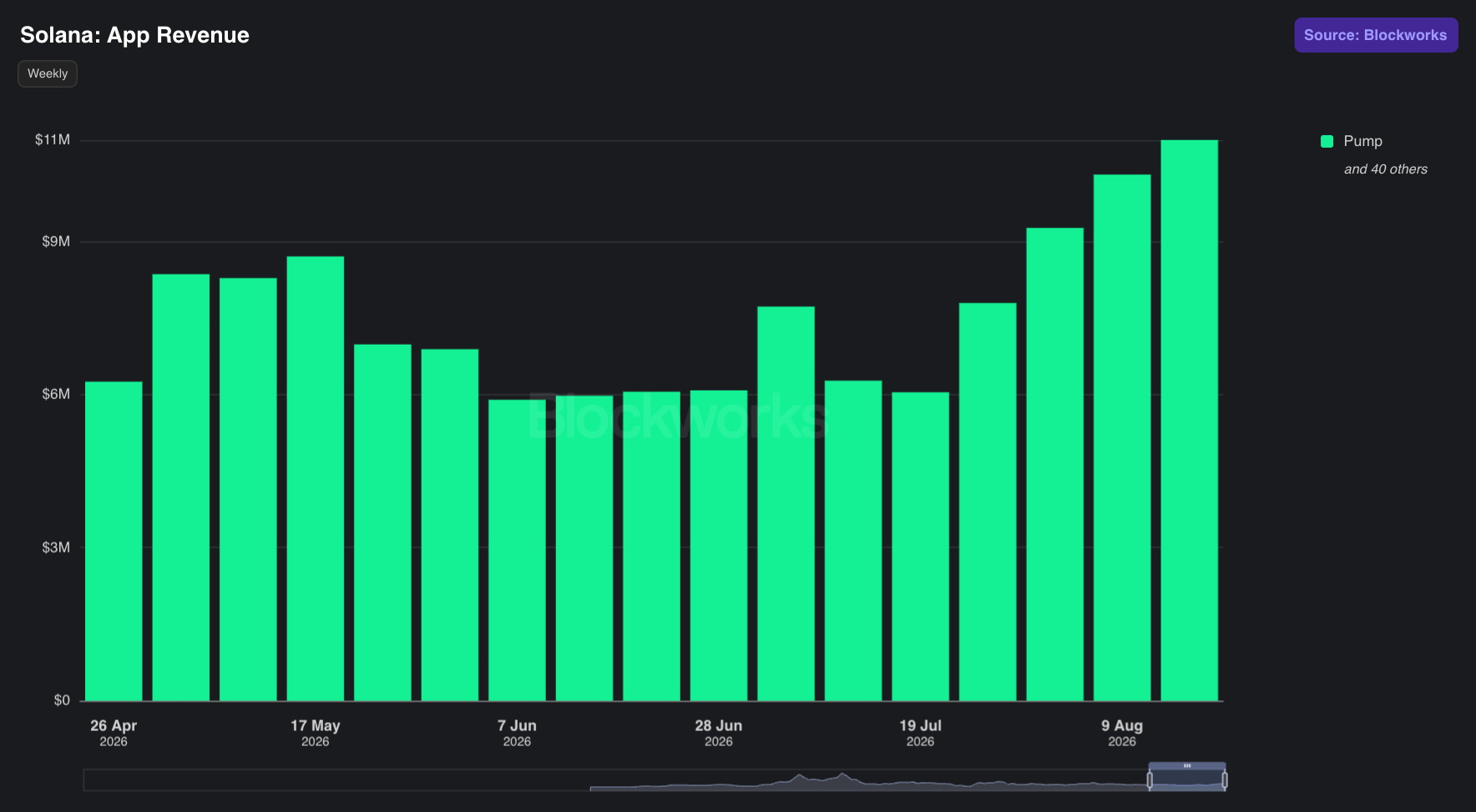
With an $ANSEM-led memecoin renaissance breathing new life into Solana’s onchain trading activity, $PUMP has been one of the network’s biggest benefactors. Pump’s revenue has almost doubled in recent weeks, rising from just over $6M in early July to $11M last week.
The increase in buybacks and attention, coupled with the confirmation that early investors were not going to liquidate their freshly unlocked tokens, has changed the market’s perception of $PUMP.
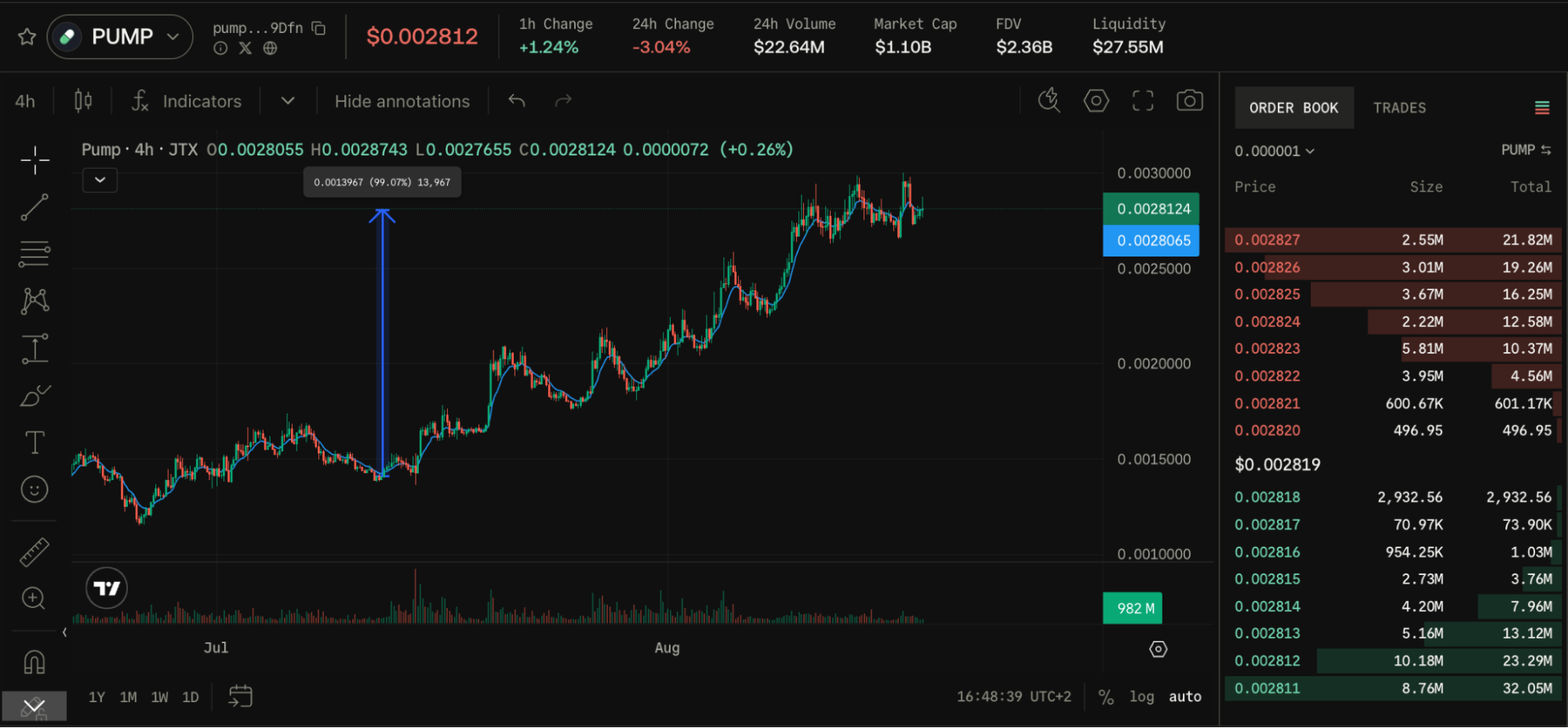
In a matter of weeks, an asset many traders were scared to touch has become one of the network’s strongest performers, rising 99% since July 12.
Crypto Investors Flip Bullish on Buybacks?
With pump.fun’s buyback program flipping profitable on acquisition cost, market participants are once again evaluating the effectiveness of token buybacks. With the rules and regulations around crypto tokenholder rights and entitlement still uncertain, many crypto projects have turned to using protocol revenue to buy tokens off the open market to signal alignment with holders.
Market participants have long been divided over the mechanics effectiveness. Critics argue that tokens buybacks are a terrible use of revenue, through which the company pours money into a proverbial black hole to allow investors to exit their positions.
In January 2026, Solana DePIN heavyweight Helium announced the end of its buyback program, claiming that the firm would no longer continue “wasting our money”.
Meanwhile, with $PUMP’s buyback efforts back in the green and the market showing newfound confidence in the asset, the dialogue amongst crypto investors is changing. Chiming in from the TradFi crowd, Bitwise’s Matt Hougan asserts that buybacks are a powerful value capture mechanic.
Using examples like $PUMP and $HYPE, two of the strongest crypto businesses of all time, some market participants argue the difference between a successful buyback mechanic and failed one is conviction in the model.
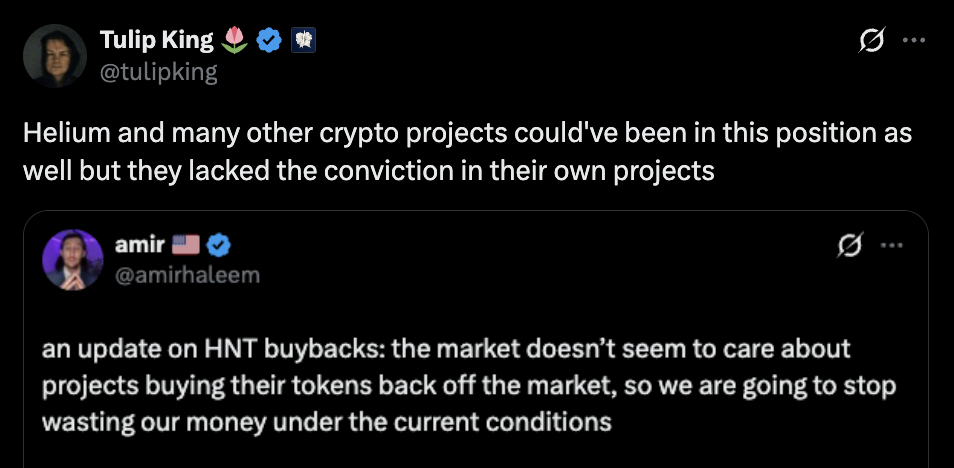
While pumpfun has finally flipped green on its acquisition cost after 9 months underwater, crypto’s most successful buyback program is still far ahead in terms of value creation.
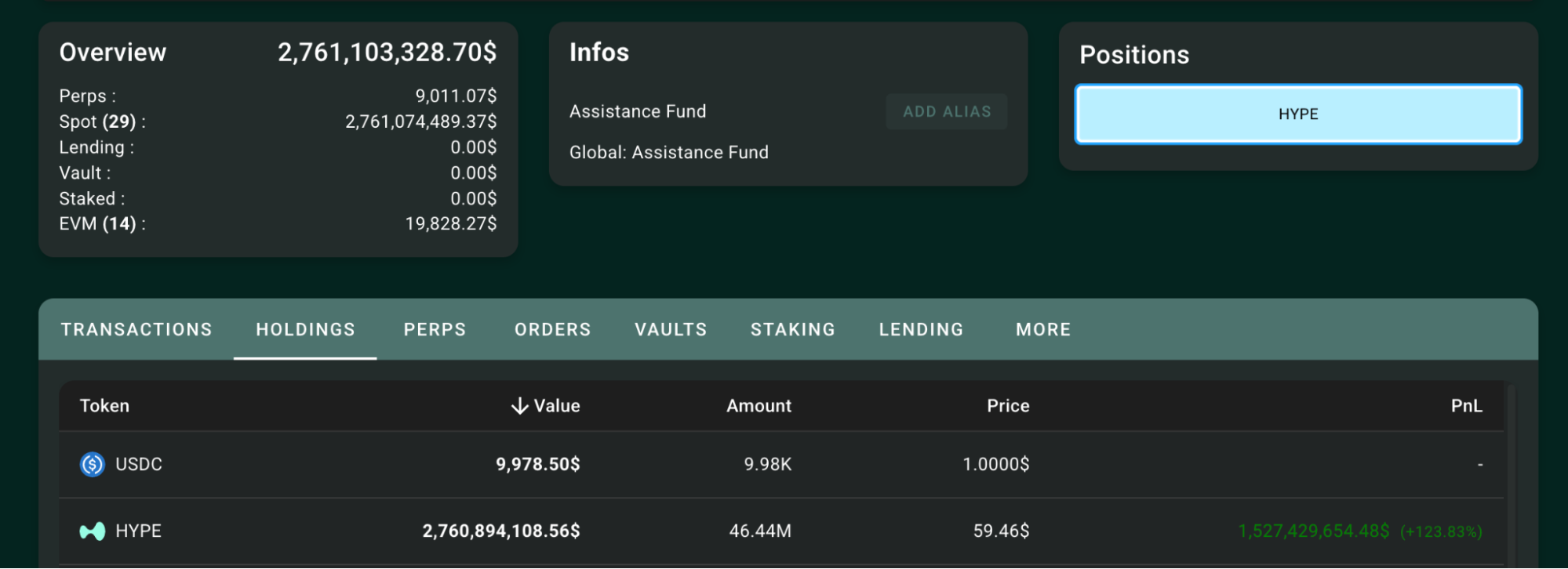
The Hyperliquid Assistance Fund, which uses Hyperliquid revenue to buy $HYPE, currently holds 46M $HYPE, currently valued at $2.76B. At an average acquisition cost of $26.56 per token, the Assistance Fund is up $1.5B on its purchases.
Read More on SolanaFloor
Is this memecoin run over?
Are Memecoin Traders Leaving Solana for BNB and Robinhood? Onchain Data Disagrees
What’s Behind Standard Chartered’s $2,000 $SOL Price Prediction