De onchain-markt voor ruilkaarten is in 2026 opnieuw een explosieve groeifase ingegaan. Na het bereiken van recordhoogtes in maart en april voorspellen blockchain-gebaseerde gacha-platforms nu nog een recordmaand in mei.
Volgens gegevens gedeeld door Messari, stegen de maandelijkse onchain TCG gacha uitgaven naar $148,6 miljoen in maart 2026 voordat ze weer stegen naar $184 miljoen in april. Huidige projecties schatten het volume in mei op ongeveer $211,2 miljoen, wat het hoogste geregistreerde maandtotaal voor de sector zou betekenen.
De stijging weerspiegelt de groeiende vraag naar tokenized Pokémon kaarten en andere trading card collectibles die gebruikers kunnen kopen, verhandelen, inwisselen en op speculeren via blockchain marktplaatsen.
Messari Research beschreef de trend als "TCG-gekte" die zich onchain verplaatst, met het argument dat dezelfde speculatieve energie die eerder memecoins en NFT's voedde, is verschoven naar digitale ruilkaartecosystemen.
De cijfers achter de hausse
Volgens Messari Research bereikten de maandelijkse TCG gacha uitgaven een record van $148,6 miljoen in maart 2026, en stegen daarna weer tot $184 miljoen in april 2026. Deze back-to-back all-time highs markeerden een van de snelste groeiperiodes voor verzamelobjecten in de keten.
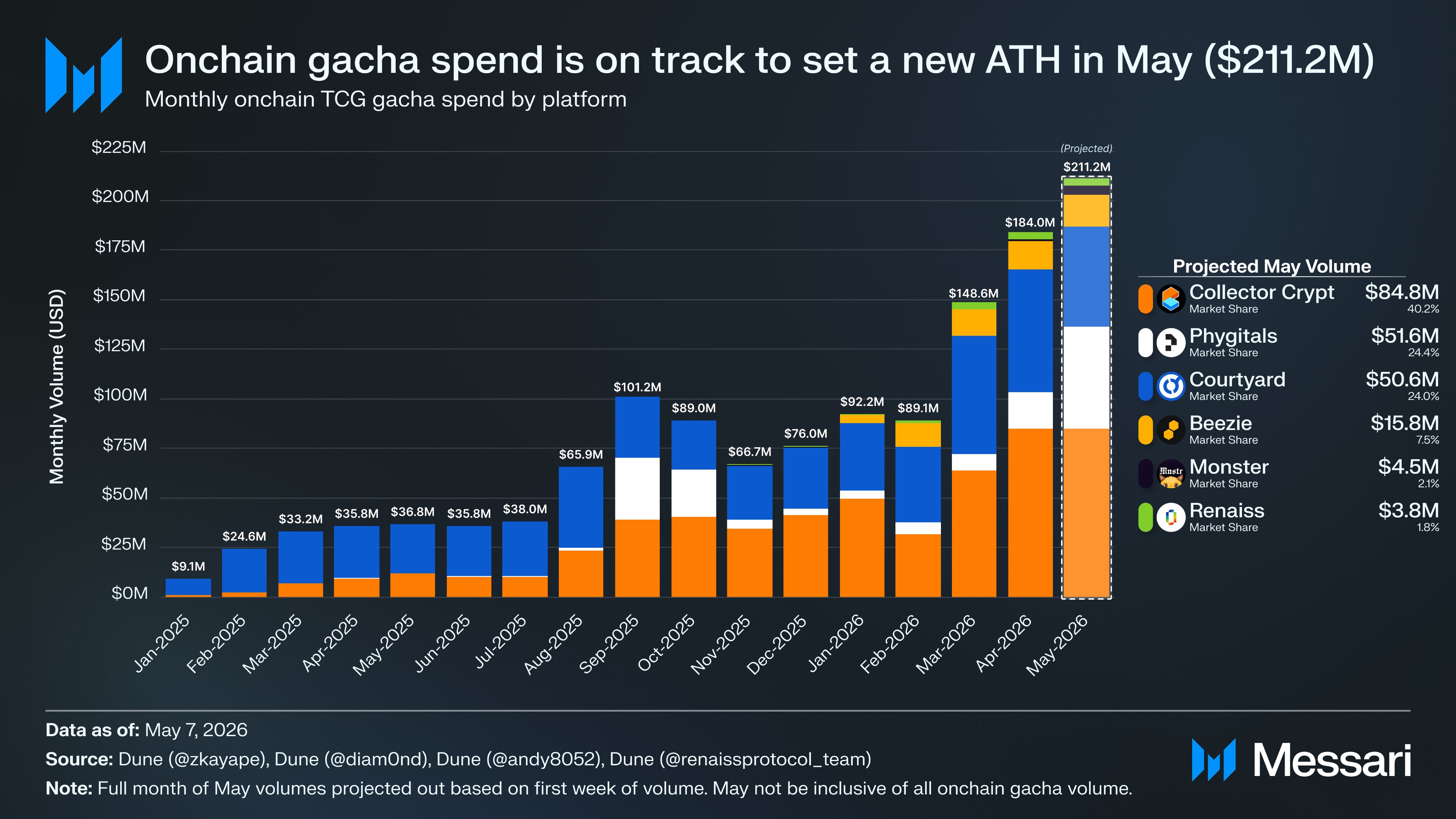
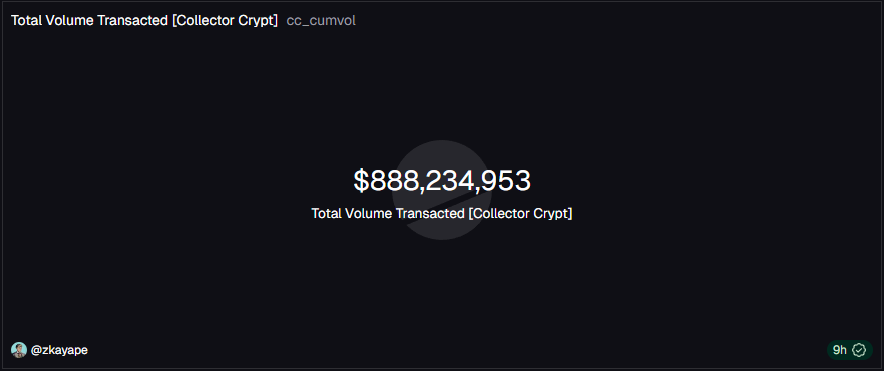
De stijging is grotendeels geconcentreerd bij een handvol dominante platforms die nu de meeste onchain trading card activiteit controleren. Collector Crypt leidt momenteel de markt in het verwachte volume van de uitgaven in mei, maar de historische groei is ook aanzienlijk geweest. Uit gegevens van Dune Analytics blijkt dat het platform al meer dan $480,9 miljoen aan cumulatieve gacha-bestedingen heeft verwerkt en meer dan $888,2 miljoen aan totaal transactievolume.
Courtyard blijft een van de grootste spelers op het gebied van zowel gacha-uitgaven als handel op de secundaire marktplaats. Het platform heeft meer dan $582 miljoen aan cumulatieve gacha-bestedingen en genereert ruwweg $952,9 miljoen aan marktplaats-transactievolume. Gegevens over bruto inkomsten van Dune laten verder zien dat Courtyard meer dan $140,3 miljoen aan inkomsten heeft gegenereerd.
Phygitals heeft ook een grote bijdrage geleverd aan de expansie van de sector. Het platform heeft meer dan $87,2 miljoen aan cumulatieve gacha-bestedingen geregistreerd, naast ongeveer $171,2 miljoen aan transactievolume op de marktplaats.

Gegevens van Dune laten ook een sterke groei zien in zowel het handelsvolume op de marktplaats als de activiteit op de secundaire markt in het afgelopen jaar. Het wekelijkse TCG-volume is eind 2025 en begin 2026 sterk gestegen, terwijl de wekelijkse gacha-uitgaven in de afgelopen maanden verschillende keren een nieuw hoogtepunt bereikten.
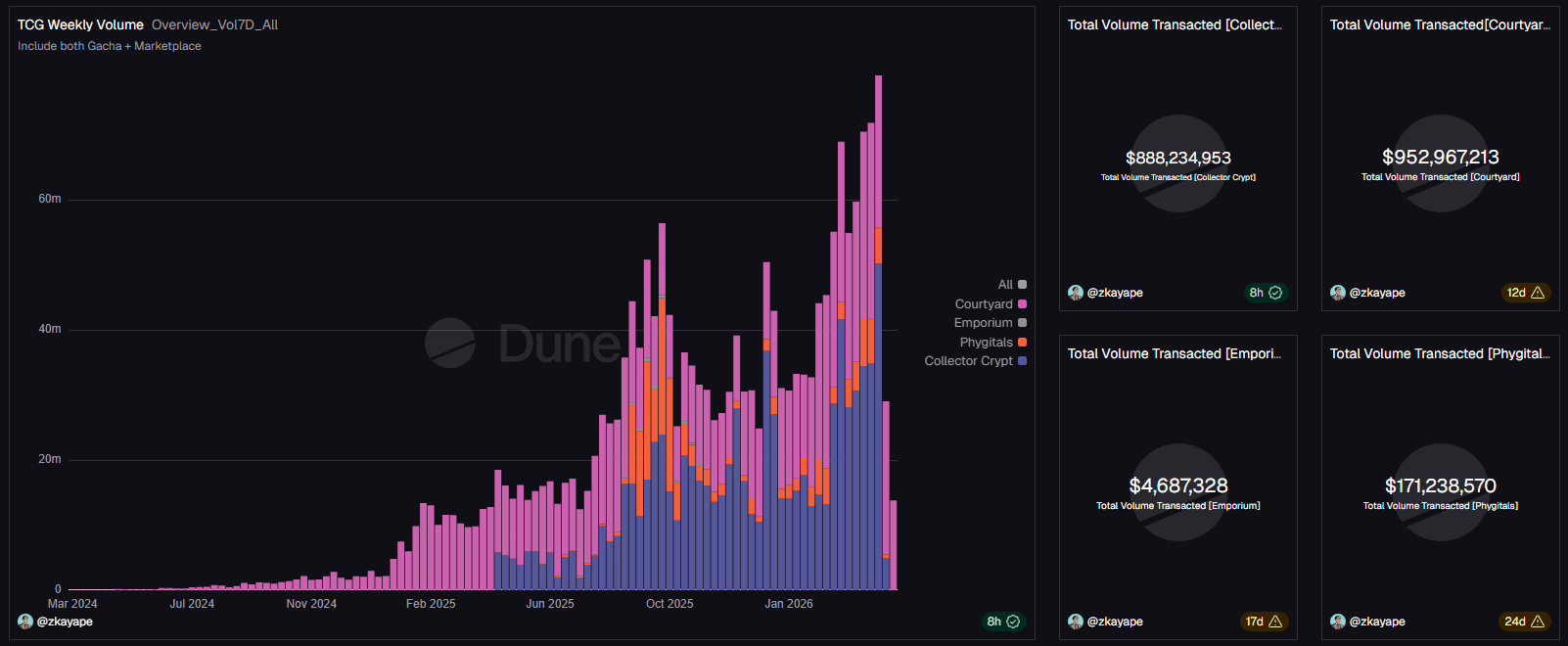
Courtyard en Collector Crypt hebben momenteel het grootste marktaandeel in zowel gacha-uitgaven als secundaire marktplaatstransacties.
Hoe Tokenized Pokémon Cards werken
Tokenized Pokémon Cards combineren fysieke verzamelobjecten met blockchaininfrastructuur. In plaats van louter te bestaan als digitale NFT's, vertegenwoordigen deze activa echte Pokémon-kaarten die zijn opgeslagen in beveiligde kluizen. Elke NFT komt overeen met een specifieke fysieke kaart die gebruikers later kunnen inwisselen.
Bij Pokémon-kaarten is de verhouding tussen het blockchaintoken en het fysieke verzamelobject 1:1. Professionele sorteringsdiensten authenticeren en evalueren de kaarten voordat platforms ze als NFT's slaan.
Zodra de kaarten zijn geverifieerd, plaatsen operators ze in verzekerde opslagkluizen die worden beheerd door externe bewaarders. Het blockchain token fungeert dan als eigendomsbewijs en stelt verzamelaars in staat om de activa direct online te verhandelen.
Deze structuur is erop gericht om verschillende lang bestaande problemen in de markt voor fysieke verzamelobjecten aan te pakken, waaronder vertragingen bij het verzenden, risico op vervalsing, geografische barrières en gefragmenteerde prijsgegevens. Houders kunnen de fysieke kaart uiteindelijk inwisselen door de NFT te verbranden en verzending aan te vragen bij de opslagprovider.
Waarom Pokémon-kaarten een crypto-obsessie werden
Verschillende factoren lijken de vraag te stimuleren. De heropleving van de populariteit van Pokémon-kaarten viel samen met een bredere terugkeer van speculatieve activiteit in cryptomarkten. Veel handelaren die zich eerder richtten op NFT's of memecoins, nemen nu deel aan de markten voor token-verzamelobjecten.
Messari Research stelde dat het speculatieve enthousiasme rond digitale Pikachu- en Charizard-kaarten steeds meer lijkt op eerdere cryptohypecycli. Tegelijkertijd trekken token-verzamelobjecten gebruikers aan die niet tot de traditionele cryptohandelaars behoren. Verzamelaars van fysieke ruilkaarten hebben nu toegang tot wereldwijde liquiditeit, realtime prijsgegevens en onmiddellijke vereffening zonder kaarten te verzenden tussen kopers en verkopers.
De overlap tussen crypto native gebruikers en millennial Pokémon verzamelaars creëert ook een natuurlijk publiek voor deze platformen. Tokenization maakt bovendien nieuwe mechanismen mogelijk die traditionele marktplaatsen moeilijk kunnen ondersteunen. Sommige platforms bieden onmiddellijke terugkoopprogramma's, terwijl andere fractionele eigendom van dure kaarten toestaan.
Systemen op basis van blockchain bieden ook transparante eigendomsgeschiedenissen en geverifieerde herkomstgegevens, die veel verzamelaars waarderen bij het verhandelen van hoogwaardige activa.
Gacha-mechanismen blijven zich uitbreiden buiten Pokémon
Het succes van Pokémon-kaarten met token heeft ook experimenten aangemoedigd in aangrenzende categorieën van verzamelobjecten.
Een voorbeeld hiervan kwam deze week naar voren toen BAXUS de lancering aankondigde van zijn onchain whisky- en wijnautomatenmarktplaats.
BAXUS beschreef het platform als een marktplaats met tokens waar gebruikers digitale automaten kunnen laten draaien met zeldzame flessen whisky en wijn.
De lancering laat zien hoe gacha-achtige mechanismen steeds vaker opduiken in meerdere categorieën van echte activa, niet alleen ruilkaarten.
Lees meer op SolanaFloor
"Hoe verdien ik hier geld mee? Pump.fun Co-oprichter's Hantavirus Post veroorzaakt Backlash
Solana Coins Go Vertical as $JTO, $CARDS, and Others Enjoy Massive Breakouts
Bekijk hoe gemakkelijk het is om uw $SOL in te zetten op mobiel