Loading...
en

“How Do I Make Money From This?”: Pump.fun Co-Founder’s Hantavirus Post Triggers Backlash

Alon’s comparison between prediction markets and memecoin speculation ignites debate over crypto culture, ethics, and who really profits from viral attention.

Alon, the pseudonymous co-founder of pump.fun, sparked one of the crypto industry’s most polarizing conversations this week after posting a lengthy thread about how traders could potentially profit from growing online attention surrounding Hantavirus.

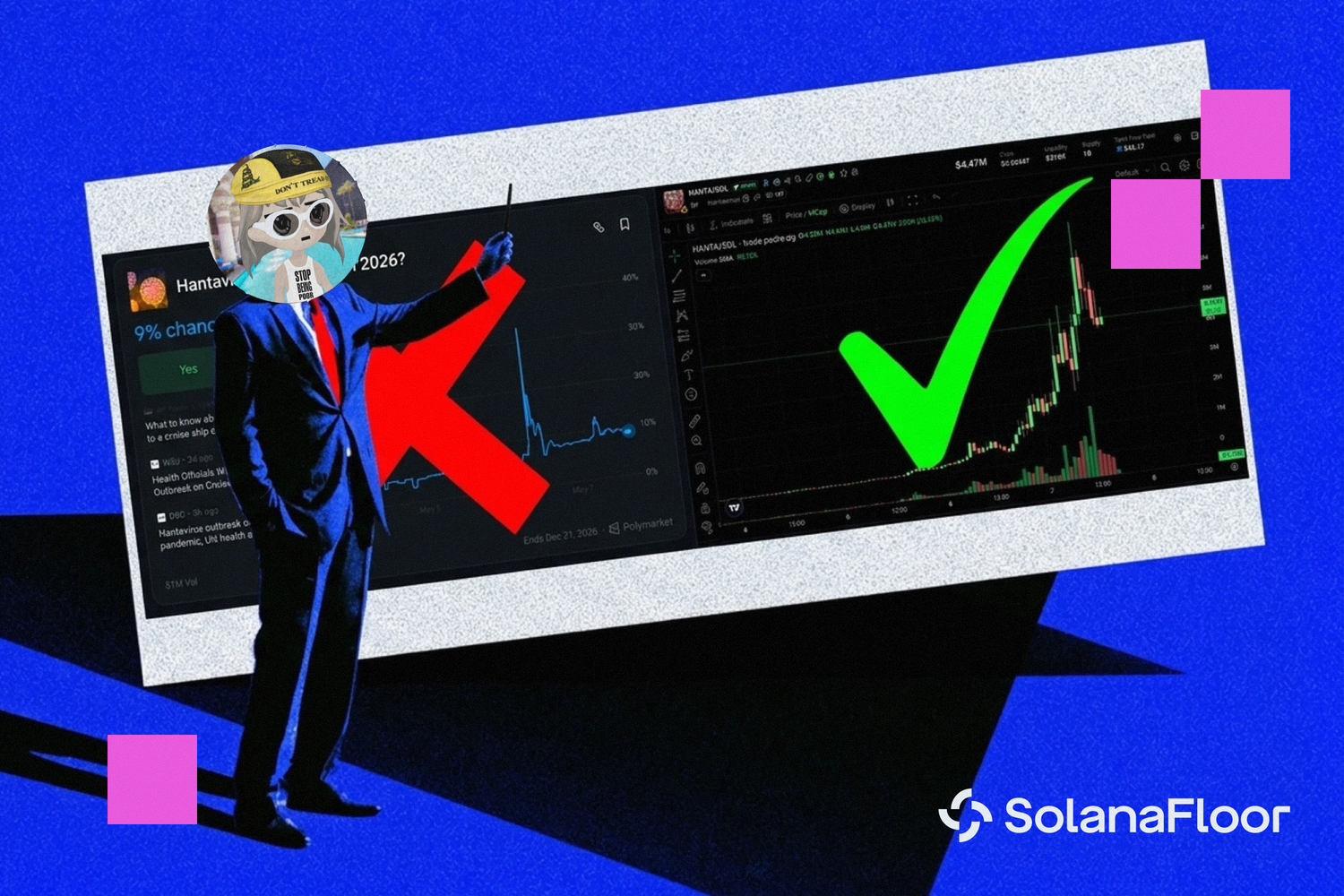
The post centered around two speculative markets tied to the topic. The first involved a Polymarket prediction market asking whether the World Health Organization would officially characterize Hantavirus as a pandemic in 2026. The second involved $HANTA, a Solana memecoin associated with the narrative.

Alon framed the thread around a blunt question: “If you're an internet person, chances are you have a bigger concern: how do I make money from this?”

He argued that prediction markets offered limited upside because of low liquidity, slower resolution timelines, and smaller potential returns. He contrasted that with the explosive rise of the $HANTA memecoin.

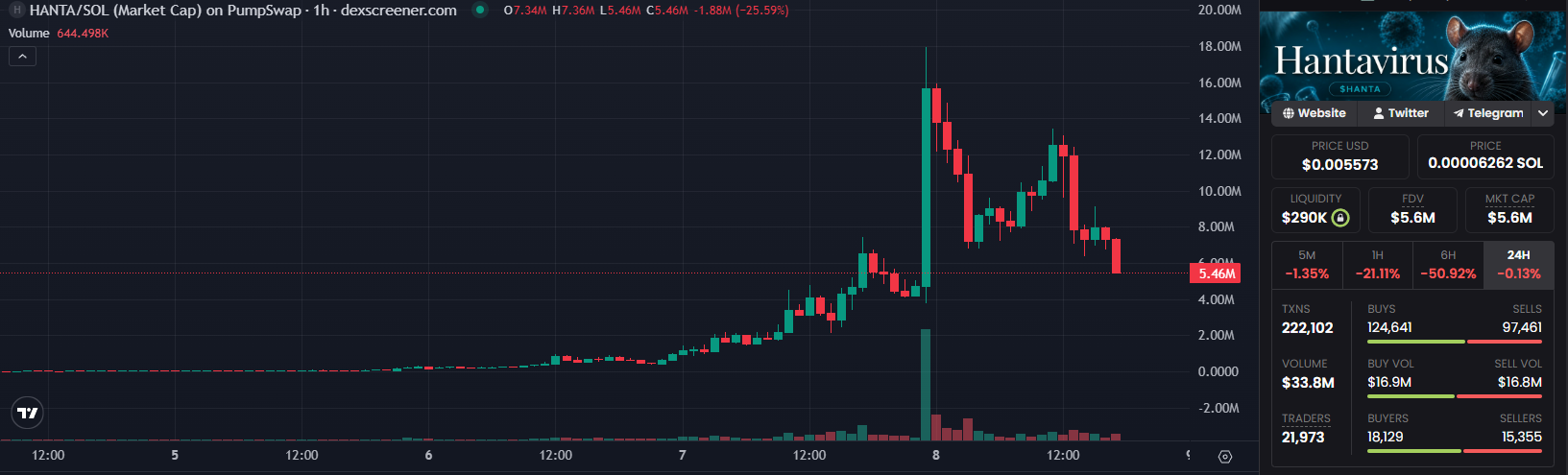
According to Alon, the token generated roughly $20 million in trading volume over several days and climbed from under a $10,000 market cap to more than $7 million earlier in the day. He also claimed that traders had nearly 24 hours to buy the token at a market cap below $500,000, which would have produced returns greater than 10x. He ended the post with a disclaimer stating that the thread was for educational purposes only.

Prediction Markets Versus Memecoin Speculation

The Polymarket contract tied to the discussion asks whether the World Health Organization will explicitly characterize Hantavirus, Hantavirus Pulmonary Syndrome, Hemorrhagic Fever with Renal Syndrome, or a related outbreak as a “pandemic” before the end of 2026.

The market briefly surged to a 33% probability on May 6 before falling back to 10% at the time of writing. Trading volume on the market stood at roughly $2.3 million.

Some traders viewed the post as a straightforward explanation of how attention flows through crypto markets. Others argued that it crossed ethical lines by framing fears surrounding a possible disease outbreak as a speculative opportunity.

Community Reaction Splits Crypto Twitter

The post quickly spread across X and generated thousands of reactions from traders, builders, and critics. One user criticized the comparison itself, writing: “out of all the good / funny decent memes on your platform, you decide to push the coin of a literal virus lol”

Another reacted more harshly: “ah yes, when there is talks of a deadly virus that would kill and ruin people’s lives lets think about how to profit”

Others defended Alon’s argument, claiming critics misunderstood the point of the thread. One response argued: “alon is saying you can bet on this going up or down just like you do on poly markets but with more opportunity and more money to be made with way less capital”

Another trader framed the situation as an experiment in market structure: “If the coin goes back down to sub 5m does that mean it's better to trade prediction market? If this goes higher does it prove a point that trenches are better than prediction markets?”

Some reactions focused less on ethics and more on the broader implications for memecoin culture. One widely shared post described the situation as “the biggest aura risk of the year” and argued that pump.fun had effectively backed itself into a corner. The user suggested that a collapse in the token would reinforce the idea that only short term scalpers profit from memecoins.

Critics also accused the platform of profiting from emotionally charged narratives without contributing anything meaningful in return. One user wrote: “This is why normies see crypto as a casino run by vultures.”

Questions About Who Actually Profited

As the discussion escalated, several analysts began examining blockchain data tied to the token’s largest winners.

Benjamin Boulin, CEO of Circular.fi, claimed that many traders lost money after entering the token following Alon’s tweet. Boulin wrote, “Hantavirus traders have already lost ~20k in 1 hour since Alon mentioned the token.”

He also warned that rapid price acceleration creates extreme slippage and arbitrage conditions that favor bots and sophisticated traders.

Another widely shared thread from onchain analyst dethective challenged the idea that ordinary retail traders generated major profits. The analysis claimed that the only six-figure profit belonged to a trading bot that executed more than 2,000 transactions on the token.

The thread also identified several wallets that allegedly purchased the token before Alon’s tweet and sold shortly after attention peaked. According to the analysis, many of the largest gains came from fresh wallets, automated trading systems, or influential accounts with large followings.

Dethective summarized the findings with a broader criticism of memecoin trading dynamics, saying, “If you're not in one of those categories, you're exit liquidity.”

The thread fueled ongoing concerns that highly speculative memecoin markets disproportionately reward insiders, bots, and early participants while most late traders absorb losses.

The market cap of the $HANTA token referenced spiked to over $17 million following Alon’s thread, but has declined over 50% in the last 6 hours and is currently trading below $6 million at the time of writing.
Screenshot (313)

Read More on SolanaFloor

Solana Coins Go Vertical as $JTO, $CARDS, and Others Enjoy Massive Breakouts
Solana Community Divided Over Drift’s Proposed Recovery Token and Q2 Relaunch

See How Easy It Is To Stake Your $SOL On Mobile

Solana Weekly Newsletter

Related News