$280M KelpDAO Exploit Forces DeFi Liquidity Crunch - Is Solana Safe?
An Ethereum-based DeFi incident is sowing chaos across crypto lending protocols
- Published:
- Edited:
April continues to be one of the darkest months in DeFi history. Just weeks after Drift Protocol lost $285M worth of customer funds to a social engineering attack, KelpDAO has suffered a devastating bridge exploit.
Over the course of the attack, malicious actors borrowed funds against artificial collateral deployed in AAVE, leaving crypto’s biggest lending protocol with over $196M worth of bad debt.
As a result, protocols across the crypto industry are suffering from a severe liquidity crunch, with depositors withdrawing funds as confidence in DeFi falters.
KelpDAO $rsETH Exploit Leaves AAVE with $196M in Bad Debt
On April 18, the KelpDAO bridge fell victim to a devastating exploit believed to have been orchestrated by North Korea’s Lazarus Group, the notorious group of state-sponsored cybercriminals responsible for the loss of an estimated $6.7B in historical attacks.
After compromising two RPC nodes and spoofing the singular verifier of KelpDAO’s LayerZero-powered bridge, attackers were able to exploit the bridge into releasing 116,500 $rsETH to the attacker's wallet.
Instead of selling $rsETH directly, the attackers deployed the funds in AAVE, borrowing $ETH against the artificial collateral and leaving Ethereum’s biggest lending market with over $196M in bad debt.
In the wake of the attack, the various DeFi parties and applications have begun pointing fingers at each other, attempting to shift blame and a ten-figure liability away from themselves. LayerZero, the infrastructure provider, argues that its protocol functioned exactly as intended and KelpDAO’s reliance on a 1/1 DVN posed a critical security flaw.
Meanwhile, KelpDAO is reportedly preparing a memo blaming LayerZero for the hack, claiming that the entity relied on default configurations and guidance from the L0 team when designing the protocol.
In response to the incident, AAVE has frozen $rsETH across its V3 and V4 protocols. While taken in the interest of user safety, purists have argued that this goes against the core tenets of DeFi.
Kamino Utilization Rates Maxxed Out
The KelpDAO exploit may be an EVM-centric incident, but lending applications across the crypto industry are now staring down the barrel of deposit flight. With lenders re-evaluating the risks associated with even the most resilient and battle-tested protocols, lending markets are finding themselves caught in a liquidity crunch.
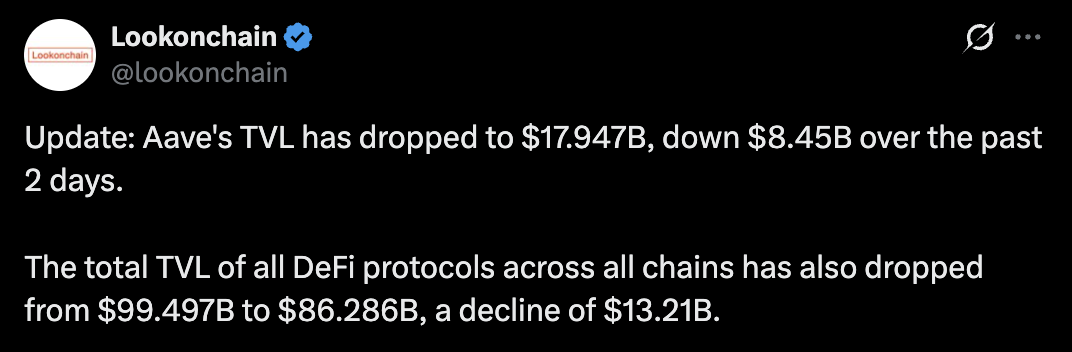
While AAVE’s TVL has plummeted by over 30% in a matter of days, utilization rates in Solana-based lending markets like Kamino are hovering near 100% in many leading markets, causing borrow rates to spike.
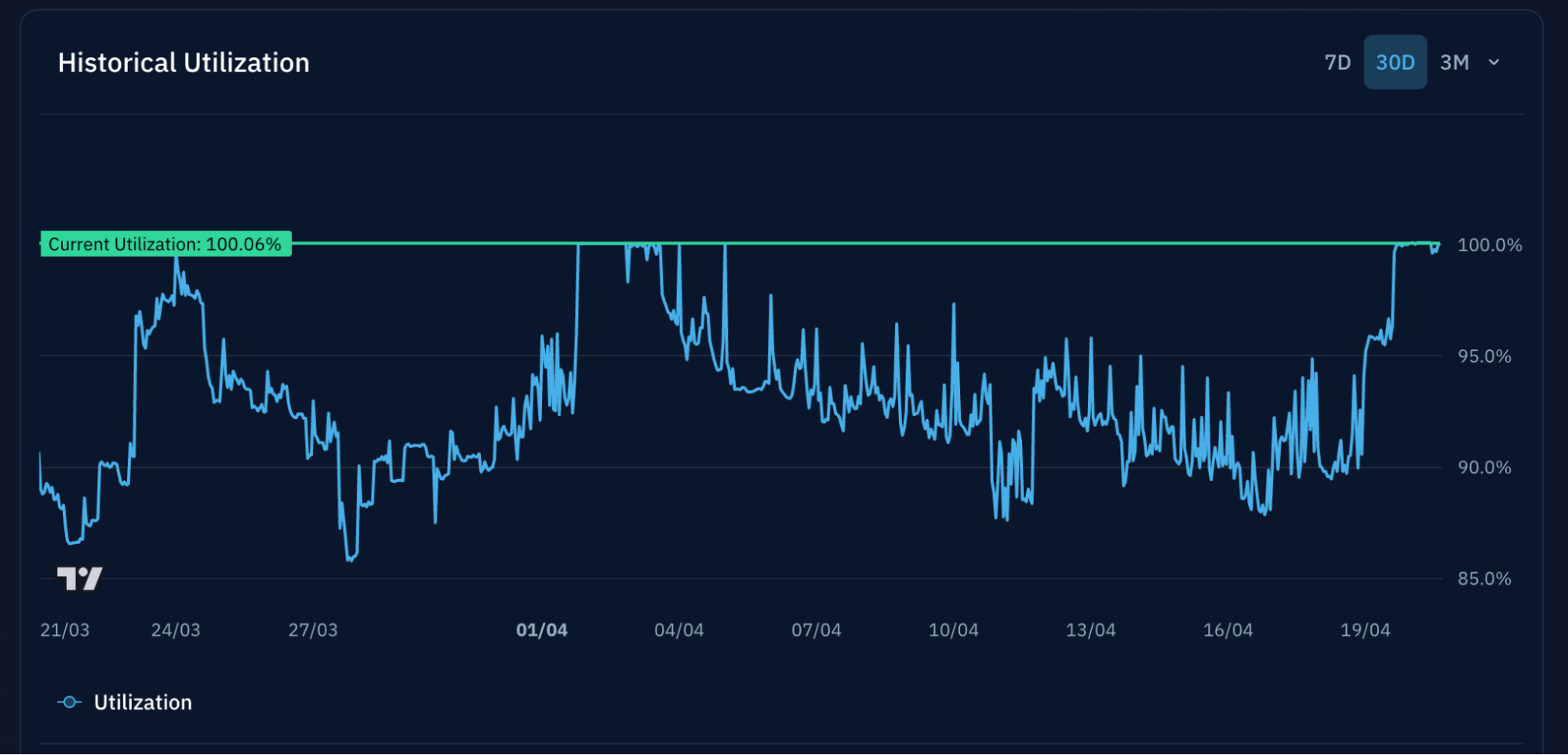
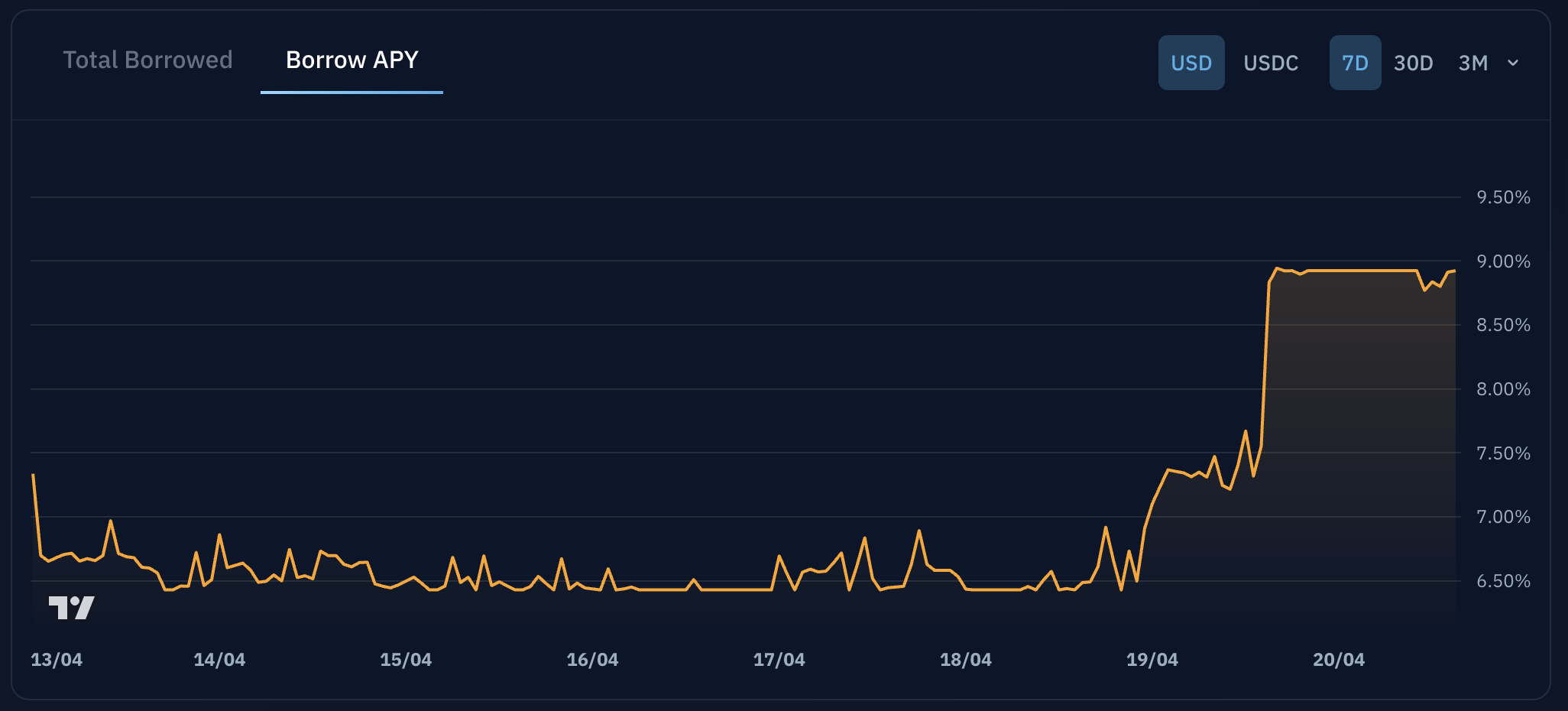
For example, $USDC borrow rates in Kamino’s $PRIME market have risen to as high as 9%, exceeding $PRIME’s base yield of 6.95% and making the looping strategies powering its growth economically unsustainable.
Borrowers now eagerly await a return of confidence and capital to DeFi lending apps, or risk facing a steady erosion of value if borrow rates continue to exceed underlying yield.
Trust in DeFi At All-Time Lows
2026 has been an exceptionally harsh year for DeFi. Between the loss of over $570M to exploits in the last three weeks alone and the perceived stagnation of DeFi creativity, users are beginning to question if DeFi isn’t simply a failed experiment. DefiLlama data suggests that April is not the 6th largest month for DeFi hacks in history, with 10 days still remaining.
Industry leaders like Moonrock Capital’s Simon Dedic argues that “the risk reward ratio of DeFi simply isn't attractive enough anymore”, while Wintermute CEO Evgeny Gaevoy admits “it feels pretty bleak for DeFi innovation at this stage.
Despite floundering sentiment, one could argue that Solana DeFi is maturing through this bear cycle. Stablecoin activity and payments flows on the network remain high when compared to other networks, with the chain recording a new all-time high in total economic activity in Q1.
Read More on SolanaFloor
Crypto markets wobble in midst of oil crisis
Solana ETFs Record $35M in Weekly Inflows as US-Iran Ceasefire Draws to a Close
Bloomberg’s James Seyffart Sits Down with SolanaFloor