ドリフト・プロトコル、2億8500万ドルの搾取:知っておくべきことすべて
何が起きたのか、どのエコシステムのアプリが影響を受けているのか、なぜ皆がサークルに腹を立てているのか。
- 公開:
Solanaベースの永久通貨取引所として人気のDrift Protocolが壊滅的なエクスプロイトの被害に遭い、ユーザーの預金を含む2億8500万ドル以上の資金が失われました。
SolanaのDeFiエコノミーの中心的な柱であるDrift Protocolのエクスプロイトは、エコシステム全体のアプリケーションやサービスに影響を与えた。数十ものサードパーティ製アプリがDrift保管庫を通じて利回りを生み出しているため、プロトコルに直接触れたことのないエコシステム参加者でさえ影響を受けた可能性がある。
Drift Protocolへの支援が殺到する中、暗号コミュニティはCircleへの混乱と失望を表明している。批評家たちは、中央集権的なステーブルコイン発行者は損害を軽減するために資金を遮断することができたが、そうしなかったと主張している。
何が起こったのか?
攻撃者はどのようにアクセスしたのか?
4月1日、高度に調整された攻撃者が、Drift Protocolのセキュリティ・カウンシルの管理者をコントロールするために、耐久性のあるノンスアカウントを経由した事前署名トランザクションを使用した。Drift Protocolによると、最初のNonce設定は3月23日に作成されたとのことで、数週間にわたって組織化された高度に洗練された作戦であったことがうかがえます。
オンチェーンデータによると、Driftは4つの耐久性のあるNonceアカウントが作成されたと主張している。そのうち2つはDrift Security Councilのメンバーに関連するもので、もう2つは攻撃者が管理するアカウントに関連するものでした。このウィンドウの間に、少なくとも2/5のマルチシグ署名者がdurable nonceアカウントに関連するトランザクションに署名した。
3月27日、Driftは安全保障理事会の計画的な移行を実行した。これは理事会メンバーの変更に伴う措置である。3日後の3月30日、更新されたマルチシグのメンバーのために新しい耐久性のあるノ ンスアカウントが作成された。
このセットアップにより、攻撃者は十分なマルチシグ承認(2/5)を効果的に得て、遅延した新奇な攻撃ベクトルを実行した。4月1日、攻撃者はトリガーを引き、保険ファンドからのテスト引き出しを開始し、その前に2つの事前署名された耐久性のあるノンス・トランザクションを実行し、管理者権限を悪意のあるアクターに移行した。
管理者権限を完全に掌握した攻撃者は、次に$CVTと呼ばれる偽資産の新しいスポット市場を初期化した。出金制限を解除し、オラクル操作によって$CVTの価値を人為的につり上げた後、攻撃者は偽の担保を担保に資金を借り入れ、貸借プール、保管庫預金、取引残高から2億8500万ドル以上を流出させた。
その後の数時間で、攻撃者は盗まれた資金の大部分をSolanaからCircleのCCTP経由でEthereumに橋渡しした。Arkham Intelによると、ウォレットは資金の大部分を$ETHにスワップしており、中央集権的なエンティティによって凍結または押収されることはない。
Driftはすべてのプロトコル機能を凍結し、侵害されたマルチシグウォレットは削除されました。Driftに入金されていない$dSOLと保険基金の資産は保護のために移動され、Driftチームは資金を回収するためにセキュリティチームと法執行機関を積極的に調整しています。
Durable Nonceとは?
昨日のハッキング以前は、Solana DeFiの大半はDurable Nonceが何なのか知らなかった。今日、Solanaの専門家たちは、Driftがこの悪用に重要な役割を果たしたと強調したこのメカニズムに対して、多くの批判を繰り広げている。
Solanaのトランザクションには必ず最近のブロックハッシュが含まれており、トランザクションが確認されなければ約60~90秒で失効する。Durable Nonceはその期限切れのブロックハッシュを特別なオンチェーンアカウントに保存された値で置き換えるため、トランザクションは無期限に有効であり続ける。
トランザクションが最終的に送信され確認されると、Nonceは自動的に変更されるため、同じトランザクションが再利用されることはない。トランザクションに複数の署名者が必要な場合、オフラインでの承認が必要な場合、あるいは通常短時間で完了しないワークフローが必要な場合に、開発者はこのツールを使用する。
しかし、Anzaの代表であるtrentdotsol氏は、この仕組みに対する典型的な嫌悪感にもかかわらず、耐久性のあるnonceは攻撃のせいにされるべきではないと主張している。
どのSolana DeFiアプリが暴露されるのか?
何年もの間、Drift ProtocolはSolana DeFiの要となってきた。悪用される前、Drift Protocolは5億5000万ドル以上のTVLを誇り、何十ものサードパーティアプリケーションがその保管庫とプールに依存して、ユーザーに利回りを提供していました。
Solana DeFiのアプリケーション全体における被害の程度はまだ明らかにされていないが、19のアプリケーションが攻撃による影響を受けたことが公式に確認されている。
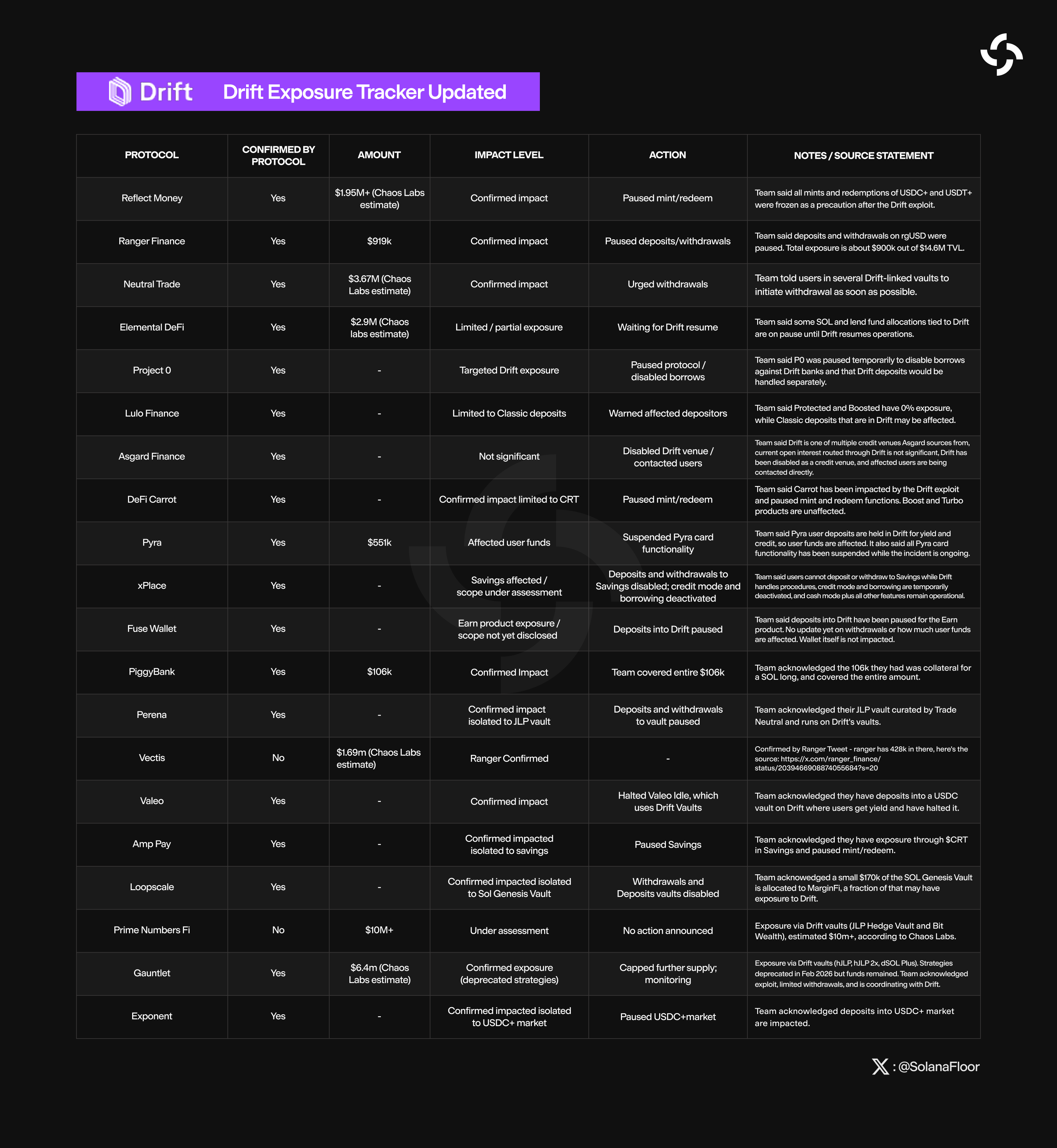
これはプロトコルの発展途上のリストです。最新の情報については、SolanaFloor ᵔ アカウントを参照してください。
攻撃者は$155M相当の$41.7Mの$JLPを清算したにもかかわらず、ジュピターは流動性トークンが原資産によって完全に裏付けされており、やりとりする上で完全に安全であることを確認しました。
Drift Validator、$dSOLに影響なし
珍しい明るい兆しとして、Drift ProtocolはDrift Validatorに賭けられた約2億3,000万ドル相当の290万ドルの$SOLが安全であることを確認しました。プロトコルのサンクタム発行のLST(Liquid Staking Token)である$dSOLもまた、攻撃の影響を受けていない。
サークルの無関心に失望した暗号コミュニティ
2022年以来最大のSolana-DeFi攻撃のさなか、ネットワーク参加者は、チェーン最大の中央集権的オペレーターの1つの無策に不満を表明している。
盗まれた資金を傍受する力を持っているにもかかわらず、$USDCの背後にある安定したコインの発行者であるCircleは、悪用の期間中、完全に不活発なままだった。
批評家たちは、Circleの怠慢が攻撃者にDeFiコミュニティを無制限に略奪することを許し、危機の際のエコシステムに対するサポートの欠如をまざまざと見せつけたと主張している。
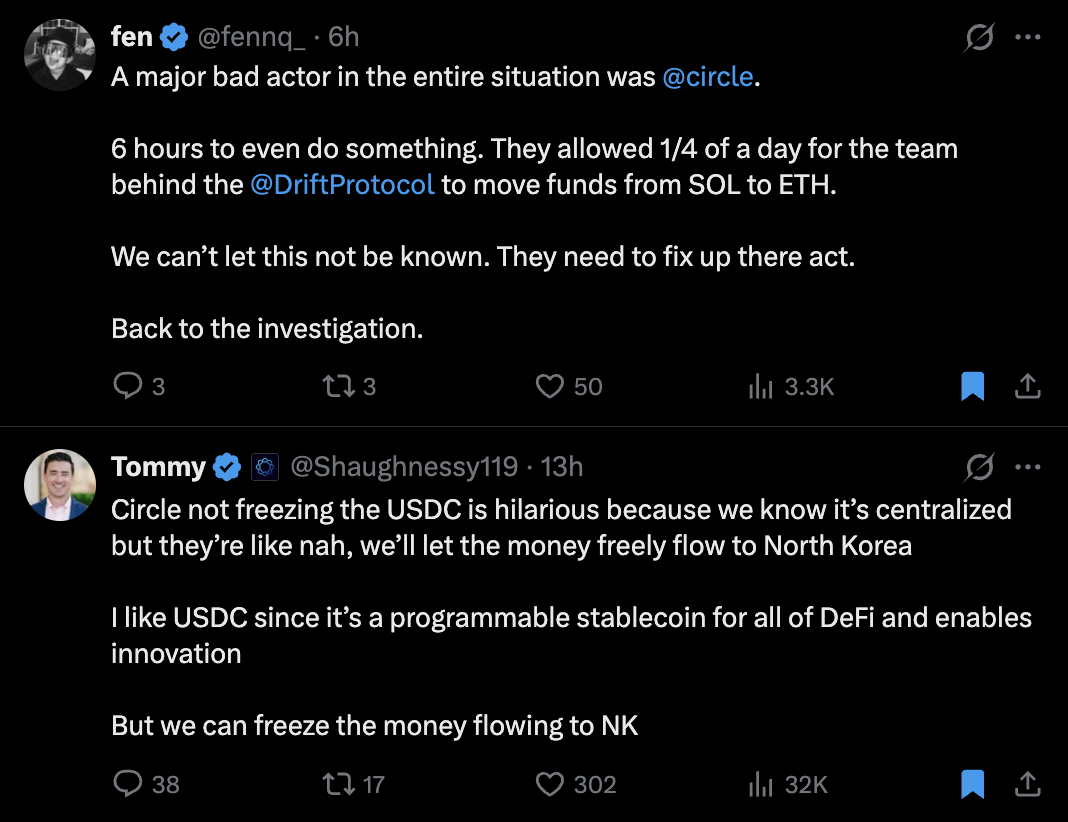
Circleはまだ公式声明を発表していないが、オンチェーンの記録によると、同社は18:05 UTCに500M$USDCを鋳造しており、発行者がエクスプロイトの最中に実際にアクティブであったことを示唆している。
ヒューマンエラーは依然としてブロックチェーンのセキュリティにとって最大のリスク
Drift Protocolの悪用は、歴史を通じて多くの大規模なセキュリティインシデントで繰り返されてきたテーマを補強している。プロトコルの基礎となる技術、スマートコントラクト、プログラムは、厳密な戦闘テスト、監査、安全性を確保することができるが、ヒューマンエラーは多くの場合、チェーンの最も弱いリンクである。
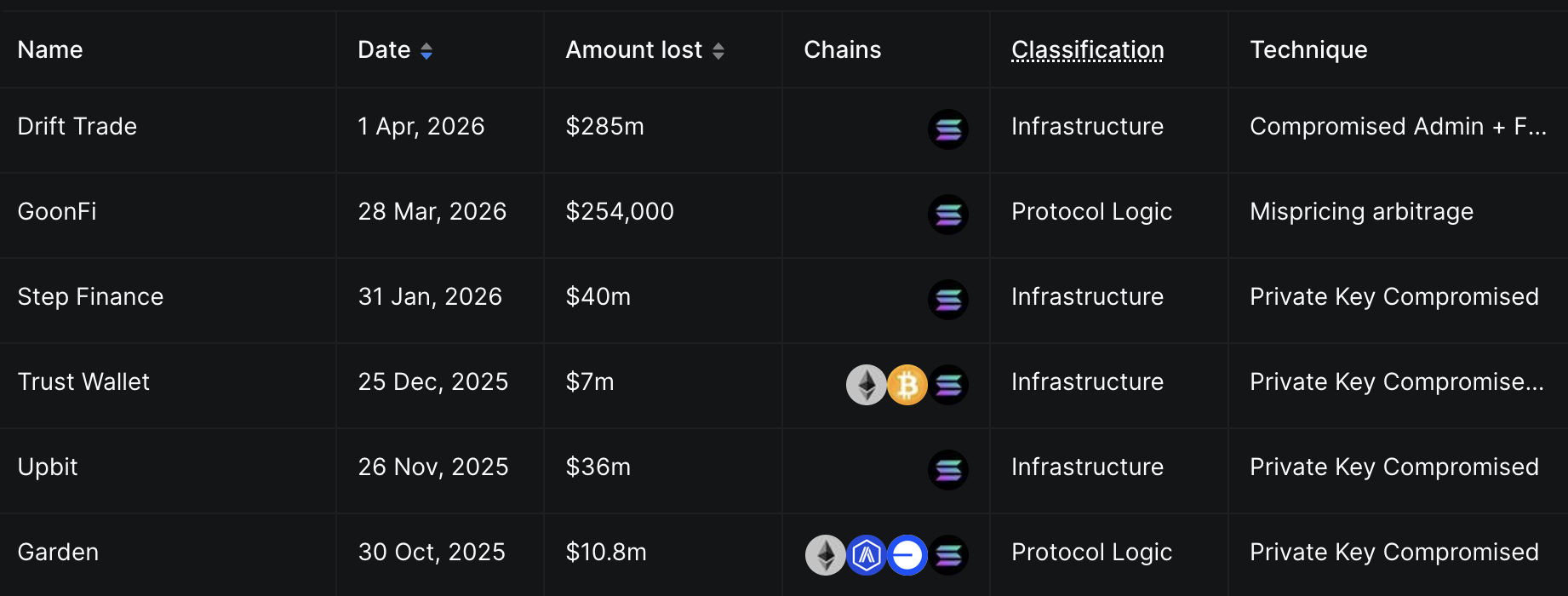
DefiLlamaのデータによると、Solanaの最近のセキュリティ悪用の大部分は、漏洩した秘密鍵に起因しており、多くの場合、ソーシャルエンジニアリングやその他の運用上のセキュリティ違反が原因となっている。
Driftプロトコルの悪用を受けて、Solana全体のエコシステム参加者はDeFiチームに対し、ネットワークが同様の事象に見舞われることがないよう、自らのシステムを再評価するよう促している。
これは発展途上の話であり、ライブアップデートについては、SolanaFloorのアカウントを参照してください。
ソラナフロアの続きを読む
機関投資家規模のマーケットメーカーがソラーナを選択
SBIホールディングスのB2C2がSolanaを主要ステーブルコイン決済レイヤーとして採用
ドリフトプロトコルの悪用:何が起こったのか?