La Ley CLARITY acaba de ser aprobada por el Comité Bancario del Senado. ¿Qué va a pasar ahora?
A pesar de los grandes avances, el proyecto de ley aún tiene un largo camino por recorrer.
- Publicado:
- Editado:
La Ley de Claridad del Mercado de Activos Digitales ha sido aprobada hoy por el Comité Bancario del Senado por 15 votos a favor y 9 en contra, lo que supone el avance más importante de la criptolegislación que jamás haya alcanzado esta fase en el Congreso.
¿Qué se dijo hoy durante la revisión de CLARITY y cuál es el siguiente paso para que el proyecto se convierta en ley?
Lo que ocurrió en la revisión del 14 de mayo
La senadora Elizabeth Warren lideró la oposición demócrata desde el primer momento, calificando el proyecto de ley de "simplemente no estar listo" y argumentando que el Congreso debería estar limitando los tipos de interés de las tarjetas de crédito en lugar de redactar normas para la industria de las criptomonedas. Todas las enmiendas demócratas presentadas durante la sesión fueron rechazadas por el presidente Tim Scott por motivos de procedimiento.
Mientras tanto, la cuestión de la ética, la principal exigencia de los demócratas de que el proyecto de ley incluya disposiciones sobre conflictos de intereses dirigidas a los funcionarios electos que se benefician de las criptomonedas, sigue sin resolverse.
El Comité Bancario no tiene jurisdicción sobre ese lenguaje, lo que significa que no se puede añadir en esta etapa y debe ser negociado por separado antes de una votación en el pleno.
Qué hace el proyecto de ley
La Ley CLARITY traza una línea legal entre los productos digitales y los valores, una distinción crítica que ha sido objeto de litigio en los tribunales y adivinada por los constructores de toda la industria durante la mayor parte de una década. La mayoría de los tokens nativos de blockchain se sitúan en el lado de las materias primas, lo que otorga a la CFTC jurisdicción exclusiva sobre sus mercados al contado.
La SEC mantiene la supervisión de los activos de los contratos de inversión, pero su alcance sobre las criptomonedas se reducirá significativamente. A partir de ahora, las bolsas, los corredores y los agentes de materias primas digitales se registrarán en la CFTC y responderán ante ella.
Mientras tanto, DeFi obtiene protección legal explícita. Las actividades que no implican el control de los fondos de los clientes, como la gestión de validadores y el suministro de infraestructuras no custodiadas, quedan totalmente excluidas de los requisitos de registro del proyecto de ley.
En cuanto a las stablecoins, se prohíbe el rendimiento pasivo. Sin embargo, no todo está perdido para los cripto-nativos. Mientras que el rendimiento pasivo está estrictamente fuera de la mesa, las recompensas basadas en la actividad todavía están en juego, lo que sugiere que las transacciones, el volumen de operaciones y el uso de la plataforma todavía pueden estimular el flujo de efectivo para los titulares de stablecoin bajo el compromiso Tillis-Alsobrooks que salvó el proyecto de ley en mayo.
¿Qué ocurrirá a continuación?
La votación de hoy envía la Ley CLARITY al pleno del Senado. Sin embargo, antes de que esto pueda suceder, primero tiene que fusionarse con el proyecto de ley del Comité de Agricultura del Senado, la Ley de Intermediarios de Productos Básicos Digitales, que fue aprobada por el comité en una votación de 12-11 en enero.
Una vez fusionados, los líderes del Senado tienen que conseguir 60 votos en el pleno. Eso significa que al menos siete demócratas, además del único partidario de hoy, el senador Rubén Gallego, de Arizona, tienen que sumarse.
Aunque pueda parecer una tarea difícil, ya se ha conseguido convencer al pleno para que se una al bando pro criptografía. El año pasado, el proyecto de ley GENIUS sobre el stablecoin fue aprobado por el pleno del Senado por 68 votos a favor y 30 en contra, con 18 demócratas.
Si el Senado lo aprueba, el proyecto de ley se dirigirá a la reconciliación con la Cámara, que aprobó su propia versión de la legislación el pasado otoño. La Casa Blanca ha fijado el 4 de julio como objetivo para la firma presidencial, lo que exige que el Senado y la Cámara de Representantes actúen con rapidez.
El problema ético no resuelto de CLARITY
La principal amenaza para el futuro de la Ley CLARITY es el conflicto de intereses. Actualmente, los demócratas se mantienen firmes en que no votarán a favor de la aprobación final sin un lenguaje ético diseñado para evitar que los funcionarios electos se beneficien de las criptomonedas mientras están en el cargo.
Sin suficientes controles, la industria corre el riesgo de enfrentarse a un escrutinio continuo sobre las debacles existentes, como la larga y accidentada historia de la familia Trump con sus diversos esfuerzos criptográficos.
Mientras tanto, la Casa Blanca se ha mostrado igualmente firme en la otra dirección. El asesor Patrick Witt dijo en Consensus Miami que la administración aceptará normas que se apliquen "en todos los ámbitos, desde el presidente hasta el nuevo becario en el Capitolio", pero rechazará cualquier cosa que singularice a una oficina o titular en particular.
¿Qué significa esto para Solana?
Según CLARITY, es probable que la mayoría de los tokens nativos de Solana se califiquen como mercancías digitales en el marco del proyecto de ley, lo que significa jurisdicción de la CFTC en lugar de la SEC.
Se espera que los protocolos que operan infraestructuras no custodiadas a través de la red obtengan protección legal directa bajo la exención DeFi, dando a los inversores la claridad regulatoria que han estado esperando durante muchos años.
Como era de esperar, los mercados de criptomonedas subieron con fuerza tras el anuncio, con una subida del 3,4% en $BTC. Las empresas públicas basadas en cripto también disfrutaron de movimientos impresionantes, con Coinbase (COIN), Galaxy Digital (GLXY), y Circle (CRCL) ganando ~6% en la sesión.
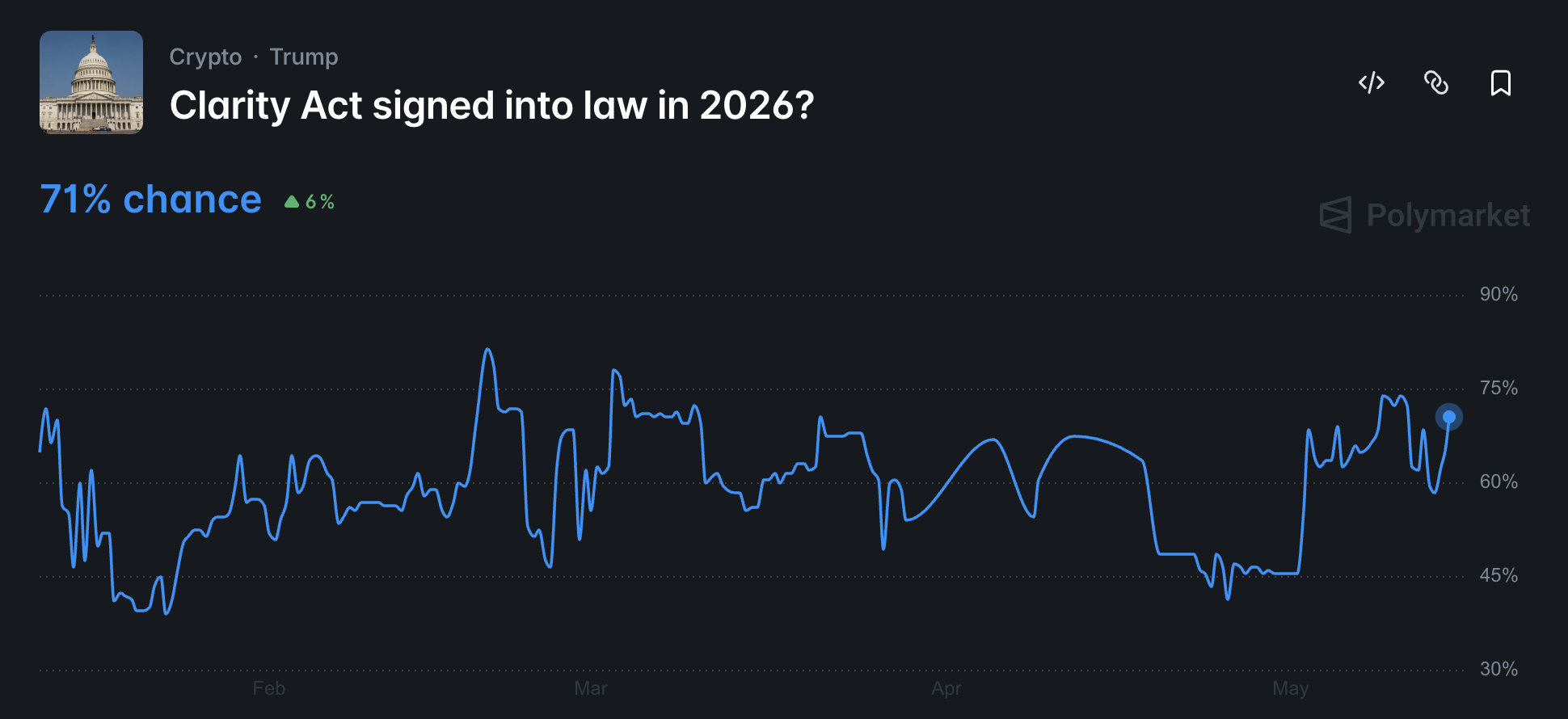
Todas las miradas se dirigen ahora al pleno del Senado, aunque las posibilidades de que la ley CLARITY acabe aprobándose parecen más favorables que nunca. Los datos de Polymarket otorgan actualmente a la Ley CLARITY un 71% de probabilidades de convertirse en ley antes de finales de año, lo que sugiere una creciente convicción entre los participantes del mercado.
Más información en SolanaFloor
Los inversores institucionales tienen manos de diamante
Los ETF de Solana registran los mayores flujos de entrada semanales en lo que va de año
El sector de la privacidad de Solana llama la atención