The CFTC is Speed-Running Perps Regulation - Will Incoming Rules Stick?
Perps slated to be biggest benefactors of incoming regulations
- Published:
U.S. Federal Agencies are doing everything in their power to establish regulatory oversight and frameworks for crypto markets and digital assets.
Mere weeks after the CLARITY Act’s rejection, CFTC Chair Mike Selig has delivered an advance notice for the proposed rulemaking on new crypto regulations. According to the text, one of the agency’s primary motivations is giving U.S. citizens a clear and regulated path towards engaging with leveraged markets.
Industry experts are celebrating the initiative shown by the CFTC and the SEC following CLARITY’s rejection, but with the Democrats expected to win the Senate in the upcoming midterm elections, can the government’s incoming regulations stick?
CFTC Outlines Prospective Crypto Ruling
It seems crypto theatrics have found their way into the federal agencies of the United States. Accompanied by a hype video featuring cryptopunk-esque characters, CFTC Chair Mike Selig has unveiled a 108-page advance notice outlining two companion frameworks: Regulation Crypto Asset Transactions (Regulation CTX) and Regulation Crypto Asset Markets (Regulation CAM).
While the SEC has been working hard over the years to lay frameworks for digital asset investing, the CTFC’s latest notice focuses primarily on leveraged contracts, like perpetual futures.
Regulation CTX
Regulation CTX defines which crypto trades fall under the CFTC's jurisdiction in the first place.
The CFTC's preliminary reading is rather broad. A trade is captured the moment a platform offers leverage, even if the customer declines it and pays in full. That offer can sit in onboarding documents, exchange terms, or margin agreements, and can cover every product on a platform at once.
Regulation CTX also tackles "actual delivery," the main exit from CFTC oversight. Fully paid trades that only exist as a book entry on an exchange's internal ledger would stay under the agency's watch. To qualify as delivered, the CFTC suggests customers may need to hold the private keys to the wallet containing their assets.
Regulation CAM
Regulation CAM is the practical half of the framework. It creates a new, slimmed-down category of CFTC-registered exchange called a crypto asset market (CAM), tailored to platforms that only list crypto.
Unlike a traditional futures exchange, a CAM would list the crypto asset itself rather than a contract referencing it. Exchanges could also keep the integrated model crypto has grown up with, running trading, clearing, and custody under one corporate roof.
Every customer order would flow through a futures commission merchant (FCM), bringing segregated accounts and anti-money laundering obligations with it. Leverage could only come from FCMs or FCM-sponsored banks, with each financing arrangement listed in the exchange's rulebook. Exchanges holding customer assets would also face proof of reserves requirements.
Notably, the notice sets no leverage caps. Instead, the CFTC asks whether it should prescribe margin levels, restrict thinly traded tokens from use as collateral, or permit rehypothecation of customer assets.
What Changes for Traders?
Administrative red tape aside, the CFTC’s new rulings would bring U.S.-based traders closer to engaging in perpetual futures markets.
Unleveraged spot trading in assets like $BTC and $SOL stays with the states. The CFTC lacks authority over plain spot markets, and the notice confirms exchanges can keep operating under state licenses if they avoid offering leverage.
With the proposed rulings now public, the CFTC has opened a 60-day comment period, giving experts the opportunity to weigh in on the framework and suggest any potential changes.
CLARITY’s Failure “Was a Blessing”
The CLARITY Act collapsed on September 15, falling 49-50 in a procedural vote that needed 60 to advance. Democrats objected to weak ethics provisions covering President Trump's crypto interests, while Republicans Susan Collins, Josh Hawley, and Jerry Moran also voted no.
Industry leaders pivoted almost immediately. Ripple CEO Brad Garlinghouse asserted "the SEC, under Chair Atkins, and the CFTC, under Chair Selig, will continue to work hard to issue rules."
Meanwhile, Bitwise CIO Matt Hougan claims that CLARITY’s failure actually enables more progressive crypto regulation. In a recent memo Hougan called CLARITY’s failure a “blessing in disguise.”
According to Hougan, CLARITY would have banned stablecoin rewards on exchanges and opened a national license to traditional finance competitors, compromises the industry no longer has to swallow. These sentiments have been echoed by Solana ecosystem leaders, with the Solana Foundation’s Chase Barker reinforcing the belief that CLARITY failure was a blessing.
The regulators have delivered. On August 18, the SEC proposed Regulation Crypto Assets, a conditional safe harbor allowing tokens to trade freely in secondary markets once they separate from their issuer's promises. The CFTC's notice explicitly positions Regulation CAM as the complementary framework for those tokens.
Democrats Expected to Win the Senate in U.S. Midterms
While CLARITY’s failure, and the consequent frameworks rolled out by the SEC and the CFTC, are undoubtedly bullish for the industry as a whole, they do come with a critical caveat. Regulations pushed through at an agency level aren’t as sticky as those that make it through the Senate, and a new administration could start unwinding the rulings if the Democrats win in 2028.
In the meantime, the current pro-crypto administration is racing to lay as many building blocks as they can in the remaining time left to them. The GENIUS Act is already law, the SEC's safe harbor is out for comment, and the CFTC is taking steps to bring perps to the U.S. with apparent haste.
The argument from crypto's backers is that by 2028, too much will be built to undo. Registered venues, customer accounts, and onshore liquidity would all need to be dismantled through the same slow notice-and-comment process the agencies are using now.
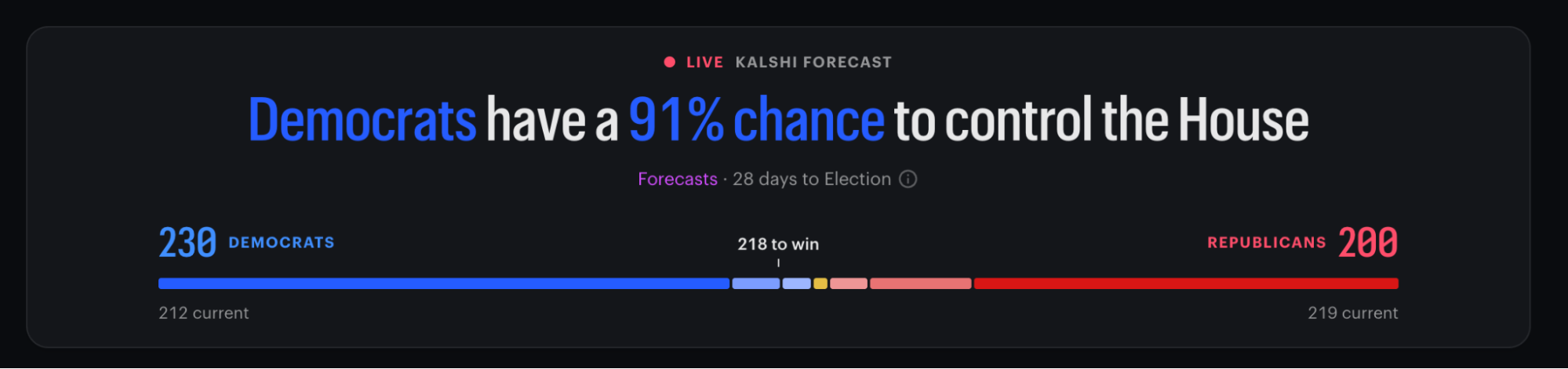
Even though the Democrats are expected to take both the House and the Senate in the upcoming midterms, there’s little they can do to slow the crypto’s progress. Overturning newly-laid rules requires the president's signature, and Trump has proven himself a staunch ally of crypto in the U.S. A Democratic majority can still hinder crypto regulation progress through oversight hearings, appropriations riders, and control over the confirmation of future commissioners, but the sitting admin effectively holds the cards from now until 2029.
Read More on SolanaFloor
Solana’s Perps Race is Heating Up
Imperial Raises $1.5M in Seed Round, Bringing 7x Deeper Liquidity to Solana Perps Market
Matt Hougan Joins The Big Picture