SIMD-0550 & SIMD-0553: Everything You Need to Know About This Week’s $SOL Tokenomics Votes
Solana is one step closer to reduced inflation and increased token burns
- Published:
- Edited:
For years, $SOL holders have expressed concerns and frustrations over the network’s issuance rate.
At the current inflation rate of 3.715%, over ~23.4M $SOL (worth ~$1.56B), will be distributed among stakers over the next year, a figure ecosystem leaders argue is counter-productive to the needs of the network.
Fortunately for disgruntled $SOL holders, the network is set to vote on not one, but two critical governance proposals this week designed to resolve Solana’s tokenomics: SIMD-0550, and SIMD-0553.
Voting for SIMD-0550 and SIMD-0553 to Open This Week
Nine months after Helius engineer _lostin_ first floated SIMD-0411, $SOL holders are finally able to actionably express their view on $SOL tokenomics. Alongside votes for the recently renamed disinflation proposal, SIMD-0550, $SOL stakers will also be able to vote on SIMD-0553, which aims to introduce a resource-based token burn mechanic.
Early votes are expected to go live today, on August 3rd. Consistent with Solana’s governance mechanics, proposals that receive support from at least 15% of stake are progressed to a final vote, where they are ultimately approved or rejected by the wider Solana ecosystem.
Unlike previous issuance-based proposals, like the infamously polarizing SIMD-0228, both SIMD-0550 and SIMD-0553 are expected to pass with flying colors. Both proposals have been met with resounding public support from all corners of the ecosystem, with the vast majority of network participants eager to see productive changes in $SOL tokenomics.
What can $SOL holders expect from each proposal?
SIMD-0550: Reduce Inflation
Authored by Helius engineer _lostin_, SIMD-0550 is the formal successor to SIMD-0411, a proposal originally drafted in November 2025, and the spiritual successor to SIMD-0228. Where SIMD-0228 was divisive due to its complexity, SIMD-0550 is simple, both from a public understanding and a technical implementation.
SIMD-0550 promises to double Solana’s disinflation rate from 15% per year to 30% per year, effectively halving the time it will take for the network to reach its terminal inflation rate of 1.5%.
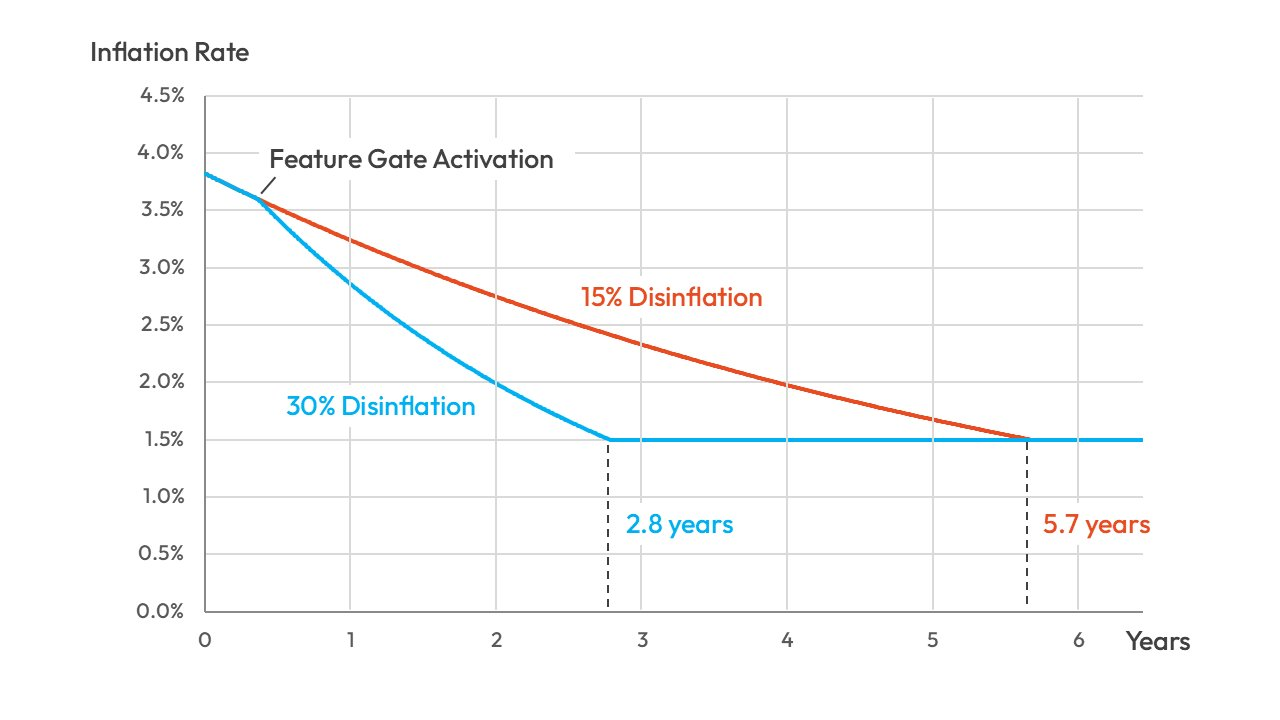
According to Helius’ 0xIcihgo, SIMD-0550 implementation reduces the time to terminal inflation by ~3 years, saving an estimated $1.5B in $SOL emissions. Reception to the proposal has been overwhelmingly positive, earning the seal of approval of Solana Labs founder Anatoly Yakovenko.
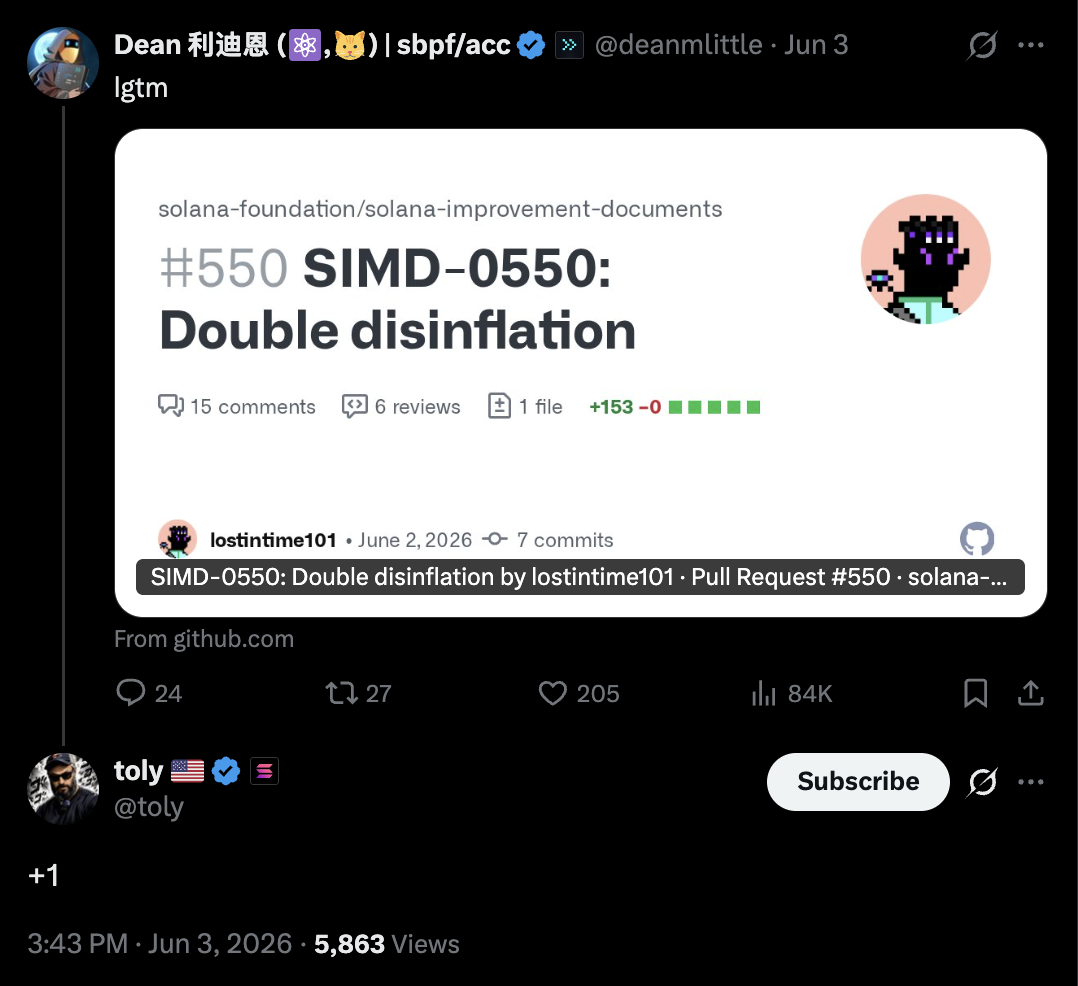
If approved, SIMD-0550 is expected to have a positive impact on $SOL price action. Advocates argue that reduced emissions will lead to reduced sell pressure from validator operators, who often need to liquidate rewards to meet operational costs.
SIMD-0553: Increase $SOL Burn
Where SIMD-0550 is a simple rate-change designed to bring down inflation, SIMD-0553 is a more complex and ambitious proposal. Initially proposed as SIMD-0547, the document was renumbered at formalization, and is now referred to as SIMD-0553.
Authored by Temporal cavemanloverboy, the same engineer who single-handedly orchestrated a 100k-TPS spike of activity on the Solana Mainnet, SIMD-0553 seeks to introduce a resource-base fee burn. If approved, SIMD-0553 would programmatically remove $SOL tokens from circulation based on how much compute they consume.
Currently, Solana transaction costs are calculated based on several variables, including CU (compute unit) consumption, data load, and write locks. Under SIMD-0550, the network would add a base fee to every transaction, which scales based on its complexity.
Specifically, SIMD-0553 recommends charging and burning 0.1 lamport (one-billionth a $SOL) per cost unit requested. Effectively, the more complex the transaction, the higher the burn rate.

Critically, cavemanloverboy has asserted that SIMD-0553 will have a limited impact on non compute-intensive transactions, like market maker updates and validator voting costs, ensuring Solana maintains its competitive advantage for HFT.
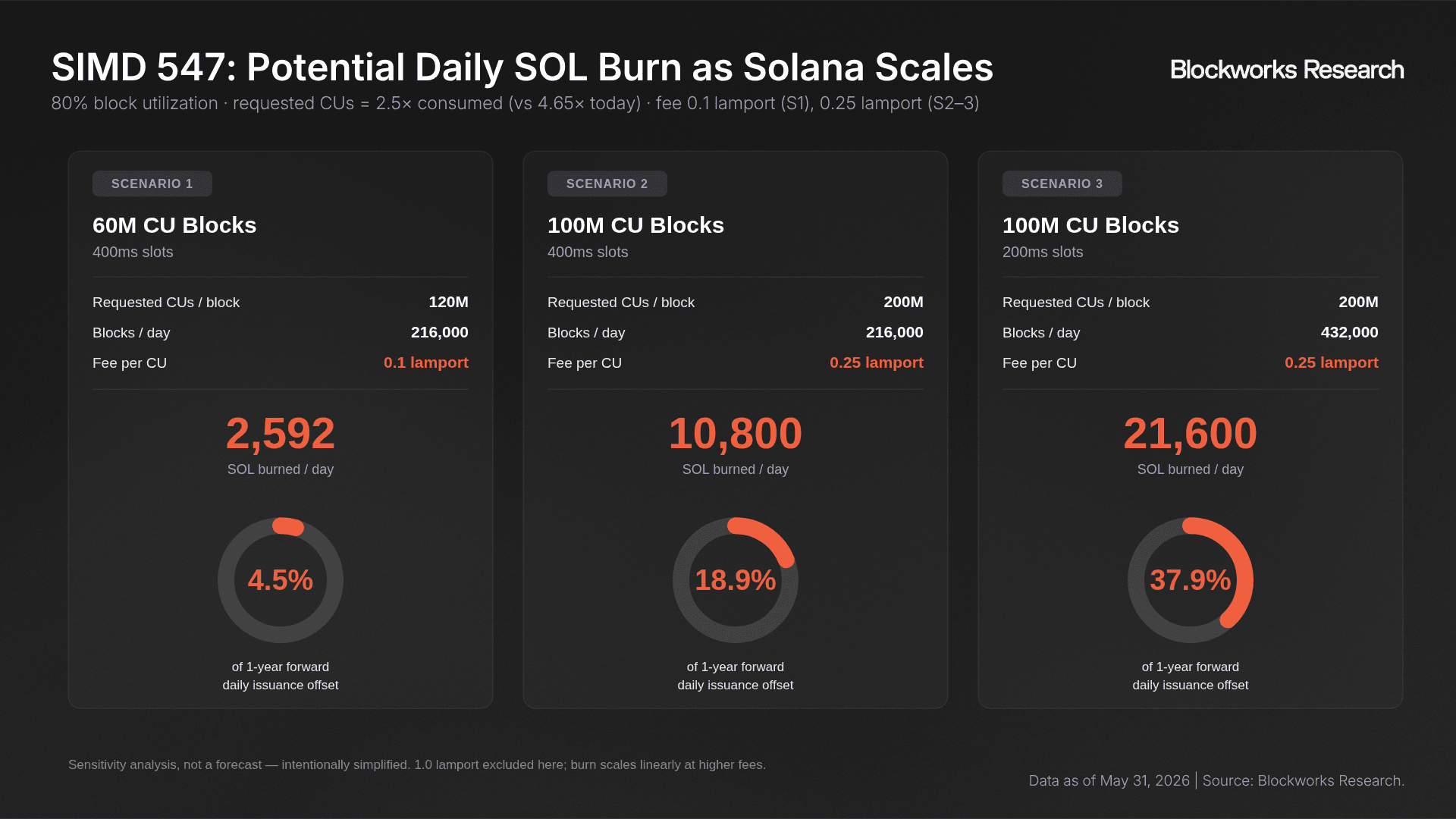
Early estimates from various sources suggest that SIMD-0553 could increase Solana’s burn rate from anywhere between 2592-21,600 $SOL per day.
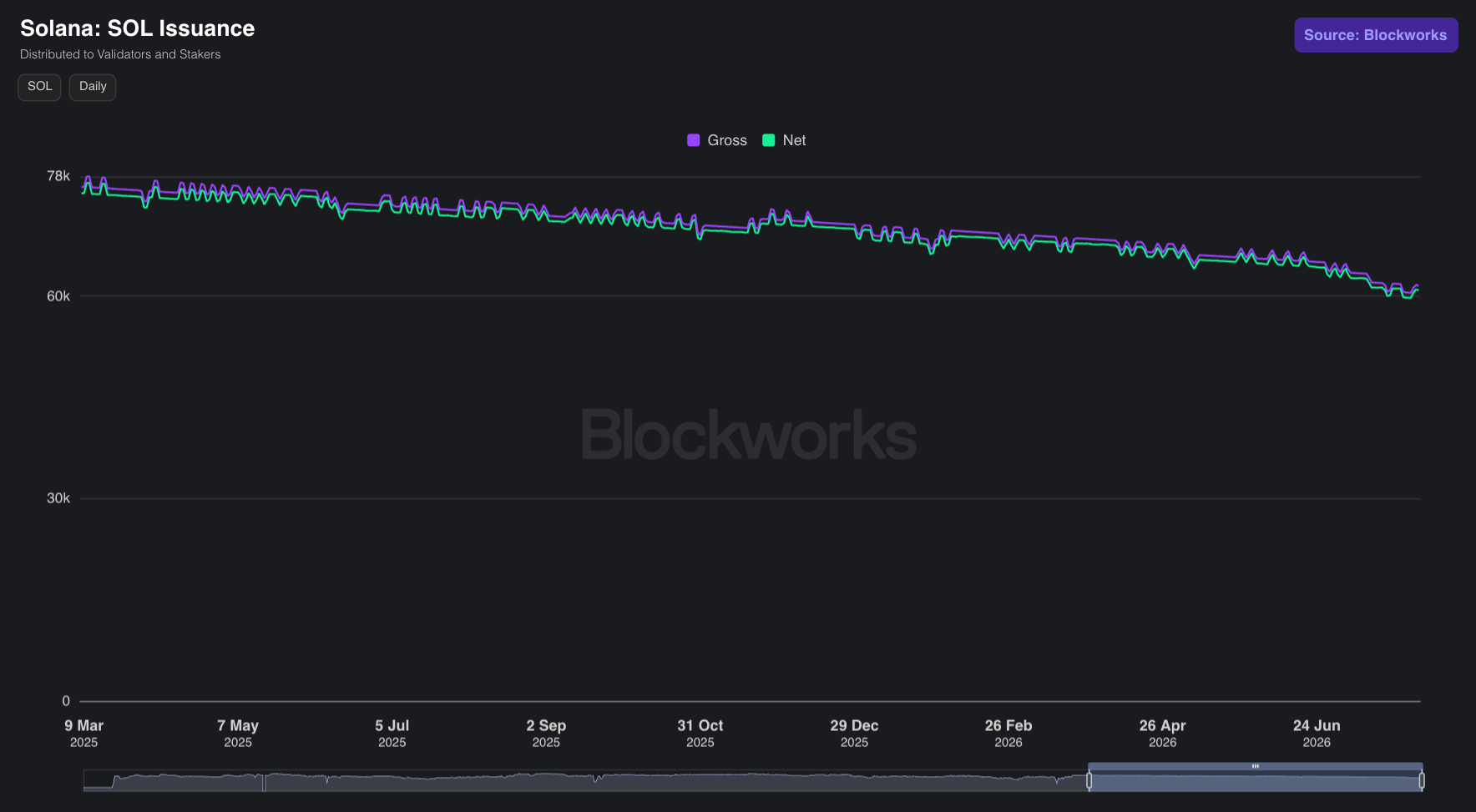
While implementing a resource-based burn mechanism is encouraged for $SOL scarcity and value accrual, the token is still far from net-deflationary. Blockworks data suggests that, currently, around 62k $SOL enters circulation via issuance everyday.
However, it’s important to note that this data is drawn from Solana’s existing network activity. At a fundamental level, upcoming technical improvements like Alpenglow, Agave 4.2, and a recent raise on the network’s block limit all facilitate greater scalability and onchain app diversity, which may accelerate resource-based burn rates in the future.
Read More on SolanaFloor
Auto credit loans hit Solana
Hastra Launches $AUTO, Bringing $1.68T Auto Credit Market to Solana DeFi
Are Solana’s Prediction Markets About to Break Out?