SEC дала DeFi Apps зеленый свет в заявлении о регистрации брокера-дилера
Проект Crypto продолжает реализацию своего амбициозного замысла
- Опубликовано:
SEC продолжает расчищать путь для блокчейн-инноваций в США, воплощая в жизнь концепцию, изложенную в "Проекте крипто" Пола Эткина .
После того как всего месяц назад была разработана прогрессивная таксономия криптовалют, Отдел торговли и рынков SEC сделал знаковое заявление о том, что операторам DeFi фронтендов и кошельков, возможно, не нужно регистрироваться в качестве брокеров-дилеров.
Благодаря новой таксономии, более совершенной структуре регулирования и согласованию действий оппонентов в ходе переговоров по CLARITY Act, США быстро становятся лидером в области криптовалютного законодательства.
Фронтенды DeFi не являются брокерскими дилерами
13 апреля Комиссия по ценным бумагам и биржам США (SEC) опубликовала заявление сотрудников, в котором изложила требования к регистрации брокеров-дилеров для приложений, используемых для совершения сделок с ценными бумагами криптоактивов в среде ончейн.
Ранее, согласно разделу 15(a) Закона о биржах ценных бумаг от 1934 года, любое лицо, "осуществляющее операции с ценными бумагами за счет других лиц", должно было зарегистрироваться в качестве "брокера-дилера". В течение многих лет это постановление нависало над DeFi приложениями и провайдерами кошельков, предполагая, что они могут быть подвержены тем же требованиям, что и их коллеги из TradFi.
Новое постановление Комиссии по ценным бумагам и биржам США (SEC), ставшее большой победой для экономики DeFi, предлагает гораздо более четкие руководящие принципы. Согласно заявлению агентства, фронтэнды приложений, расширения браузеров и программные кошельки, предназначенные для взаимодействия с блокчейном, теперь классифицируются как "покрытые пользовательские интерфейсы" и могут работать без регистрации в качестве брокера-дилера, если они остаются самоокупаемыми, используют фиксированную плату и не дают инвестиционных советов.
Прогрессивное решение SEC было незамедлительно отмечено широким криптосообществом. Глава отдела политики и главный юрисконсульт A16z назвал этот шаг "огромной победой для криптовалют", а Аманда Туминелли из образовательного фонда DeFi описала его как "тяжелый день для привратников и защитников рвов" и "хороший день для строителей"
Между тем, некоторые заинтересованные стороны использовали это объявление, чтобы попытаться привлечь внимание SEC к текущей деятельности принадлежащей семье Трампа компании World Liberty Financial, которая, по мнению критиков, может представлять системный риск для DeFi.
Законодательство США о криптовалютах еще никогда не выглядело лучше
SEC, безусловно, изменила свое отношение к криптовалютам. После долгих лет принудительного регулирования под железным кулаком Гэри Генслера председатель SEC Пол Аткинс наверстывает упущенное.
С момента объявления "Проекта крипто" в августе 2025 года SEC до сих пор выполняла свое обещание сделать Соединенные Штаты "криптостолицей мира". В сентябре SEC выпустила первое в своем роде письмо "Бездействие" для DoubleZero, фактически заявив, что экономические потоки, связанные с протоколами на основе DePIN, не будут классифицироваться как операции с ценными бумагами.
В марте SEC и CFTC выпустили совместную таксономию криптоактивов, официально классифицировав $SOL, $BTC и $ETH как цифровые товары и введя систему из пяти пунктов, которая наконец-то провела четкую границу между криптовалютными ценными бумагами и всем остальным. Кроме того, стакинг и airdrops были явно исключены из сферы правоприменения в отношении ценных бумаг.
Совсем недавно CFTC также предоставила Phantom освобождение от ответственности, гарантировав, что поставщик кошельков не обязан регистрироваться в качестве представляющего брокера при подключении пользователей к регулируемым рынкам.
Лидеры движутся к принятию закона CLARITY
Заявление SEC прозвучало на фоне возобновления давления со стороны политиков с целью достижения договоренностей по оставшимся переговорам о CLARITY Act. 10 апреля генеральный директор Coinbase Брайан Армстронг, один из тех, кто громче всех выступал против некоторых аспектов закона, выразил желание добиться его подписания.
Для криптовалютных компаний по всей территории США подписание закона CLARITY Act - дело не терпящее отлагательств. Учитывая вероятность того, что Дональд Трамп и Республиканская партия проиграют промежуточные выборы в США в конце этого года, сторонники криптовалют чувствуют, что времени на принятие законопроекта в Конгрессе может не хватить.
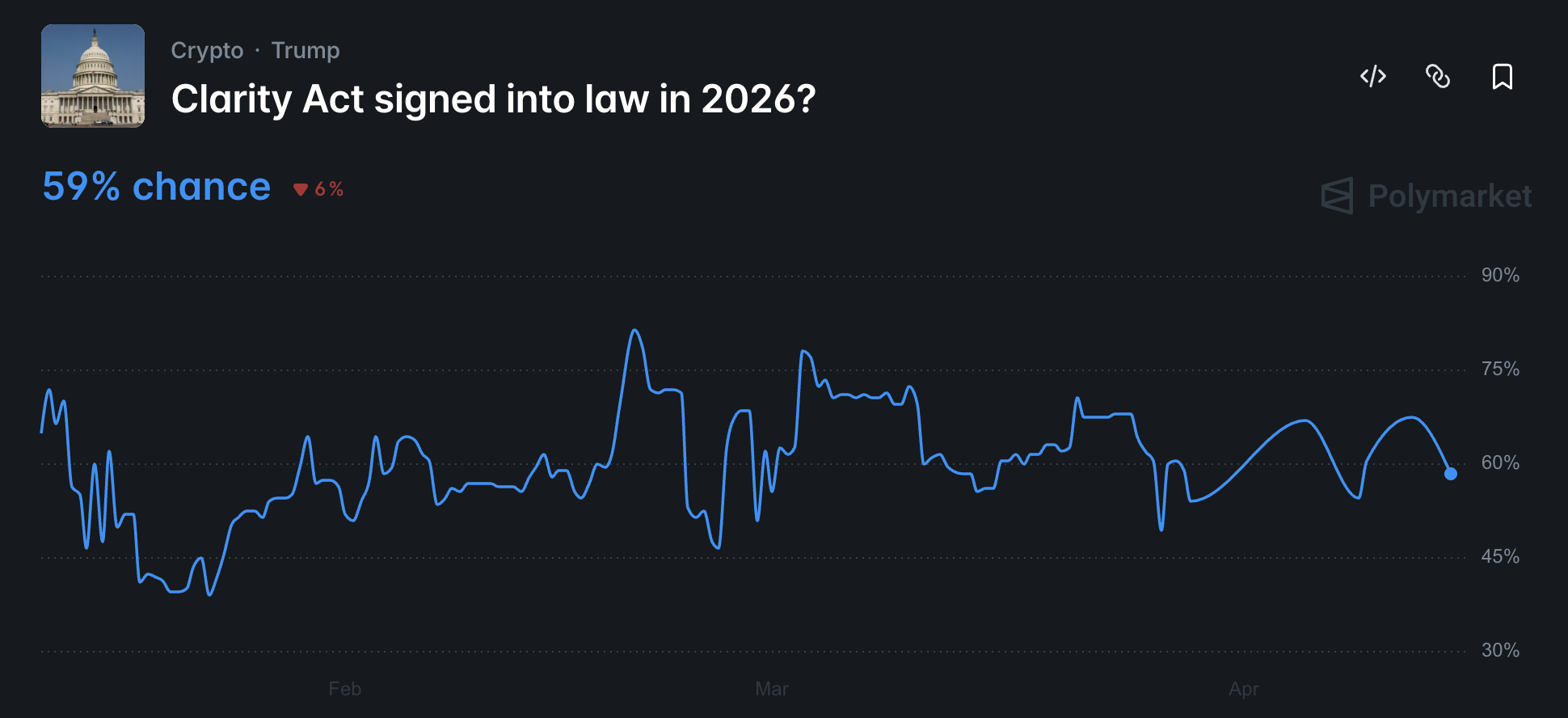
Согласно данным Polymarket, вероятность того, что закон CLARITY Act будет подписан до конца года, составляет 59%.
Подробнее на SolanaFloor
Почему перехват $285 млн украденных средств представляет собой "моральную проблему"?
Генеральный директор Джереми Аллейр твердо заявляет о бездействии Circle во время дрейфа $285M
Почти $1B в TVL покинули Solana после дрифт-эксплойта