
le cofondateur de Solana lance un défi à la communauté DeFi : "Revenir aux logiciels immuables Open Source"
Anatoly Yakovenko invite les pirates à essayer d'exploiter son code immuable
- Publié:
Avec une série d'exploits à grande échelle et d'attaques d'ingénierie sociale ravageant le sentiment DeFi, les leaders de l'écosystème appellent à un retour aux principes fondamentaux de la décentralisation.
En déployant un binaire immuable de percolator, son projet expérimental perps trading passion, Anatoly Yakovenko, cofondateur de Solana Labs, a lancé un défi à la communauté DeFi.
Est-il grand temps que les applications DeFi abandonnent le contrôle administratif et reviennent à des logiciels libres et immuables ?
Pirater un percolateur, trouver un emploi
Le "Percolator" de Toly a une fois de plus attiré l'attention des participants au projet Solana DeFi. Après avoir dévoilé le code source en février, l'expérience perps de Yakovenko est à nouveau sous les feux de la rampe, cette fois comme preuve supposée de la résilience des contrats immuables.
La vérification formelle offrant des niveaux de sécurité sans précédent pour les contrats intelligents, Yakovenko affirme catégoriquement qu'il est "plus optimiste quant à la possibilité de supprimer les clés d'administration qu'à n'importe quel autre moment de ma carrière professionnelle de développeur de logiciels".
Après avoir déposé 5 $SOL dans le fonds d'assurance de Percolator et brûlé les clés d'administration, Yakovenko a ouvertement invité les pirates potentiels à exploiter et à manipuler le moteur de risque du programme.
Toly a promis de se porter garant de tout challenger qui réussirait, en l'aidant à trouver un rôle au sein de l'écosystème et un accès potentiel à des investissements providentiels.
Alors qu'une grande partie de la communauté onchain a sauté sur l'occasion pour promouvoir divers memecoins adjacents au percolateur, plusieurs utilisateurs de DeFi font un effort honnête.
Yakovenko a depuis mis en évidence quelques tentatives courageuses pour déjouer le programme, bien que le fonds d'assurance du percolateur reste intact à ce stade.
Retour à DeFi Immuable
L'appel de M. Yakovenko en faveur d'un logiciel libre et immuable intervient dans une période profondément difficile pour DeFi. La sécurité des contrats intelligents a beaucoup progressé ces dernières années et le code du protocole est sans doute plus solide que jamais, mais l'économie onchain est confrontée à une augmentation inquiétante du nombre de piratages et d'exploits dus à des attaques d'ingénierie sociale et à la compromission des clés.
S'adressant à SolanaFloor lors du Breakpoint 2025, Mooly Sagiv, Chief Scientist de Certora, affirme que la plus grande menace pour DeFi n'est pas le code, mais l'erreur humaine. En 2026, les attaquants malveillants ont beaucoup mieux réussi à cibler les personnes clés des entreprises de cryptographie pour obtenir un accès administratif aux protocoles et aux fonds, comme en témoignent les exploits récents de Drift Protocol et KelpDAO.
Les contrats immuables et les clés d'administration brûlées constituent un moyen de défense contre ce vecteur d'attaque très sophistiqué. Autrefois principe fondamental de la décentralisation, l'immutabilité est devenue une sorte d'arrière-pensée, les équipes choisissant de conserver le contrôle administratif de leurs applications.
Cependant, des événements récents montrent que la communauté cryptographique est divisée sur les nuances du débat sur la décentralisation. Dans le sillage de l'exploit KelpDAO, le Conseil de sécurité d'Arbitrum a décidé de geler 30 766 $ETH détenus par l'exploiteur, suscitant à la fois des critiques et des éloges de la part de tous les secteurs de l'industrie.
Des conversations similaires ont eu lieu lors du piratage du protocole Drift le 1er avril, au cours duquel Circle a décidé de ne pas intercepter des fonds volés d'une valeur de 230 millions de dollars qui ont transité par son protocole de transfert de chaîne croisée. Le PDG Jeremy Allaire a défendu la décision de l'entreprise en déclarant que l'incident posait un "dilemme moral".
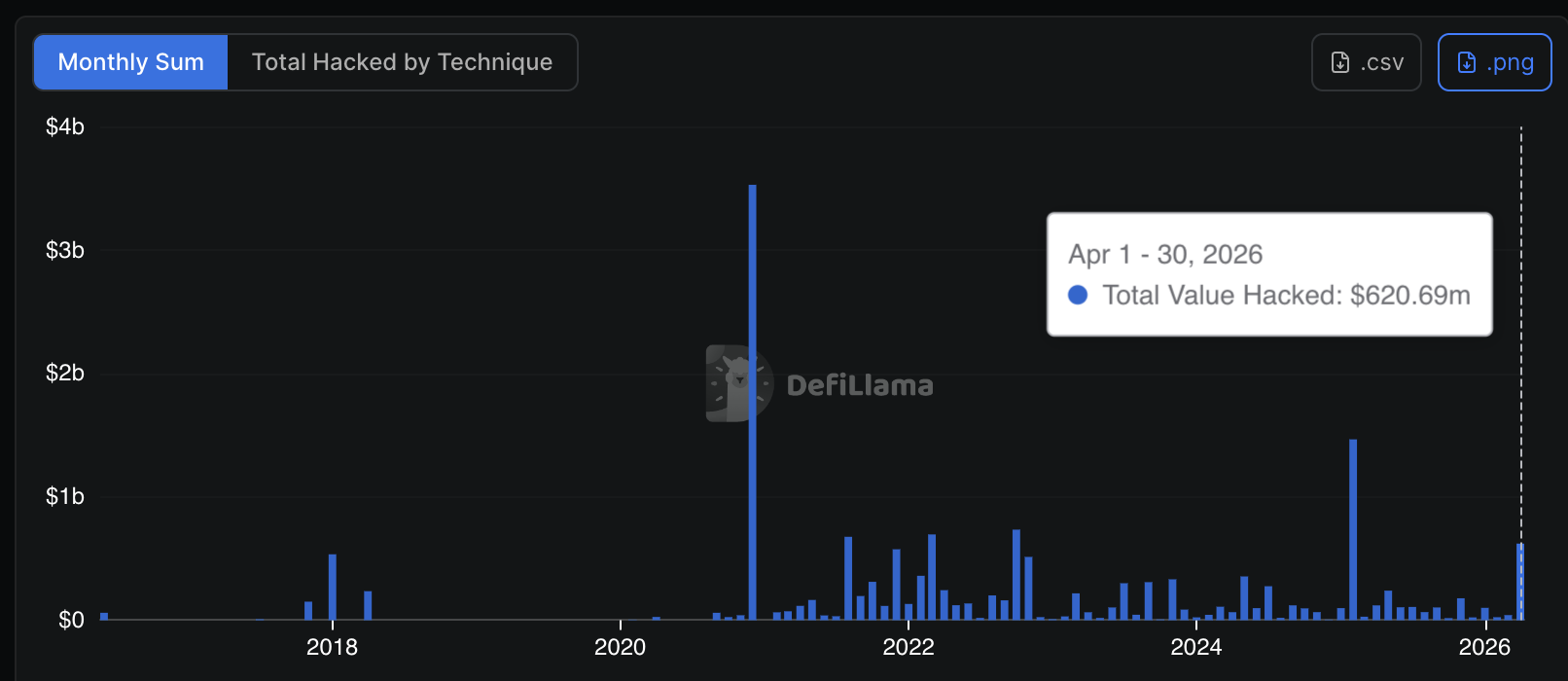
620 millions de dollars perdus à cause des piratages de Defi en avril 2026
À l'heure actuelle, le mois d'avril 2026 est en passe de devenir le sixième pire mois de l'histoire de la cryptographie pour les exploits DeFi, avec plus de 620 millions de dollars perdus par des acteurs malveillants selon les données de DefiLlama.
Au-delà du seul DeFi, les utilisateurs de cryptomonnaies sont plus que jamais encouragés à faire preuve de prudence. Les développeurs à la recherche de nouveaux postes deviennent rapidement une cible populaire pour les attaquants, qui tentent de partager des codes malveillants en se faisant passer pour des recruteurs.
Les utilisateurs de crypto-monnaies de tous niveaux sont encouragés à revoir régulièrement leurs pratiques de sécurité et l'hygiène de leur portefeuille, faute de quoi le secteur risque de s'effondrer à mesure que les constructeurs abandonnent la technologie blockchain pour des alternatives plus sûres.
Plus d'informations sur SolanaFloor
Ethereum gagne le jeu du memecoin
Ce qui se passe lorsque vous donnez à un agent IA 70 dollars à échanger