Соланский мемкоин-запуск pump.fun на прошлой неделе запустил GO - новую платформу баунти на ончейне, которая позволяет пользователям создавать и выполнять задания в обмен на криптовалютное вознаграждение. Платформа призвана соединить людей, готовых заплатить за конкретные действия, с участниками, готовыми их выполнить, создавая, по словам Pump.fun, GO как рынок, где каждый может "заплатить любому за выполнение чего угодно"
Запуск быстро привлек внимание не только из-за размера некоторых предлагаемых вознаграждений, но и из-за растущей обеспокоенности по поводу типов заданий, которые могут появиться на платформе. На момент написания статьи невостребованными остаются задания на сумму более 205 000 долларов.
Что такое Pump.fun GO?
По словам представителей Pump.fun, GO функционирует как ончейн-рынок баунти, где пользователи могут размещать задания с прикрепленными к ним вознаграждениями, а участники могут предоставить доказательства их выполнения, чтобы получить выплаты.
Платформа позволяет создателям баунти подключить свой аккаунт X и криптокошелек, создать задание с определенными требованиями и сроками выполнения, внести вознаграждение в размере не менее 5 долларов США на депозит, а затем ждать, пока pump.fun просмотрит присланные заявки и определит, успешно ли участники выполнили баунти.
Участники проходят аналогичный процесс. Они подключают свои аккаунты, выполняют поставленную задачу, предоставляют доказательства и ждут решения pump.fun о проверке.
По условиям платформы, создатели баунти не могут снимать вознаграждения после публикации. Средства остаются заблокированными в условном депонировании до тех пор, пока срок действия баунти не истечет или победитель не получит оплату. Pump.fun оставляет за собой право модерировать заявки и определять успешных участников.
Крупные вознаграждения привлекают внимание на ранних этапах
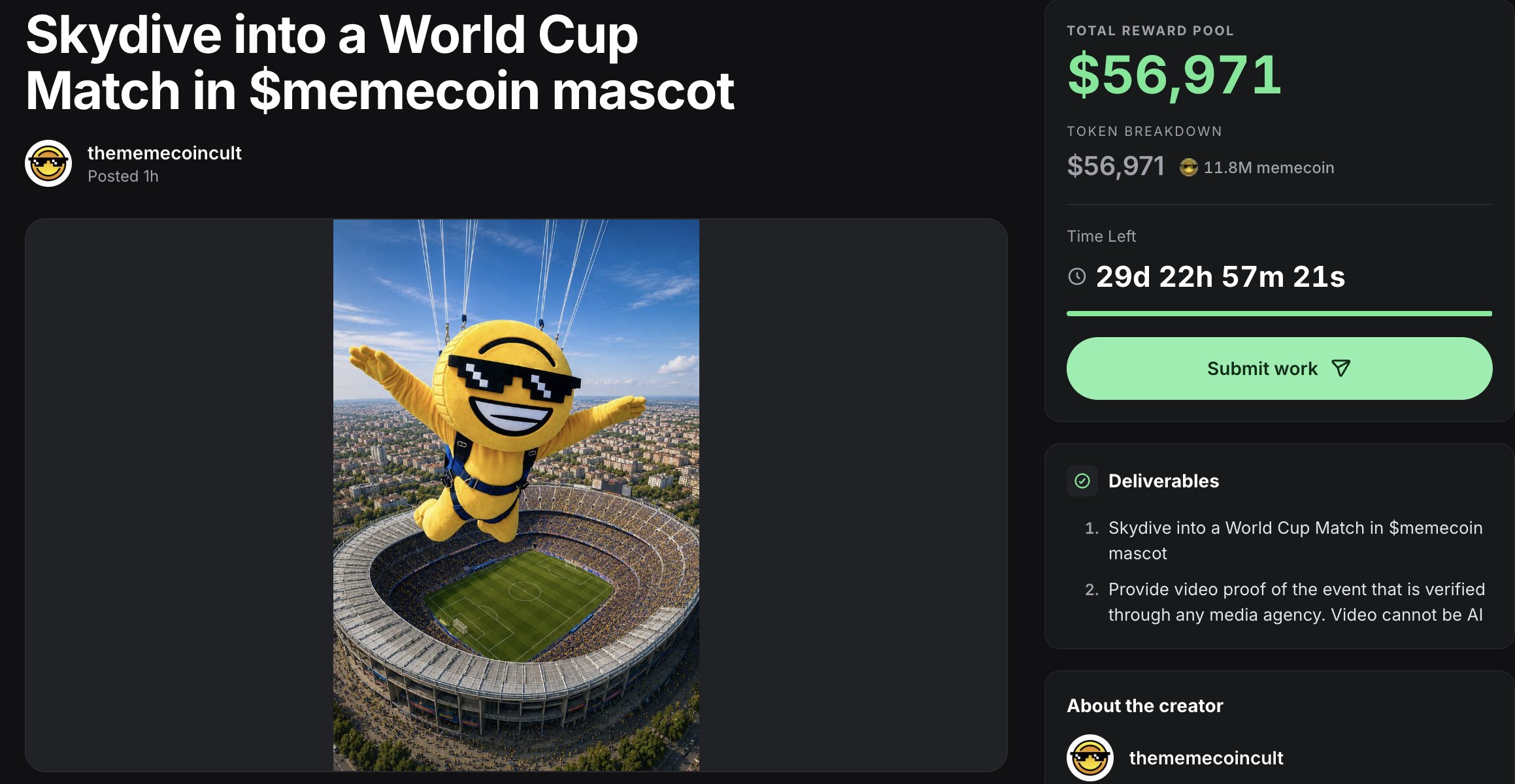
Несколько объявлений быстро привлекли внимание благодаря своим необычным требованиям и крупным выплатам. Среди самых больших по стоимости вознаграждений, которые были объявлены, - награда в $56 971 для того, кто готов прыгнуть с парашютом на матч чемпионата мира по футболу в костюме талисмана memecoin.
Среди других заметных объявлений - предложения за 22 847 долларов взять интервью у семьи убийцы Генриха Новака, 3099 долларов за татуировку в виде бегущей строки на лбу и 2924 доллара за увольнение с работы на камеру. Эти примеры помогли вызвать дискуссию о потенциальном охвате платформы, одновременно поднимая вопросы о безопасности участников, законности и практических ограничениях краудсорсинговых стимулов.
Плата за татуировку на лбу стала ранней точкой вспышки
Один из вирусных инцидентов на платформе был связан с участником из Индии, известным в сети под ником @Arivulife. За татуировку "$boutywork" на лбу предлагалось 40 долларов СОЛ. Участник принял вызов, посетил тату-салон, записал процесс и навсегда вытатуировал текст на своем лбу.
Однако вознаграждение так и не было получено. Позднее создатель баунти утверждал, что в объявлении была допущена опечатка и что предполагаемый текст должен был быть "$Bountywork" с дополнительной "n". В результате запрос на выплату был отклонен.
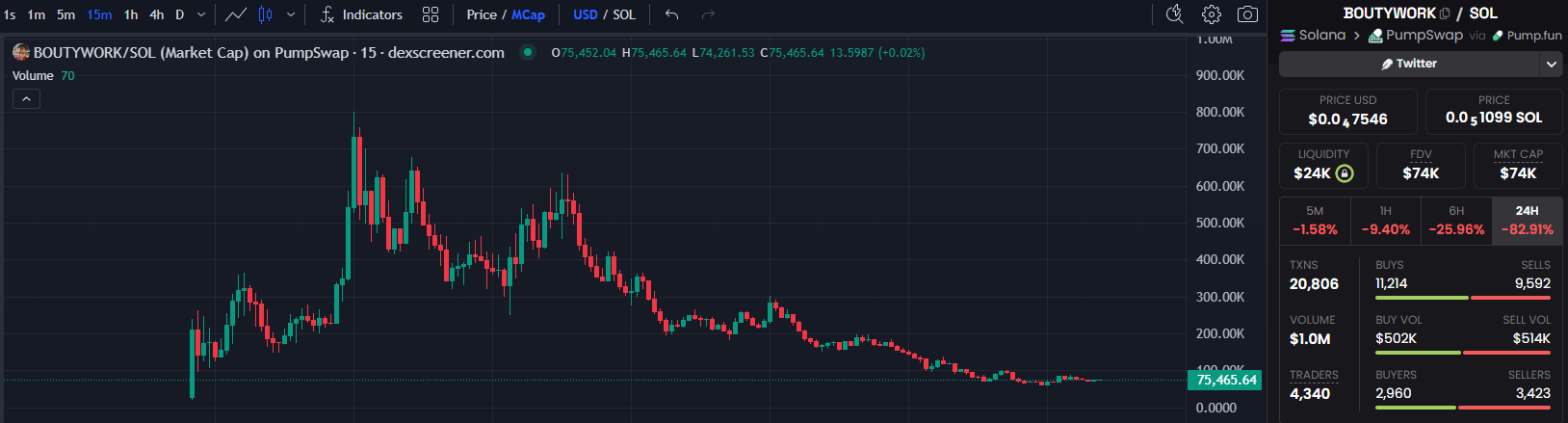
На этом история не закончилась, а приняла другой оборот, когда трейдеры запустили мемкоин Solana под названием $BOUTYWORK, используя в качестве логотипа селфи участника. Рыночная капитализация токена достигла 800 000 долларов, а вознаграждение создателя татуировки составило более 43 000 долларов.
Критика появилась почти сразу же
Запуск платформы также вызвал критику со стороны криптовалютной экосистемы. Губернатор Нью-Йорка Кэти Хочул публично осудила концепцию, написав следующее: "Предлагаю вознаграждение за первый законопроект, внесенный для запрета этого антиутопического кошмара"
Этот комментарий усилил более широкие опасения по поводу платформы и помог вывести дискуссию за пределы криптовалютных кругов в политические и регуляторные круги.
Реакция криптовалютных участников резко разделилась. Ник Алмонд, глава отдела управления в Jito, отреагировал на запуск платформы, написав: "Господи, это плохо кончится"

Другие комментаторы выразили опасения, что бессрочные системы вознаграждений могут стимулировать все более опасное поведение. Один из пользователей написал: "Не может быть, чтобы это не превратилось в рынок убийств"

Другие обратили внимание на модель модерации платформы, в частности на полномочия Pump.fun по определению успешных заявок. Ссылаясь на условия и положения, один из комментаторов написал: "Я НЕ буду арестован только для того, чтобы меня выбрал pf после"

Некоторые критические замечания касались вопросов этики. Один из пользователей социальных сетей сказал: "Это ужасный рынок. Это все равно что играть жизнями бедных людей и платить им за то, чтобы они развлекали вас", добавив: "Это должно быть немедленно запрещено"

Сторонники, однако, утверждают, что рынки вознаграждений просто создают добровольные сделки между желающими участниками и что ответственность в конечном итоге лежит на отдельных пользователях.
Отголоски предыдущих споров вокруг Pump.fun
Споры вокруг GO следуют схеме, с которой Pump.fun сталкивалась и раньше. В ноябре 2024 года платформа стала объектом пристального внимания из-за функции прямых трансляций. В тот период стримеры совершали все более экстремальные поступки в попытках привлечь внимание и увеличить стоимость токенов.
В сообщениях того времени описывались инциденты с угрозами, оскорблениями, самоуничижительным поведением и другими вредными действиями, направленными на привлечение зрителей. Обратная реакция вызвала призывы к усилению модерации в экосистеме Solana.
Соучредитель Pump.fun Алон признал опасения, заявив, что модерация существует, но не идеальна. Он утверждал, что подобные проблемы возникают на многих онлайн-платформах, и подчеркивал, что пользователи могут выбирать, какой контент им смотреть. Несмотря на то, что функция живых трансляций привлекла большое внимание, в конечном итоге эта тенденция оказалась недолговечной и не смогла стать прочной частью экосистемы платформы. Этот эпизод продемонстрировал как способность Pump.fun быстро привлекать пользователей, так и трудности, связанные с поддержанием неоднозначных экспериментов с продуктами в течение длительного времени.
Платформа GO от Pump.fun уже привлекла к себе внимание, но еще предстоит выяснить, смогут ли ончейн-баунти добиться долгосрочного соответствия продукта рынку или в конечном итоге пойдут по пути предыдущего эксперимента с livestream.
Подробнее о SolanaFloor
Piggybank TVL упал на 49% после потери средств клиентов на высокорискованной стратегии $LAB
Криптовалютные рынки восстанавливаются на фоне возобновившихся переговоров о прекращении огня
Лукас Брудер из Jito присоединяется к The Big Picture