Market Breathes Sigh of Relief as US, Iran Pause Strikes
$PUMP leads Solana ecosystem tokens, climbing 18% in 24HR
- Published:
Yet another sequence of military threats, and consequent walkbacks, has rocked markets over the course of the weekend.
After President Donald Trump hinted at the U.S. launching an attack “bigger than ever before” on Iran late last week, the two conflicting nations have once again agreed to halt strikes and seek a diplomatic resolution, just in time for Monday’s market open.
Meanwhile, Solana ETFs are enjoying their strongest inflows in the past 10 weeks, and a revival in onchain trading activity has inspired a rally in risk-on assets like $PUMP, up 14% in 24 hours.
Crude Oil Drops 8% as U.S., Iran Pause Strikes
Once again, the United States and Iran appear to be seeking a peaceful resolution to ongoing conflict, with both sides promising on Saturday to halt strikes as Iranian representatives meet with Omani officials.
Despite Iran’s assertion that the Strait of Hormuz remains closed and that ongoing talks with Oman are unrelated to the United States, markets are breathing a sigh of relief. After tensions hit a fever pitch heading into Friday’s close, punctuated by threats of escalation from both sides, markets have reacted positively to the military pause.
Index funds and tech stocks are climbing steadily in premarket trading, while Brent Crude Oil plummeted as much as 8% following the announcement. Market activity indicates that traders and investors are optimistic that the temporary pause will extend into a more official renewal of the June 17 Ceasefire MOU, which unravelled shortly after its creation.
Amidst the weekend’s theatrics, 10Y U.S. Treasury yield dropped to 4.63%. The Federal Reserve’s ongoing silence over interest rates is sparking concerns among market participants, who are now eagerly awaiting the Fed’s rate decision on July 29.
Solana ETFs Record Strongest Weekly Inflows Since May
While TradFi markets and macro conditions oscillate amidst the power struggle and social media feeds of the Iran and United States governments, institutional players are quietly bolstering their $SOL positions.
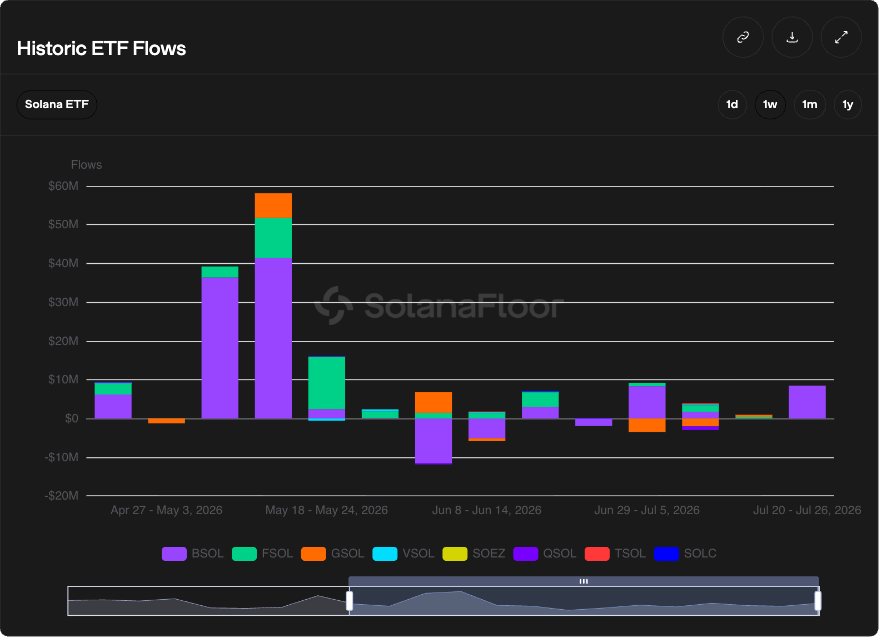
According to SolanaFloor data, Solana ETFs recorded $7.2M in weekly net flows, marking their strongest week since May 22. Coupled with three consecutive weeks of positive flows in $BTC ETFs, sentiment towards crypto is starting to flip positive.
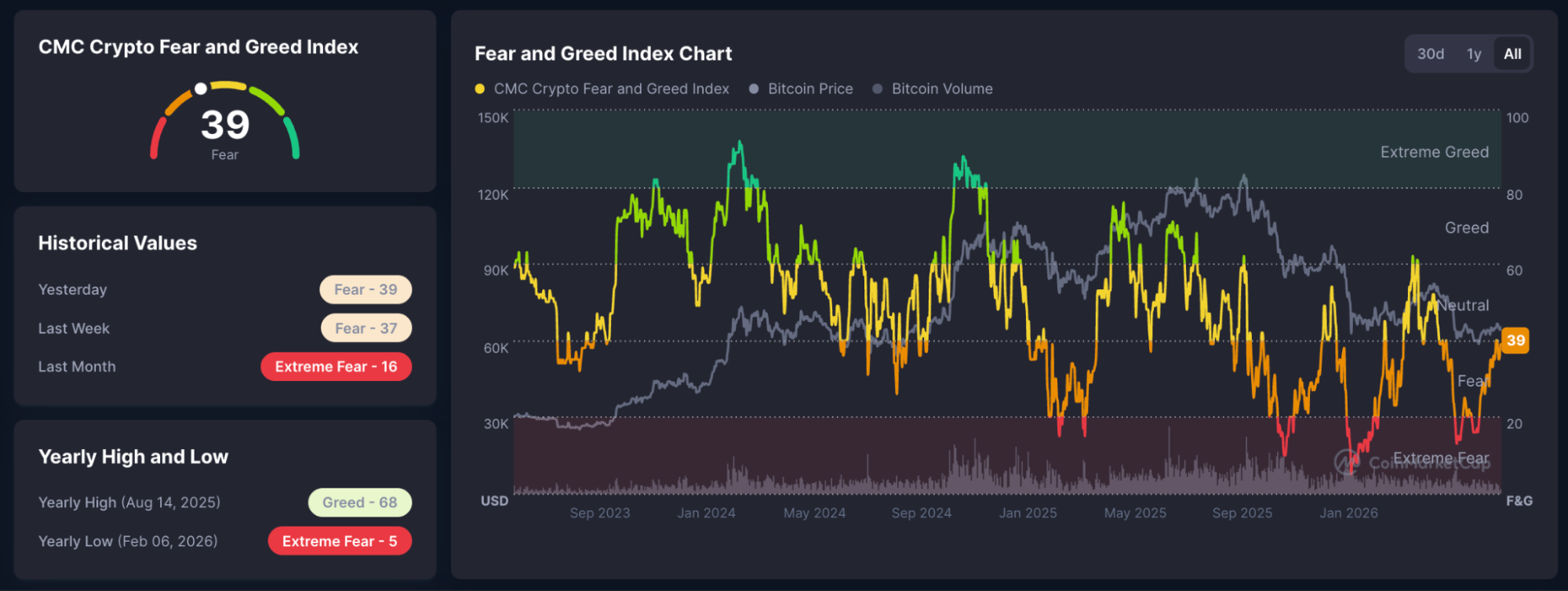
CoinMarketCap’s Fear & Greed index, a metric tracking market sentiment, is currently sitting at 39, a mere stone’s throw away from transitioning out of ‘Fear’ and into ‘Neutral’ territory.
$PUMP Soars 18% in Face of Token Unlocks
TradFi and macroeconomic markets are showing signs of relief, but the ongoing uncertainty and military tensions plaguing the Middle East are still giving traders pause. However, this seems not to be the case within crypto markets.
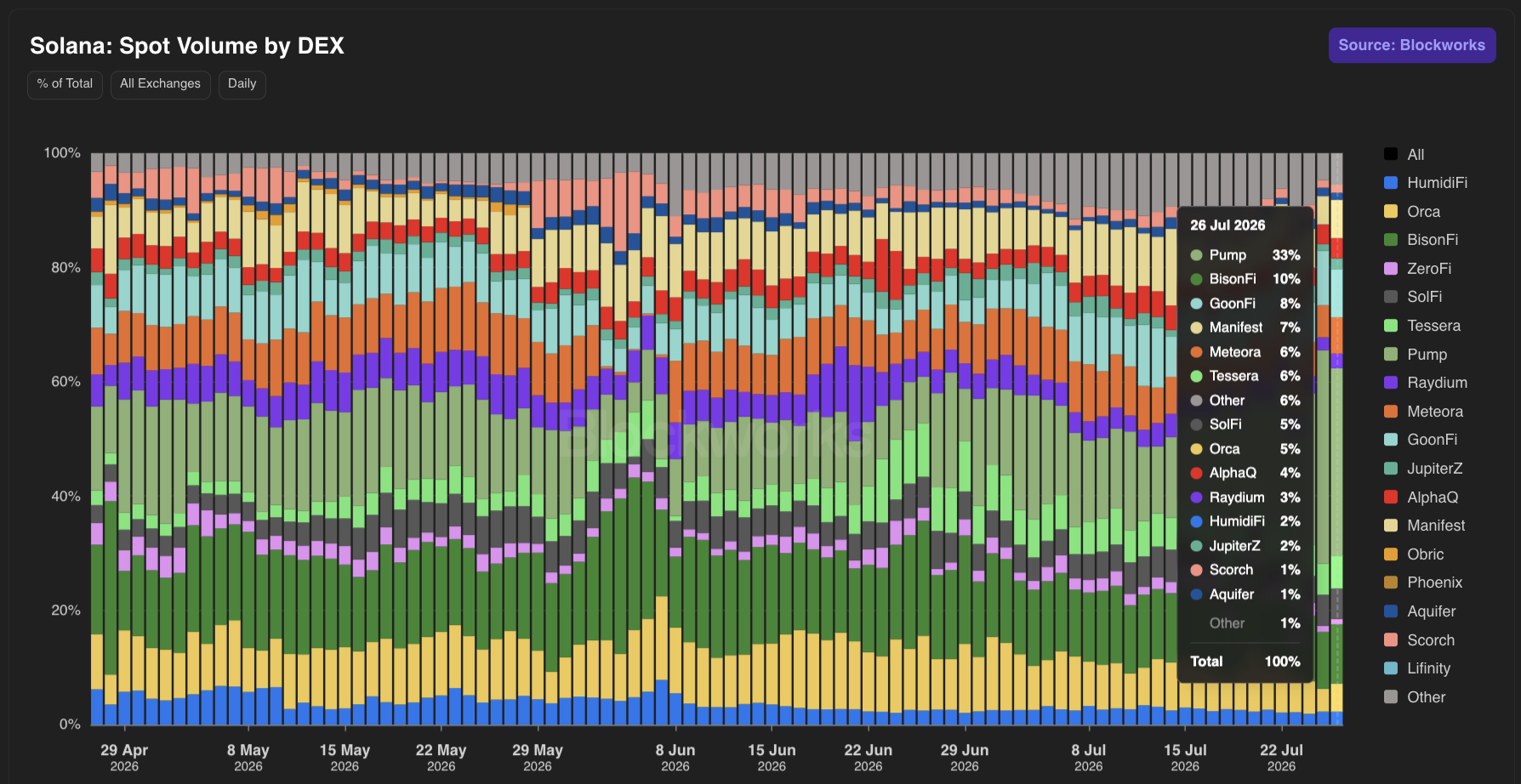
A recent resurgence in onchain trading activity is sparking newfound optimism towards crypto-native assets. With memecoins recapturing the spotlight and dominating volume share on Solana, traders and investors are pouring funds into risk-on assets like $PUMP, which has soared 18% in the last 24hrs.
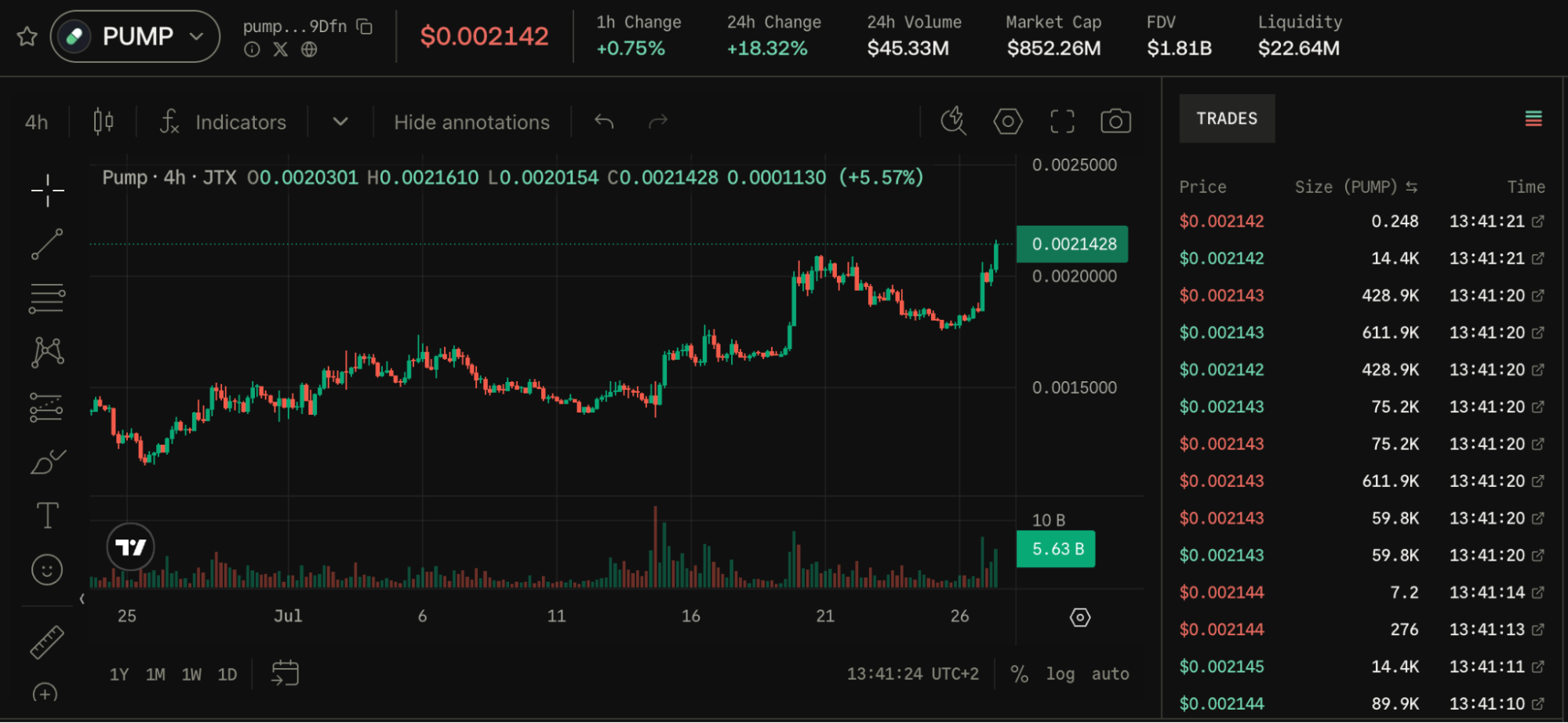
According to Blockworks data, pump is dominating Solana’s DEX rankings, constituting 33% of all onchain spot volume. DefiLlama reports that pump is once again crypto’s most valuable application in terms of revenue generation, outperforming HyperLiquid on a weekly time frame.
$PUMP’s blistering price comes in the face of heightened scrutiny towards the protocol over its vesting schedule. Tokenomist data indicates that $PUMP unlocks have begun in earnest, distributing 7B tokens, worth ~$14M, per month to team members and early investors.
Despite the vesting, pump’s ongoing buyback program is currently purchasing enough tokens to offset the unlocks, allocating 50% of all revenue to purchasing $PUMP off the open market and removing it permanently from circulation.
Read More on SolanaFloor
A UAE-based Sovereign Wealth fund hits Solana
Mubadala Capital to Launch $75M Tokenized Fund on Solana via Kaio
What’s Going on With the CLARITY Act?