Korean Fintech Giant KSNeT Signs MOU to Bring Solana Pay to 330,000 Merchants
KSNeT to begin testing x402 infrastructure across its payment network
- Published:
- Edited:
KSNet, a Korean payment and settlement company with 26 years of merchant network history, has signed an MOU with the Solana Foundation.
Signed at KSNet's headquarters in Seocho-gu, Seoul, the agreement commits both parties to two proof-of-concept projects, demonstrating Solana Pay integration across KSNet's merchant network, while the second explores an AI-driven payment model built on the x402 protocol.
The deal extends a strong run of Korean institutional agreements for the Solana Foundation, following collaborations with Shinhan Card in April and both Toss Bank and KG Group in June.
Solana Pay Meets Korea's Merchant Network
The first PoC will adapt Solana Pay's standard specifications to the domestic payment environment, linking them with the online and offline merchant network KSNet has built over more than two decades.
KSNet operates card payment, payment gateway (PG), and electronic banking services to its Korean customer base, facilitating over $4B in monthly transaction volume across over 330,000 users.
According to the press release, KSNet is committed to building build systems that strictly reflect domestic anti-money laundering requirements to block abnormal fund flows, in full compliance with financial authority guidelines.
The firm will also connect digital asset settlement to the existing Korean won settlement network. The stated aim is a settlement structure that minimises exchange rate fluctuations and liquidity risks arising when crypto-native assets are converted for merchant payouts.
Can x402 Crack the Micropayment Problem?
Beyond its proposed Solana Pay integration, KSNet will also test the x402 standard against the AI-based payment system it is currently verifying internally, examining whether the protocol fits its infrastructure.
An emerging protocol enabling AI agents to autonomously process value transfer without logins or card authentication, x402 is a natural fit for scaling high-throughput micropayments.
Micro autonomous payments, down to single-won amounts, are structurally unviable on card networks weighed down by multi-level fee structures. Meanwhile, Solana's fast settlement and negligible fees could make the model plausible at unprecedented scale.
"Based on the payment and settlement know-how accumulated in the market, we will try to provide the safest payment infrastructure to users," - Park Han-han, KSNet CEO
Despite a strong entrance to the onchain economy, x402 payments on Solana have struggled to maintain consistent adoption following a period of explosive growth in December 2025.
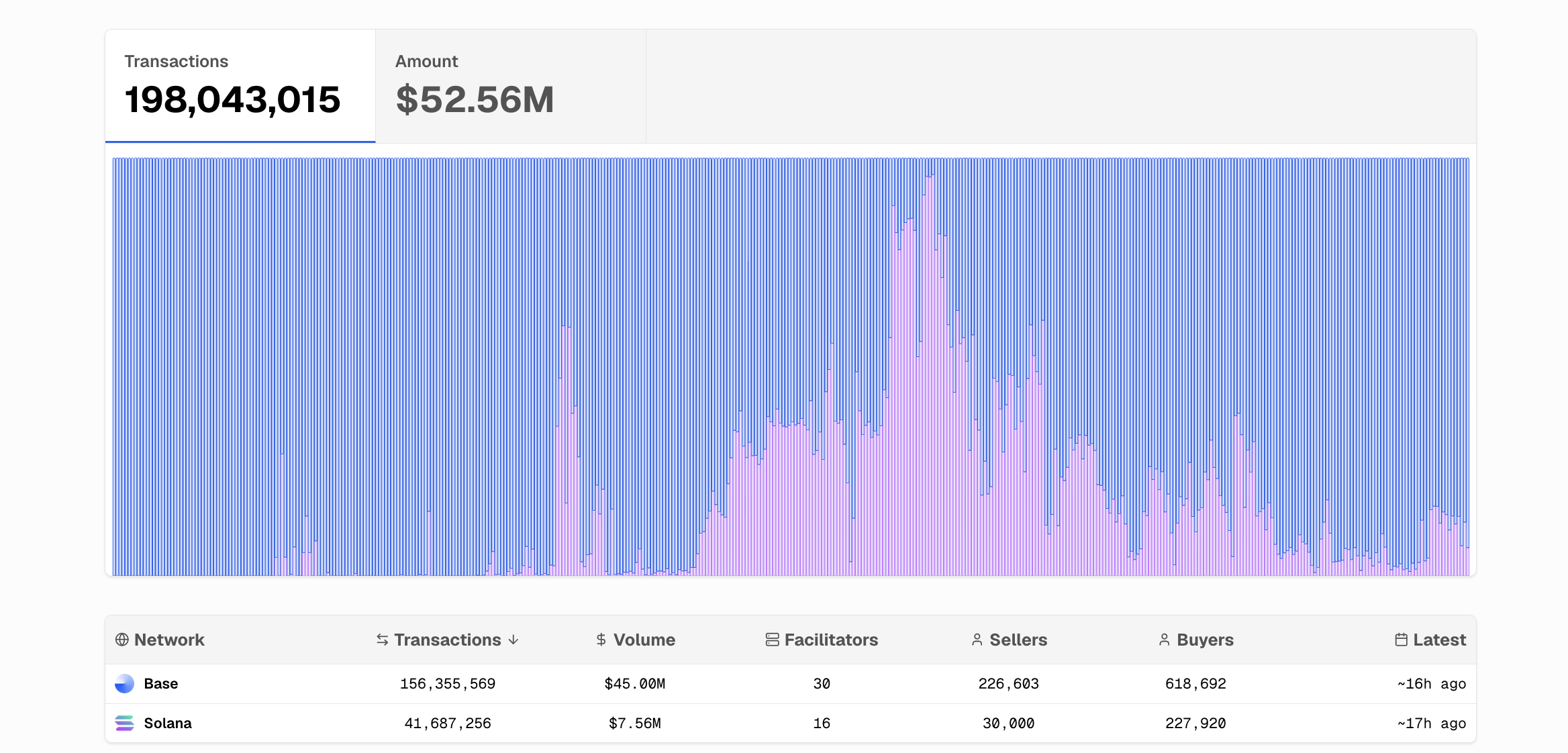
X402scan data suggests that Solana's x402 activity has dwindled in recent months, with Base, the reclaiming dominance of transaction count and volume across the payment standard.
Solana Gains Foothold in Korean Financial Sector
KSNet is not arriving cold. The firm recently began an off-ramp proof of concept with K Bank and Lambda256 for digital asset settlement, and blockchain infrastructure provider Nodit has separately disclosed an MOU with KSNet piloting USDC-based stablecoin payments on Solana.
Meanwhile, Solana’s Korean footprint is only getting stronger, now encompassing card issuers, digital banks, payment gateways, and VAN operators. Shinhan Card formalised a Web3 payments MOU in April after completing a stablecoin PoC, Toss Bank signed for stablecoin-based remittances in June, and KG Financial agreed to target stablecoin settlement across KG Group's 220,000-strong merchant network days later.
Each agreement remains pre-commercial, and Korea's Digital Asset Basic Act will ultimately dictate what ships. However, a clear pattern is starting to emerge, with Korean payment giants consistently converging on Solana as their default settlement rail.
Read More on SolanaFloor
Automotive loan yields are now tokenized on Solana
Hastra Launches $AUTO, Bringing $1.68T Auto Credit Market to Solana DeFi
Seeker Summer is in Full Swing