Loading...
en

$CRCL Down 18% as Tether Opens Doors to Auditors and CLARITY Vetoes Passive Yield

“Activity-based rewards” still on the cards

Stablecoin-maxis have been dealt a tough blow, with ongoing CLARITY Act negotiations suggesting the framework will not allow platforms to share passive yield with holders.

Once touted as the legislation that would open crypto to the floodgates of institutional U.S. capital, industry leaders reportedly argue that the latest iteration of the framework presents “a more narrow and restrictive approach toward crypto.”

$CRCL, the public stock of crypto’s second largest stablecoin issuer, has been hit hard by the proposal, with price action further exacerbated by the news that stablecoin kingpin Tether is seeking its first-ever proof-of-reserves audit.

No Rewards on Passive Stablecoin Balances

Despite years of begging for regulatory clarity, crypto insiders are reportedly disappointed with the latest iteration of the CLARITY Act, a market structure bill expected to canonize crypto regulation in the United States.

As reported by Crypto America host Eleanor Terrett, the revised language proposes to prohibit platforms from distributing yield “directly or indirectly” to stablecoin holders. Based on an internal stakeholder email, the restrictions would be enforced across the bulk of exchanges and brokers, blocking strategies that are “economically or functionally equivalent” to interest.

While passive rewards have been effectively vetoed, the framework supposedly leaves a glimmer of hope for “active users”. 

The language surrounding active rewards is reportedly vague, but suggests that programs centered around loyalty, subscriptions, or promotional activity may still be eligible, provided they are likewise not “economically or functionally equivalent” to interest.

In practice, market participants are optimistic that DeFi users will be able to circumvent these restrictions through certain onchain actions, like staking, liquidity-provision, voting, or signing transactions.

Others have argued that under this legislation, stablecoin companies will once again be forced offshore, seeking more favorable conditions outside the United States.

Tether Seeks First Full Audit

While traditional banks and stablecoin issuers go head-to-head behind closed doors, the world’s largest stablecoin issuer is finally inviting auditors to its inner sanctum. Tether, the stablecoin giant behind $USDT, has signed a Big Four Firm to complete a full protocol audit. 

With $184B in market cap across assets and serving 550M users, Tether’s debut inspection is the largest inaugural audit in financial market history.

Despite dominating the stablecoin market for over a decade, Tether has long been criticized for its opaque operations. 

Endlessly scrutinized by the crypto community, Tether’s “trust me bro” approach to transparency has led detractors to suggest that the firm may not have sufficient reserves to support the circulating supply of $USDT.

Given Tether’s gargantuan influence, a potential implosion has loomed over crypto markets as an ultimate black swan capable of destroying the industry forever. A full audit will likely help to alleviate these fears, bringing greater credibility to the industry as a whole.

$CRCL Taking Hits from Both Directions

Where Tether has historically leaned into opacity, its biggest rival, Circle, has always taken the other approach. Championing transparency, collaboration with regulators, and presenting themselves as the only credible stablecoin issuer in the absence of an independent audit of Tether, Circle has steadily eaten away at the leader’s market share over the years. 

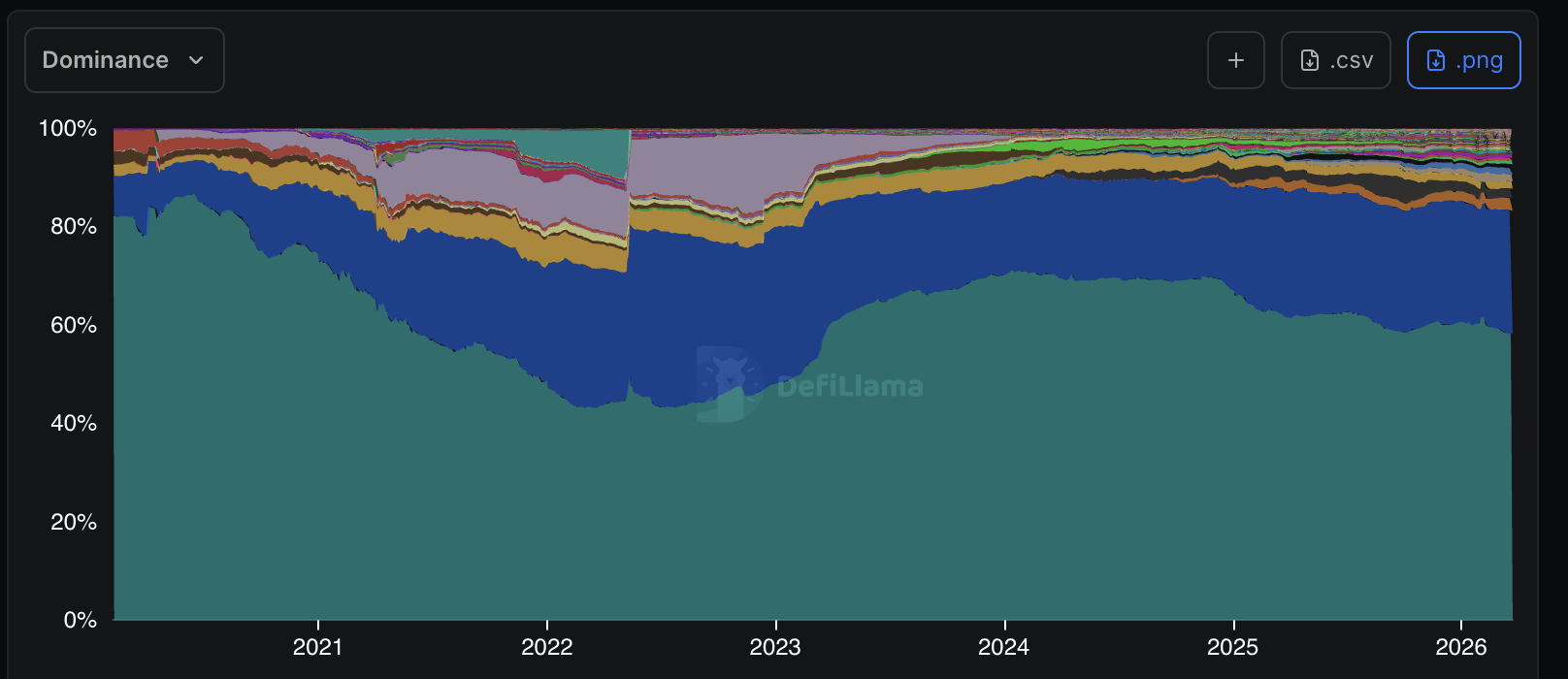
usdtdom

DefiLlama data suggests that $USDC (pictured in blue) market share has climbed from as low as 6% in 2020 to currently constitute around 25% of the global stablecoin market, signifying strong growth in the absence of a commitment to transparency from Tether.

With Tether officially joining the ranks of audited stablecoin issuers, traders and investors are rapidly adjusting their exposure. 

Coupled with emerging details surrounding the CLARITY Act, Tether’s audit announcement has inflicted a harsh blow on Circle’s market value, tanking its public stock, $CRCL, by 18%. Markets now eagerly await further updates on the progress of the CLARITY Act, which Polymarket datacri indicates has a 68% chance of being signed into law in 2026.

Read More on SolanaFloor

Solana Foundation launches new platform to streamline development

Mastercard, Worldpay, and Western Union Named as Solana Developer Platform’s First Builders

The Big Dogs Are Choosing Solana

Solana Weekly Newsletter

Tags


Related News