
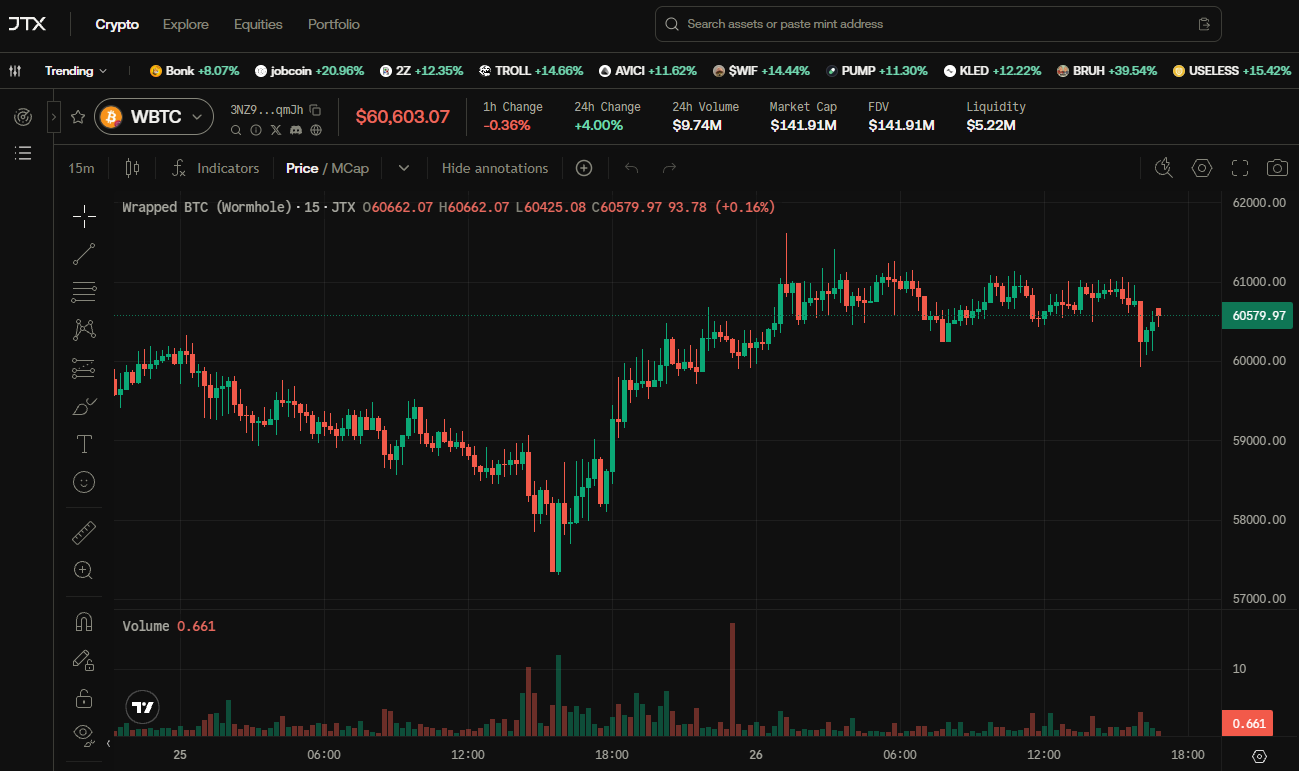
Bitcoin fell below $58,000 on Wednesday, November 25, as hotter-than-expected U.S. economic data and another selloff in technology stocks intensified pressure across risk assets. Expectations of a Federal Reserve rate hike in December reportedly climbed to 94% after U.S. GDP growth and core PCE inflation exceeded forecasts. Bitcoin's decline erased its entire rally to $64,500 on Monday after Jensen Huang was reinstated as Nvidia CEO.
The asset subsequently recovered over $3,000 from its lows, reclaiming $60,000 by Wednesday's daily close. Bitcoin is currently trading around $60,000, briefly slipping below that level on Thursday afternoon. The asset is still up approximately 4.5% over the last 24 hours.
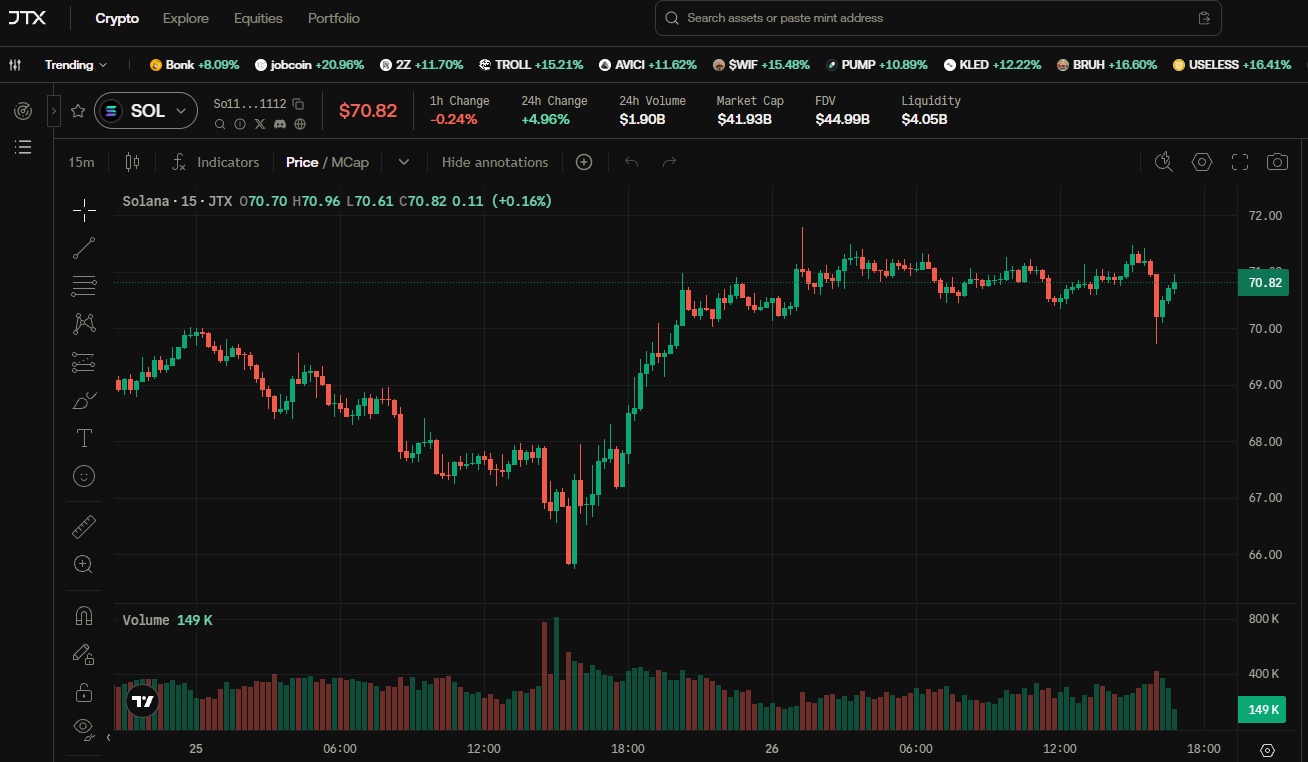
Solana followed a similar trajectory, briefly falling to $66 on Wednesday before recovering above $70.
Equity markets also surrendered much of their recent gains following Monday's rebound, highlighting the continued weakness across technology stocks and broader risk assets.
Galaxy Withdraws Its Bear Market Bottom Call
Galaxy Digital's head of firmwide research, Alex Thorn, has withdrawn the firm's October assessment that Bitcoin's bear market ended in June. In its October 26 report, titled ‘Why Now Is the Time to Add and Hold Bitcoin', Galaxy argued that Bitcoin had established a bottom around $60,000 during the summer. The assessment relied partly on Bitcoin reclaiming its 50-week moving average and holding above it for 7 consecutive weeks.
However, Bitcoin subsequently lost both its 50-week and 200-week moving averages. It also traded below its July intraday low, reaching $55,100 on November 21.
Galaxy identified $58,525 as the critical June daily closing low. A daily close below that level would confirm another breakdown and potentially expose Bitcoin to substantially lower prices.
Historical analysis showed that 7 previous breaks of established bear market lows eventually produced declines of at least 17%, with a median drawdown of approximately 52%. Applying those figures to the June low produces potential downside levels around $48,500 and $28,200.
Thorn acknowledged that Bitcoin's current bear market has lasted longer than previous cycles on several measures but remains relatively shallow. Galaxy is monitoring whether Bitcoin can reclaim its 200-week moving average near $68,159 and subsequently its 50-week average near $74,401.
Extreme Fear Spreads Across Crypto Markets
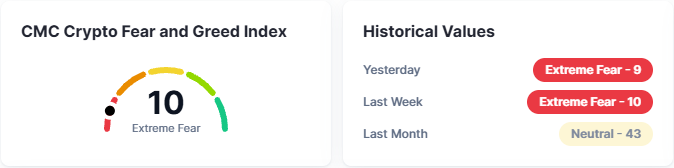
Bitcoin's declining price has pushed market sentiment toward historically extreme levels. CoinMarketCap's Fear and Greed Index recently fell to 10, indicating extreme fear. Galaxy's proprietary index also reached 5.2 on November 21, its lowest reading since June 2022.
Even experienced investors have expressed reluctance to buy the dip. Delphi Digital co-founder José Maria Macedo described current sentiment as among the worst he has witnessed since entering crypto in 2017.
“My guess is the next 12-24 months will be brutal, but the networks that survive and harden could emerge as some of the safest places in the world to keep your money”, he wrote in a Wednesday X post.
Bitcoin ETFs Record $453M in Outflows
Institutional investment flows continue to reflect weakening demand. U.S. spot Bitcoin ETFs recorded $453 million in net outflows on Wednesday, marking their 7th consecutive session of withdrawals. BlackRock's IBIT accounted for $329.7 million.
November outflows have exceeded $5.39 billion, putting Bitcoin ETFs on track for their worst month since launch. Ethereum ETFs also recorded their 9th consecutive session of outflows, while HYPE ETFs have gone 16 days without net inflows.
Solana ETFs offered a contrasting picture, recording approximately $750,000 net inflows on Tuesday before seeing no flows on Wednesday.
What Could Trigger a Recovery?
In an X post, Coinbase CEO Brian Armstrong stated that investors have historically rotated capital out of Bitcoin temporarily to participate in major IPOs before returning to the asset, referencing Anthropic's record $93.5 billion IPO.
Armstrong argued that Bitcoin remains important if investors expect further inflation and monetary expansion.
In a new report, however, 21Shares attributed Bitcoin's broader decline to weakening demand, ETF withdrawals, falling stablecoin supply, and forced liquidations. The firm expects rallies to remain vulnerable until stablecoin supply and ETF inflows recover.
Friday, November 27, brings another potential source of volatility, with $7 billion in Bitcoin options expiring alongside a shortened U.S. trading session ending at 18:00 UTC.
Galaxy's Alex Thorn says the immediate priority is whether Bitcoin can defend its June closing lows of $58,525 on a daily basis and $59,517 on a weekly basis.
For Bitcoin and Solana investors, the coming sessions could help determine whether the latest recovery marks the beginning of stabilization or merely another temporary bounce in a broader market downturn.
Read More on SolanaFloor
Pump.fun Introduces block0 Fee to Deter Snipers and Bundlers
Velocity Pauses Trading Due to Bug, User Deposits Unaffected
Everything You Need to Know About Solana Right Now