Как торговать на Solana в 2026 году
Краткий обзор
-
Solana — лучшая блокчейн-сеть для торговли криптовалютами, токенизированными акциями и мемкойнами
-
Торговля на Solana проста, и вы получаете больше выгоды за свои деньги, чем на централизованной бирже
-
JTX — идеальная площадка для удовлетворения всех ваших торговых потребностей
Solana — самая быстрая и доступная в мире блокчейн-сеть — теперь стала самым простым способом для новичков приобрести криптовалюту, акции и мем-монеты.
Любой пользователь — будь то опытный участник рынка, прошедший множество циклов, или полный новичок — может выйти на глобальный рынок и начать торговать самыми быстрорастущими активами мира всего за несколько кликов. В 2026 году торговля на Solana больше не означает борьбу со сложными и неудобными криптовалютными инструментами.
Это означает получение более выгодных цен, чем на крупнейших мировых биржах, зачастую одним касанием.
В этом руководстве подробно объясняется, почему Solana стала центром ончейн-торговли, что именно вы можете купить и как совершить свою первую сделку.
Почему стоит торговать на Solana?
Забудьте о технических деталях — Solana является лучшей платформой для торговли по нескольким очень простым причинам:
-
На Solana представлены тысячи активов, включая криптовалюты, акции, сырьевые товары, мем-монеты и прогнозы
-
Это легко — программное обеспечение и торговые платформы стали проще, чем когда-либо
-
Вы получаете больше за свои деньги
Когда вы торгуете на централизованной бирже (CEX), такой как Binance или Coinbase, вы вносите средства на счет, который контролирует биржа. Биржа может заморозить ваши средства в любой момент, и если она обанкротится, вы можете потерять всё (такое уже случалось).
На Solana сделки проводятся непосредственно в публичной блокчейне, при этом вы сохраняете контроль над своими средствами — такая схема называется самостоятельным хранением. Никто не сможет прикоснуться к вашим монетам или что-либо сделать с вашим счетом, если у него нет ваших приватных ключей.
Раньше у этого преимущества был один недостаток. Цены в цепочке исторически были хуже, чем на крупных биржах, а торговля в DeFi означала необходимость жонглировать несколькими кошельками и посещать десятки разных сайтов для покупки различных токенов.
Blockworks и Jump Crypto обнаружили, что исполнение сделок на Solana значительно лучше, чем на централизованных биржах. При сделках с $SOL на сумму от 5 000 до 20 000 долларов совокупные издержки на Solana составили всего 1,22 базисных пункта по сравнению с 8,33 базисных пункта на высшем VIP-уровне Binance. Торгуя на Solana, вы в итоге получаете больше активов, при этом тратя меньше денег на их покупку.
Где лучше всего торговать на Solana?
Solana предлагает огромный выбор торговых платформ. Агрегаторы, такие как DFlow и Titan, сканируют все источники ликвидности в сети и направляют вашу сделку тому, кто предлагает лучшую цену. Социальные платформы, такие как fomo и pump, позволяют видеть, что покупают другие пользователи, а приложения-кошельки объединяют всё это в одном удобном интерфейсе.
Все это хорошие варианты, но одна платформа выделяется среди остальных: JTX.
Что такое JTX?
JTX — это торговая платформа с самостоятельным хранением ключей, созданная Jito Labs, командой, стоящей за большей частью инфраструктуры исполнения ордеров, на которой работает Solana. Публично запущенная в июле 2026 года, JTX предоставляет обычным трейдерам прямой доступ к тем же механизмам, что и профессионалам.
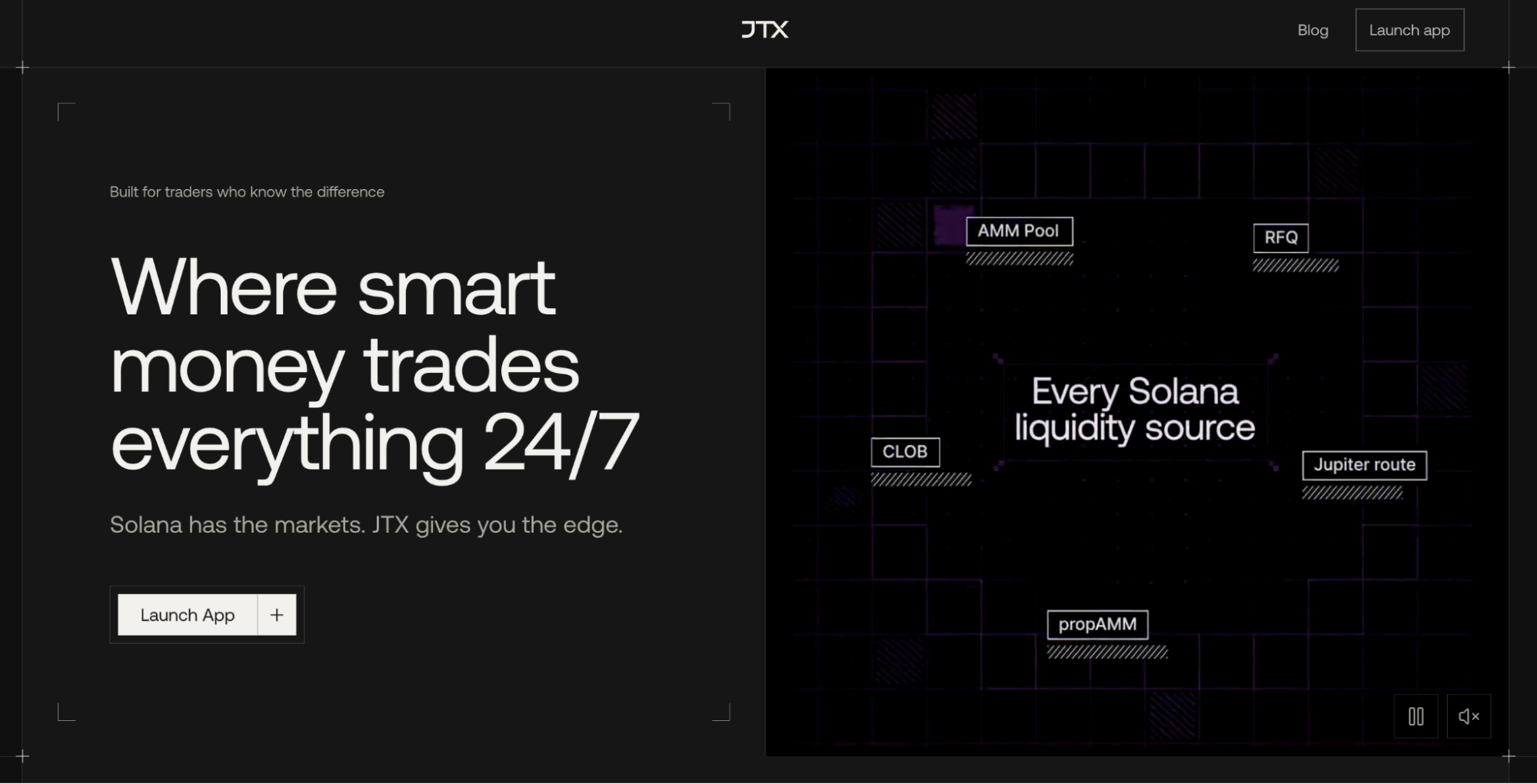
Платформа поддерживает спотовую торговлю полным спектром активов Solana, таких как $SOL, $cbBTC, мем-монеты и токенизированные акции, — и всё это через единый интерфейс. Вы храните свои ключи на каждом этапе, расчеты происходят в цепочке, и ваши средства не хранятся на счете биржи.
JTX также возвращает часть стоимости в экосистему Solana. В соответствии с результатами голосования по вопросам управления, принятого держателями $JTO, 80 % доходов платформы от комиссий направляется в Jito DAO для выкупа и сжигания токенов.
Бессрочные фьючерсы, рынки прогнозов и собственное мобильное приложение — всё это входит в план развития JTX.
Как купить цифровые активы на JTX
Начало работы займет всего несколько минут. Новые пользователи могут создать торговый аккаунт на JTX, используя адрес электронной почты или криптокошелек. После пополнения счета криптовалютой вы готовы окунуться в практически бесконечный спектр доступных активов.
С помощью меню в левой части терминала выберите актив, которым хотите торговать. JTX разбивает типы активов на основные категории, такие как криптовалюты и акции, а также выделяет активы с наибольшей динамикой за день и популярные токены.
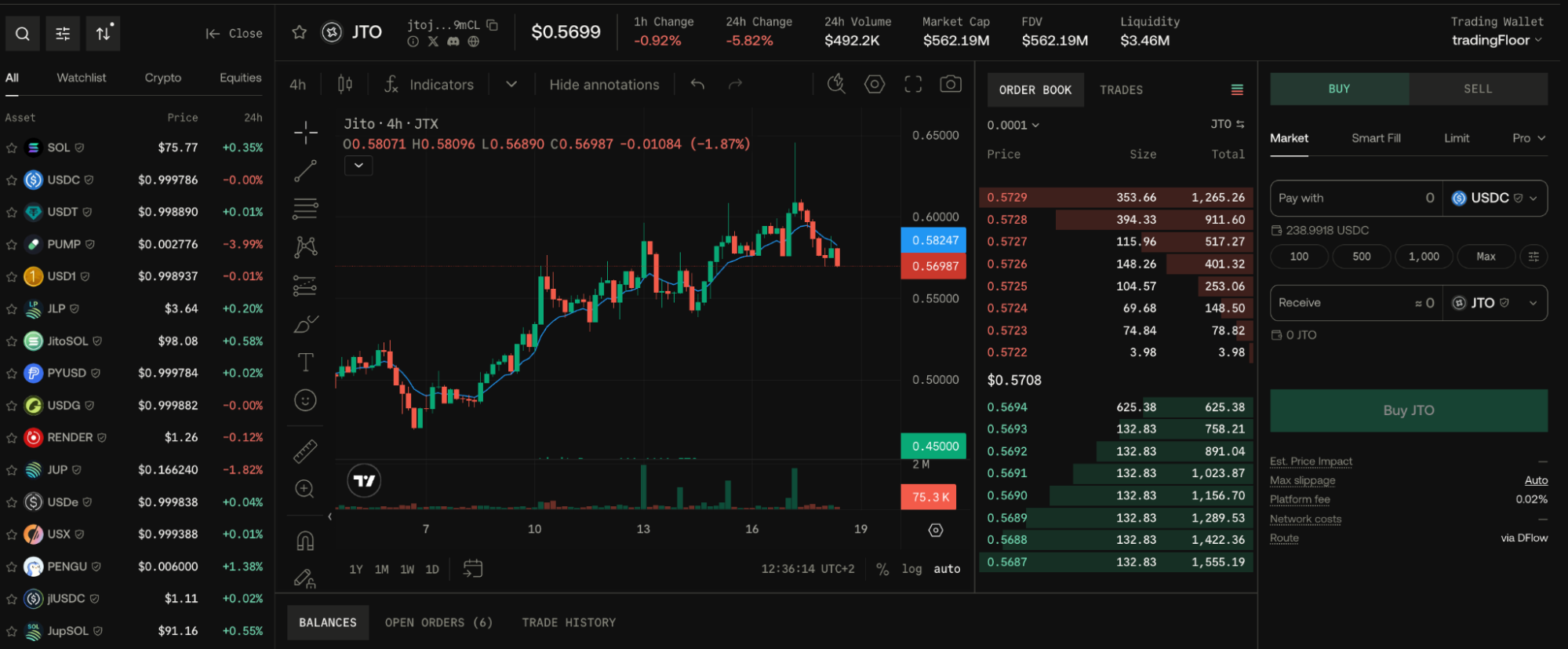
После того как вы выбрали актив, которым хотите торговать, перейдите к панели исполнения ордеров, расположенной справа от графика. Укажите объем, выберите тип ордера и подтвердите. Сделка оформляется в блокчейне за считанные секунды, и активы поступают прямо в ваш кошелек.
Типы ордеров
Типы ордеров — это просто инструкции, указывающие платформе, как вы хотите, чтобы ваша сделка была исполнена. JTX предлагает стандартный набор инструментов плюс одну флагманскую функцию, которую вы не найдете больше нигде.
Рыночный ордер
Рыночный ордер позволяет немедленно купить или продать по лучшей доступной цене. Это самый простой вариант и правильный выбор, когда скорость важнее точности.
Компромиссом является проскальзывание. Крупные рыночные ордера могут вызвать изменение цены в невыгодную для вас сторону по мере их исполнения, поэтому для более крупных сделок требуются более продуманные инструменты. Но это не обязательно означает, что рыночные ордера плохи. На самом деле, рыночные ордера на JTX стабильно лучше, чем на централизованных биржах.
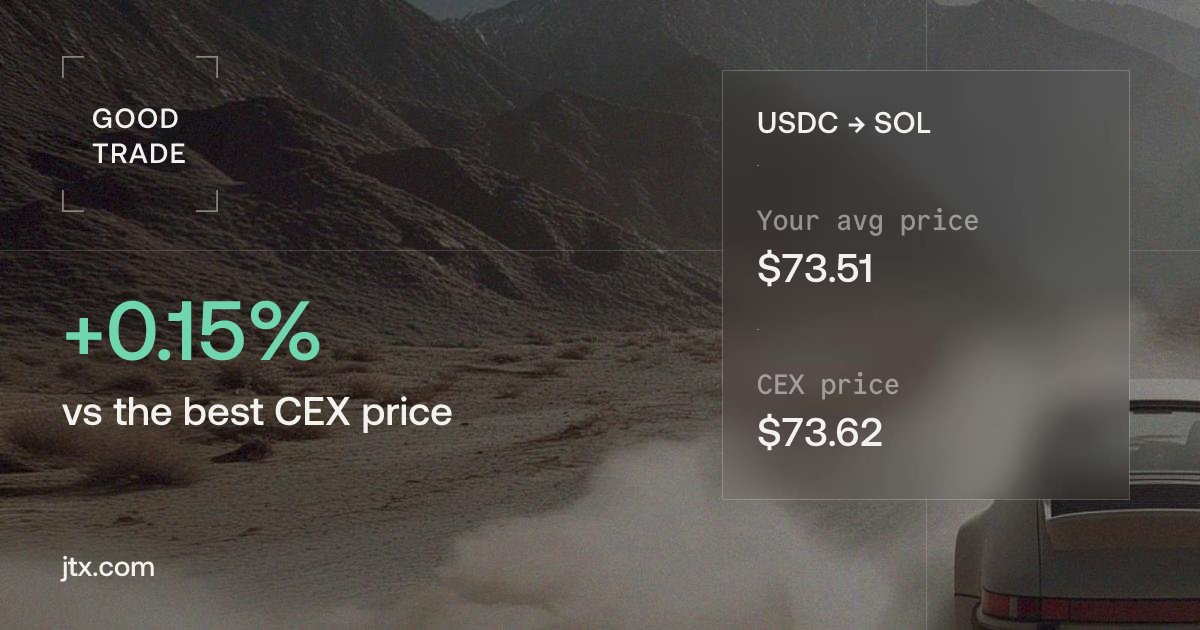
Каждый раз, когда вы размещаете рыночный ордер на JTX, протокол моделирует ту же сделку на централизованных биржах (CEX), таких как Binance и Coinbase, информируя трейдеров о том, сколько они экономят, торгуя в цепочке. В настоящее время рыночные ордера JTX проходят через DFlow, один из самых производительных агрегаторов Solana.
Лимитный ордер
Лимитный ордер исполняется только по выбранной вами цене или по более выгодной. Хотите купить $SOL, если его цена опустится до определенного уровня? Установите лимитный ордер и оставьте его в силе, пока рынок не подойдет к вам.
В отличие от триггерных ордеров, которые широко распространены в экосистеме Solana и инициируют обмен, когда активы достигают определенной цены, лимитные ордера JTX находятся непосредственно в цепочке через Manifest, что гарантирует: цена, которую вы хотите, — это цена, которую вы получите.
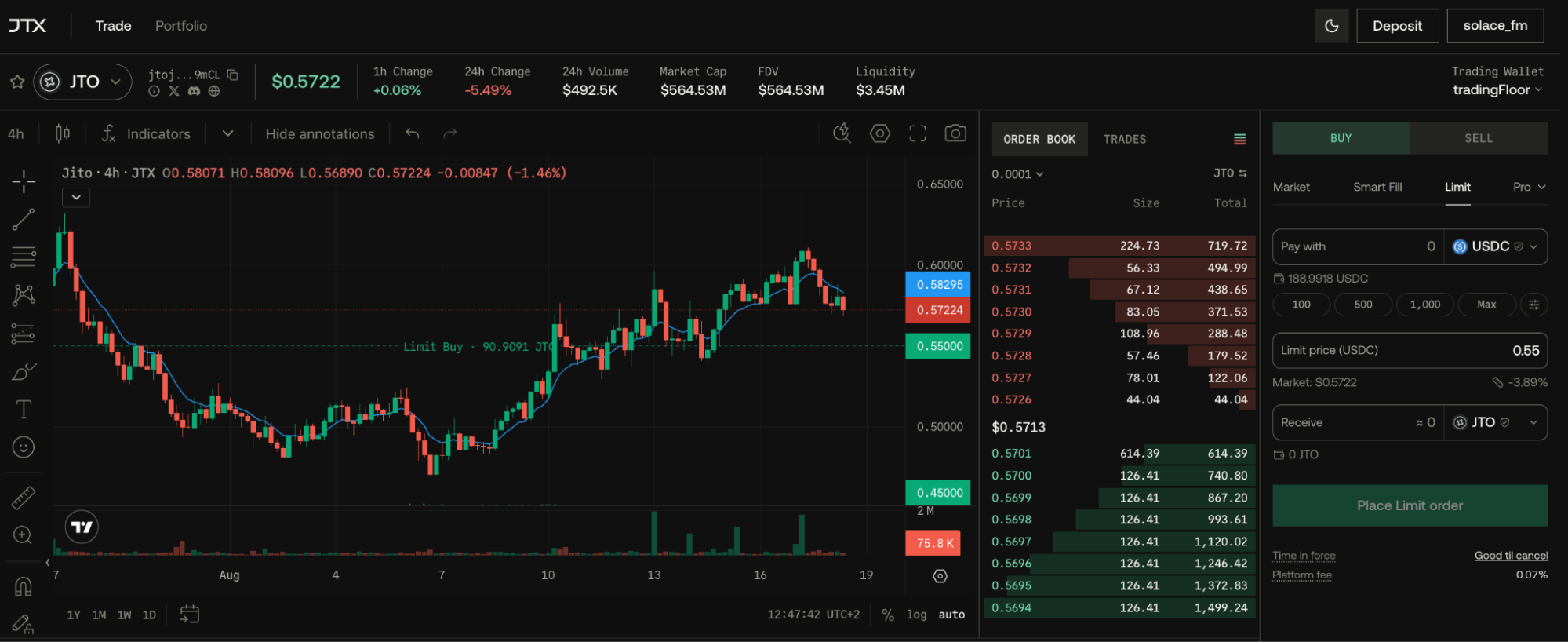
Когда вы размещаете лимитный ордер на JTX, интерфейс отображает вашу заявку прямо на графике, что помогает трейдерам визуализировать различные уровни на фоне исторических рыночных данных. Лимитные ордера дают вам полный контроль над ценой, но нет гарантии, что они будут исполнены. Если рынок так и не достигнет вашей цены, сделка просто не состоится.
TWAP
TWAP (сокращение от «time-weighted average price» — средневзвешенная по времени цена) распределяет крупный ордер на равные части, которые исполняются через фиксированные интервалы в течение заданного периода. Вместо того чтобы купить $SOL на сумму $100 000 за один раз, TWAP может покупать по $5 000 каждые несколько минут в течение часа, сглаживая вашу цену входа и снижая влияние на рынок.
TWAP — это классический инструмент для терпеливой торговли большими объёмами, и JTX предоставляет его наряду с Smart Fill в рамках своего расширенного набора инструментов для работы с ордерами. TWAP отлично подходит для постепенного увеличения позиции по активам с медленным движением, таким как сырьевые товары и акции компаний с большой капитализацией. Однако в случае более волатильных пар рынок может ускользнуть от вас, поэтому JTX разработала Smart Fill, позволяющую использовать более короткие интервалы для трейдеров, которым важны объем и скорость.
Smart Fill
Smart Fill — один из флагманских типов ордеров JTX, разработанный для исполнения крупных сделок без смещения рынка. Вместо отправки одного большого ордера, который проходит через всю доступную ликвидность, Smart Fill разбивает его на десятки более мелких ордеров, которые запускаются в быстрой последовательности, иногда с интервалом всего в полсекунды.
Между исполнениями арбитражные трейдеры возвращают цену к справедливой стоимости, поэтому каждый фрагмент покупается по цене, близкой к реальной рыночной, а не накладывается на ценовое воздействие предыдущего фрагмента. Smart Fill работает быстрее, чем стандартный TWAP, интервалы которого ограничены на таких традиционных торговых площадках, как Jupiter.
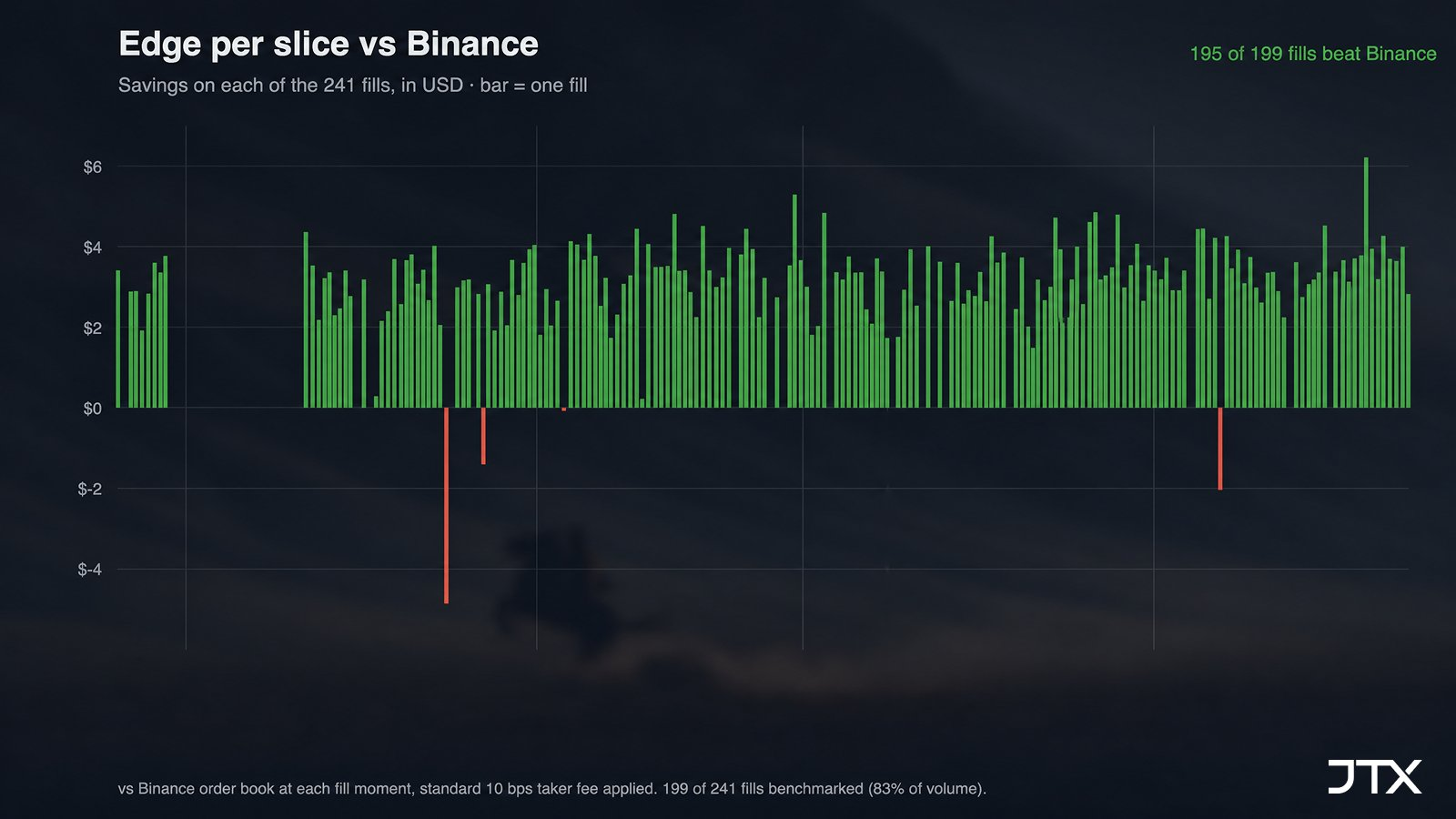
Результаты говорят сами за себя. Один из пользователей JTX недавно выполнил ордер на сумму 2 млн долларов США в $USDC в $SOL, разбив его на 241 часть, при этом каждое исполнение в среднем оказывало влияние на цену всего в 0,88 базисных пункта, а 195 из 199 исполнений, прошедших сравнительный анализ, превзошли показатели Binance.
Каковы риски?
Торговля на Solana не лишена рисков, и новичкам следует осознать все «за» и «против», прежде чем вносить даже один доллар.
Самостоятельное хранение имеет как положительные, так и отрицательные стороны. Хранение собственных ключей означает, что ни одна биржа не сможет заморозить или потерять ваши средства, но это также означает отсутствие горячей линии поддержки, если вы отправите активы не на тот адрес или потеряете свой приватный ключ.
Цены на криптоактивы могут резко колебаться, а мем-монеты, в частности, могут потерять большую часть своей стоимости за считанные часы. Никогда не торгуйте суммами, которые вы не можете себе позволить потерять.
Токенизированные акции не являются акциями. Они точно отслеживают цены, но не предоставляют прав акционеров, а их доступность зависит от вашей юрисдикции. Регулирование является приоритетом для нынешней администрации США, но правила все еще находятся в стадии разработки.
Наконец, глубина рынка в цепочке имеет свои ограничения. Ценовое преимущество Solana наиболее заметно при обычных объемах торгов, но некоторые малоликвидные активы, такие как мем-монеты, могут иметь низкую ликвидность. JTX отображает доступную ликвидность каждого токена в своем интерфейсе, поэтому всегда проверяйте проскальзывание перед размещением ордера.
Solana пять лет готовилась к этому моменту: созданию единой сети, где криптовалюты, акции, сырьевые товары и мем-монеты торгуются бок о бок по ценам, более выгодным, чем у гигантов централизованной финансовой системы. Благодаря таким платформам, как JTX, которые предоставляют профессиональные инструменты каждому, порог входа в рынок никогда не был таким низким.
Увидимся в книгах заказов.