
Why is Passing the CLARITY Act So Critical to Solana’s Growth?
The proposed bill could reinvent the way crypto is regulated in the U.S.
- Published:
Following the successful passing of the GENIUS Act in June 2025, regulators and policymakers are getting to the business end of the second landmark crypto bill of the Donald Trump presidency.
Best known as the CLARITY Act, the Digital Asset Market Clarity Act of 2025 is set to go under the microscope of the Senate Banking Committee, where senators can offer amendments and vote on whether to advance the bill out of committee.
While greater regulatory clarity is widely considered a boon for crypto markets, pockets of the blockchain industry are strongly opposed to the bill.
What is at stake in the CLARITY Act, why is Coinbase threatening to withdraw its support for the bill, and what are experts saying will happen if clarity
What is the CLARITY Act?
As the name suggests, the CLARITY Act seeks to elucidate how cryptocurrency assets and businesses are regulated in the United States. After enduring years of Gary Gensler’s combative stance and approach of ‘regulation-by-enforcement’, the CLARITY Act aims to establish the legislative guardrails that will help the U.S. achieve its goal of becoming the “crypto capital of the world”.
Primarily, the CLARITY Act will separate and outline the roles and responsibilities of government departments like the SEC and the CFTC. The Bill promises to clarify when tokens and digital assets should be treated as commodities (typically overseen by the CFTC), or treated as securities under the jurisdiction of the SEC.
Additionally, the bill intends to set out requirements and guidelines for traders, investors, and crypto-businesses in the U.S., helping to tie the blockchain economy into familiar compliance systems like AML.
In practice, CLARITY advocates argue that this will limit wash-trading on exchanges and could bring about KYC requirements in certain DeFi applications.
What Happens on January 15?
On January 15, the Senate Banking Committee is scheduled to hold an executive session to discuss the specifics of the CLARITY Act and make any amendments, and vote on whether to advance the bill out of committee.
Top of mind among Senators this week is the handling of stablecoin rewards and other indirect rewards. While the passing of the GENIUS Act initially put restrictions on the distribution of yield through stablecoin products, the American Bankers Association’s Community Bankers Council argues that issuers are exploiting a loophole to pass on rewards through affiliates and third parties.
The stablecoin issue is sparking fierce debate amongst crypto companies, with Coinbase threatening to withdraw support from the bill. According to a recent Bloomberg report, the exchange will not back the bill if the legislation imposes restrictions on stablecoin rewards beyond transparency requirements
Other items of contention that will likely be addressed in the January 15 session include legal protections for developers when their applications are used for illicit purposes. As evidenced in the ongoing Tornado Cash case, crypto advocates are adamant that founders should not be held accountable for the behaviors of their users.
Finally, the Senate is expected to discuss the implementation of policies that would prohibit elected officials from profiting from crypto-related ventures. Much to the chagrin of his opposition, President Donald Trump and his circle have launched a litany of crypto projects, ranging from the TRUMP memecoin to World Liberty Financial, a DeFi platform co-founded by Eric, Barron, and Donald Trump Jr.
What Does This Mean for Solana?
Despite the crypto community begging for regulatory clarity in the United States for years, the jury is still out on whether or not the proposed bill is ultimately in the industry’s best interests.
On one hand, TradFi investors and institutional players look upon the bill fondly, believing that the CLARITY Act brings unprecedented operational structure to the crypto industry. Bitwise CIO Matt Hougan has suggested that the bill could give markets the “all-clear” signal, pushing assets like Solana to new all-time highs.
At the other end of the spectrum, the internet’s DeFi evangelists and cypherpunks argue that the CLARITY Act is a Trojan horse designed to impinge on personal freedoms and undermine the core tenets of blockchain technology.
Ultimately, this is the reality of what institutional crypto adoption looks like. Compromises must be made at both ends of crypto’s new culture, as the industry’s cypherpunk past and corporate future seek to find an equal footing in the future of the sector.
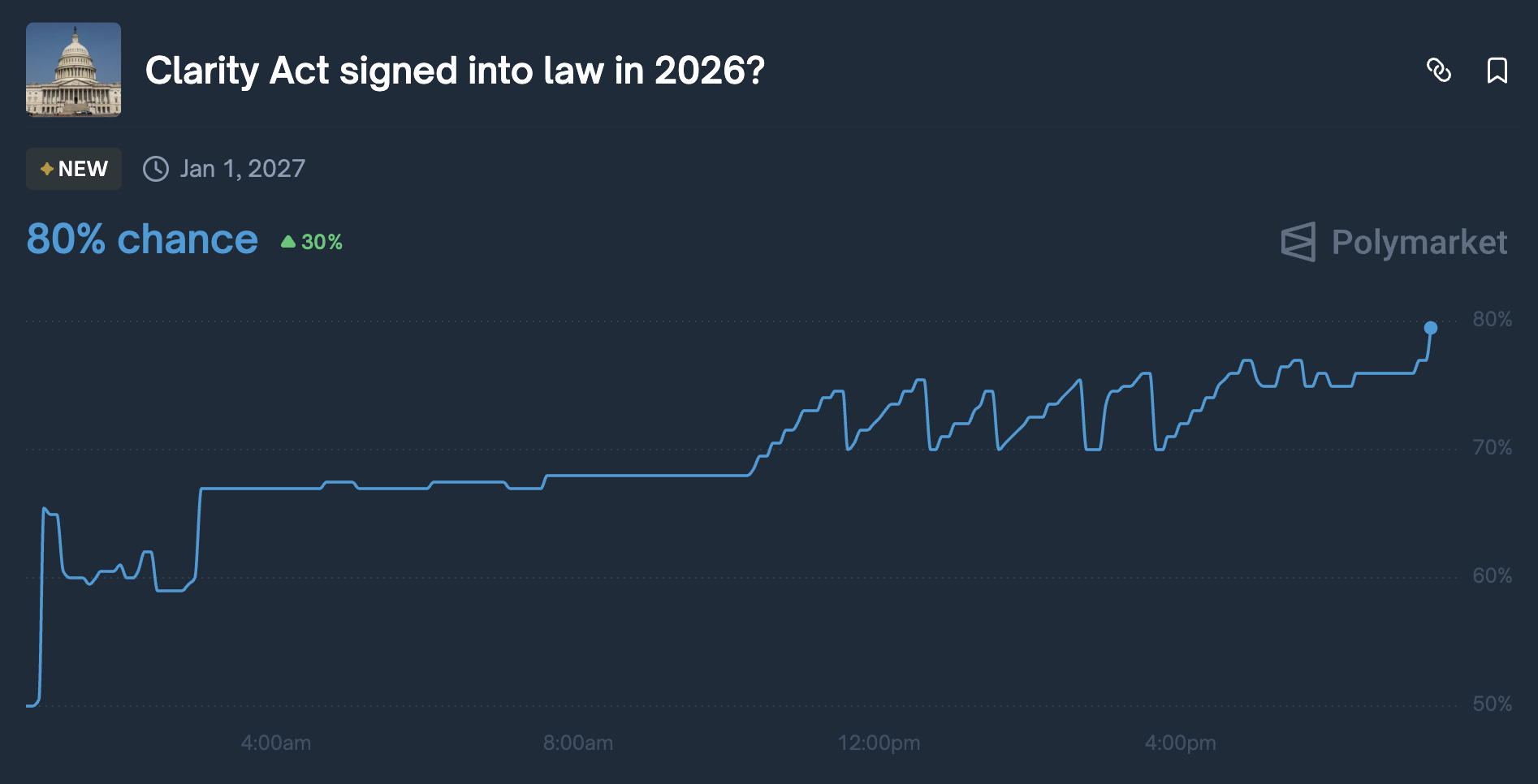
According to Polymarket, the CLARITY Act has an 80% chance of being signed into law by the end of the year.
Read More on SolanaFloor
Solana Under Fire for Second Stealth Patch in 8 Months
Rivals Criticize Solana for Another Secret Emergency Network Update
Did Solana Betray the Ethos?