For years, the idea of putting real-world assets on a blockchain lived somewhere between an academic exercise and a crypto talking point. Industry panels discussed tokenized stocks, treasuries, and commodities as inevitable, yet actual adoption progressed slowly. Believe it or not, as of New Year’s Day 2024, Solana only had just over $100,000 worth of assets tokenized on the network. If you told someone that number would surpass $1 billion just over 2 years later, they would probably have let out a hearty chuckle.
On Solana, real-world assets began to move from theory into measurable onchain behavior, revealing how users interact with familiar financial instruments in a new environment.
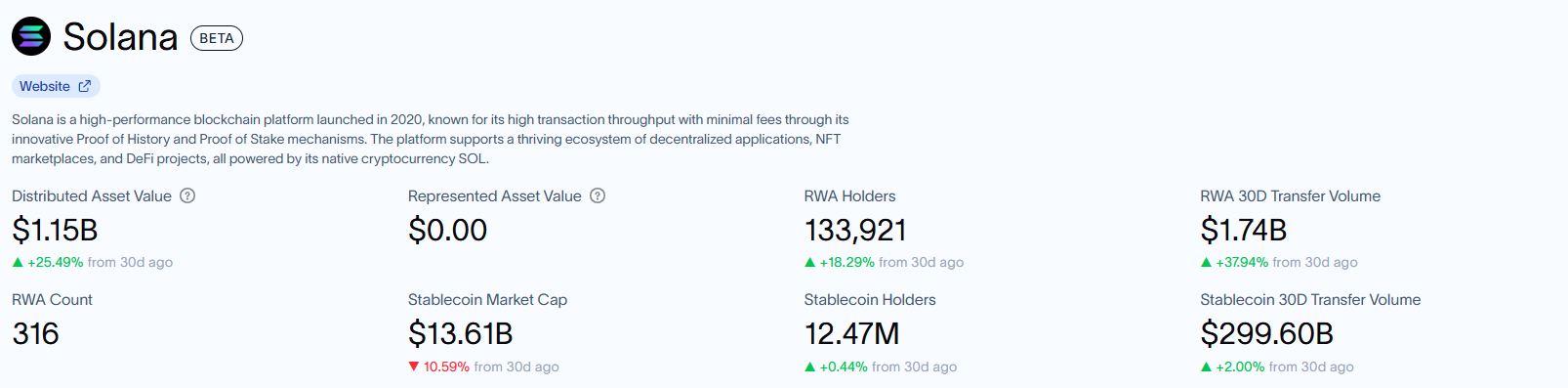
Data from rwa.xyz indicates that the total value of real-world assets on Solana has reached a new all-time high of $1.15 billion. In absolute terms, this figure may not appear transformative compared with traditional financial markets. Within crypto, however, it marks a meaningful milestone. The recently released 2026 Outlook report from CoinShares suggests that 2026 would be “tokenisation’s breakout year,” and it is indeed shaping up to be so for the Solana ecosystem.
Welcome to Solana RWAs!
From Experimentation to Measurable Growth
The pace of growth tells a clearer story than the headline number alone. At the start of 2024, RWAs were barely a thing on Solana. By early 2025, the total valuation had reached the hundreds of millions. Shortly into 2026, onchain RWA value on Solana has surpassed $1 billion dollars and continues to trend upward. The bulk of this value is classified as “distributed” RWAs, meaning assets are held directly by users through their own wallets or custodians.
This trajectory reflects more than a single successful product. Issuers have steadily expanded the range of available assets, while users have shown a growing willingness to hold tokenized versions of traditional investments onchain.
Holder Growth Offers a Window Into Behavior
Solana now has more than 133,000 unique RWA holders, with double-digit percentage growth over the past 30 days. This expansion suggests that participation has broadened beyond a narrow institutional audience.
Rising holder counts often signal improving accessibility and confidence. In this case, they also suggest that users increasingly view RWAs as assets worth keeping rather than trading quickly. Many of these wallets belong to individuals who already understand onchain self-custody and now apply that familiarity to stocks, funds, yield-bearing instruments, and the like.
This pattern mirrors a broader maturation across the Solana ecosystem. As the network supports a wider range of assets, users appear more willing to allocate capital toward longer-term holdings.
Asset Variety Grows as Capital Concentrates
Solana now hosts more than 300 distinct real-world assets with more on the way. These include tokenized equities, government debt, private credit products, and yield-focused instruments. The growing asset count points to sustained issuer interest and continued experimentation with structure and design.
In reality, the assets that have seen the most explosive growth in both trading volume and holder count are tokenized stocks. Tokenized stocks have taken off on Solana because they align closely with how users already behave onchain. While other RWAs often remain parked in wallets controlled by centralized issuers, tokenized equities circulate widely across user wallets and DeFi protocols.
At the same time, value concentration remains high. A small number of large products account for most of the total capital locked in RWAs on Solana. This pattern appears frequently in early-stage markets, where early leaders attract liquidity first, and smaller offerings follow more slowly.
Over time, broader diversification could reshape this distribution as new issuers target more specialized niches such as rare metals or crude oil.
What Can You Do With RWAs on Solana?
Solana's RWA transfer volume has grown by nearly 38% to approximately $1.74 billion over the last 30 days. The high transfer volume, alongside rising holder counts, suggests these assets are not merely being accumulated and left idle. Instead, users actively move RWAs between wallets for trading, settlement, and collateralization. This pattern points to experimentation and operational use. Furthermore, a recent CoinGecko report notes that RWAs were “the most profitable crypto narrative in 2025.”
So, how can you get in on the action?
That is where platforms like Remora Markets come in.
The emergence of Remora Markets adds a layer of functionality that previously did not exist for RWAs on Solana. Rather than treating tokenized stocks as isolated instruments, Remora enables deeper composability across DeFi with perpetual leverage trading, looping, arbitrage trading, and liquidity provision all now possible with tokenized assets.
Users can move beyond simple buying and holding to begin deploying these assets in more dynamic strategies. Assets that once required custody, paperwork, and fixed trading windows now move freely across wallets and protocols.
How You Can Get in on the Action
The first step is actually acquiring some assets for yourself. On Solana, tokenized stocks exist as native SPL tokens. Users can acquire them through platforms such as DeFiTuna, Jupiter, and Raydium, or directly through supported wallets like Phantom and Solflare using built-in swap features.
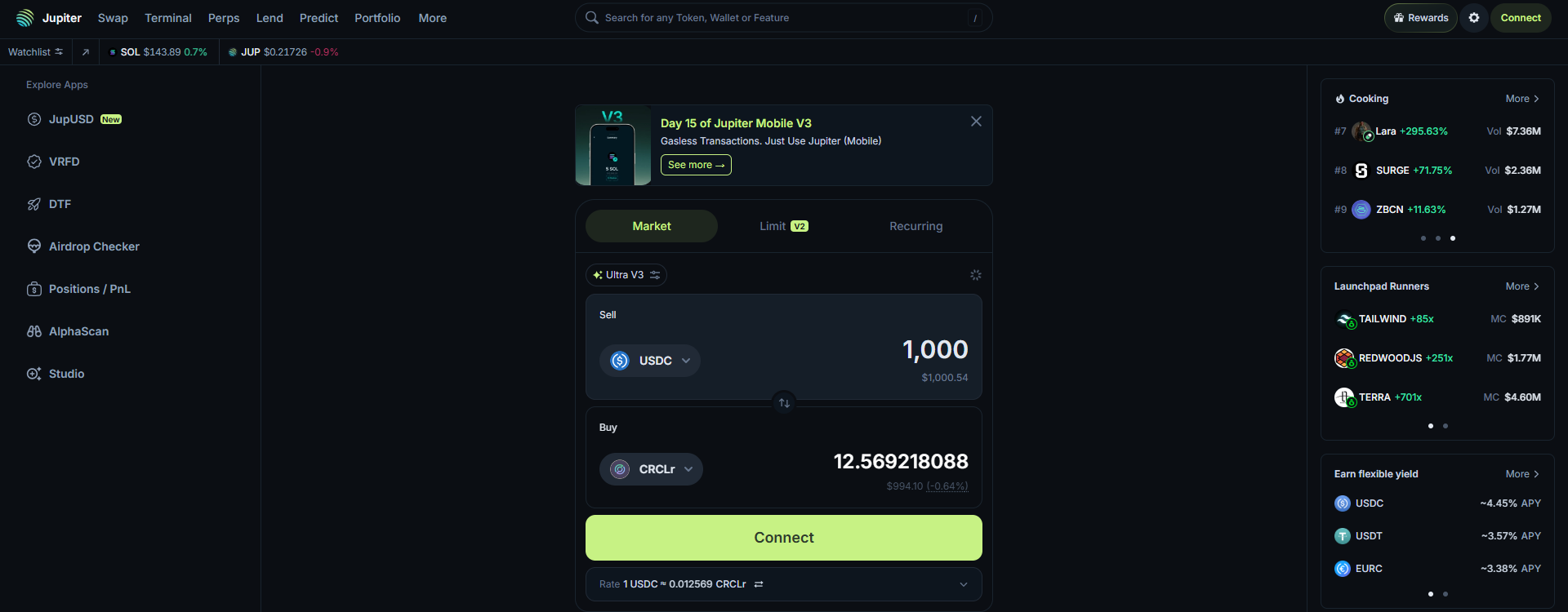
Once you have acquired the assets, it is time to put them to work:
Liquidity Provision
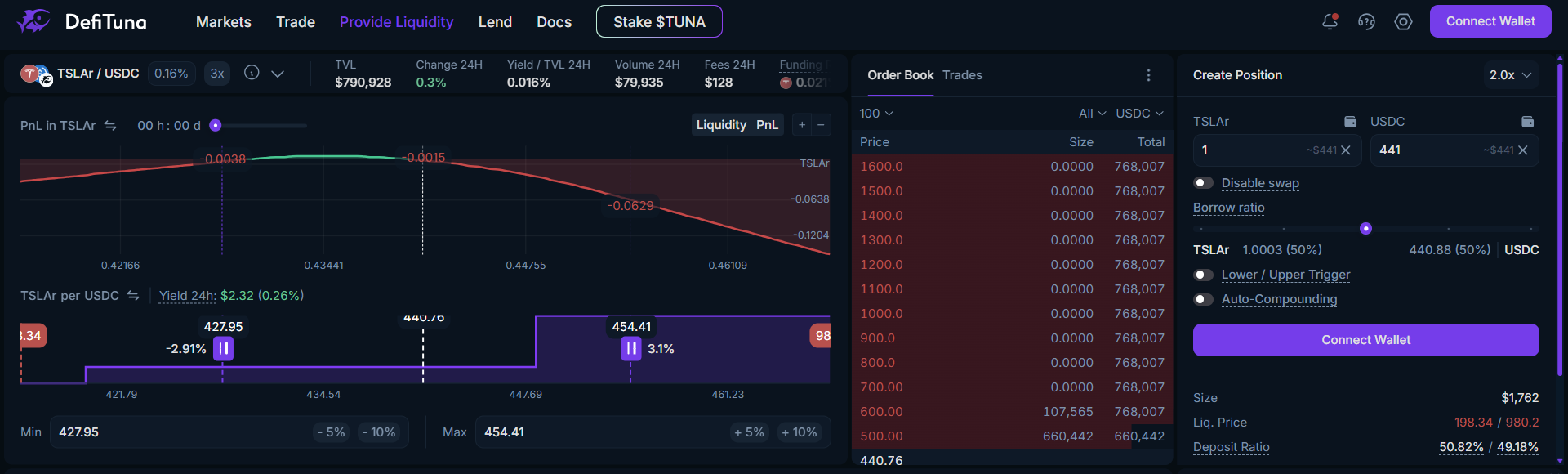
Liquidity provision represents one common strategy. By depositing assets such as $TSLAr or $CRCLr into pools on DeFiTuna or Raydium, users can earn trading fees.
Permissionless Arbitrage
Permissionless arbitrage is another strategy to consider if you want to take advantage of the differences between onchain prices and traditional market prices.
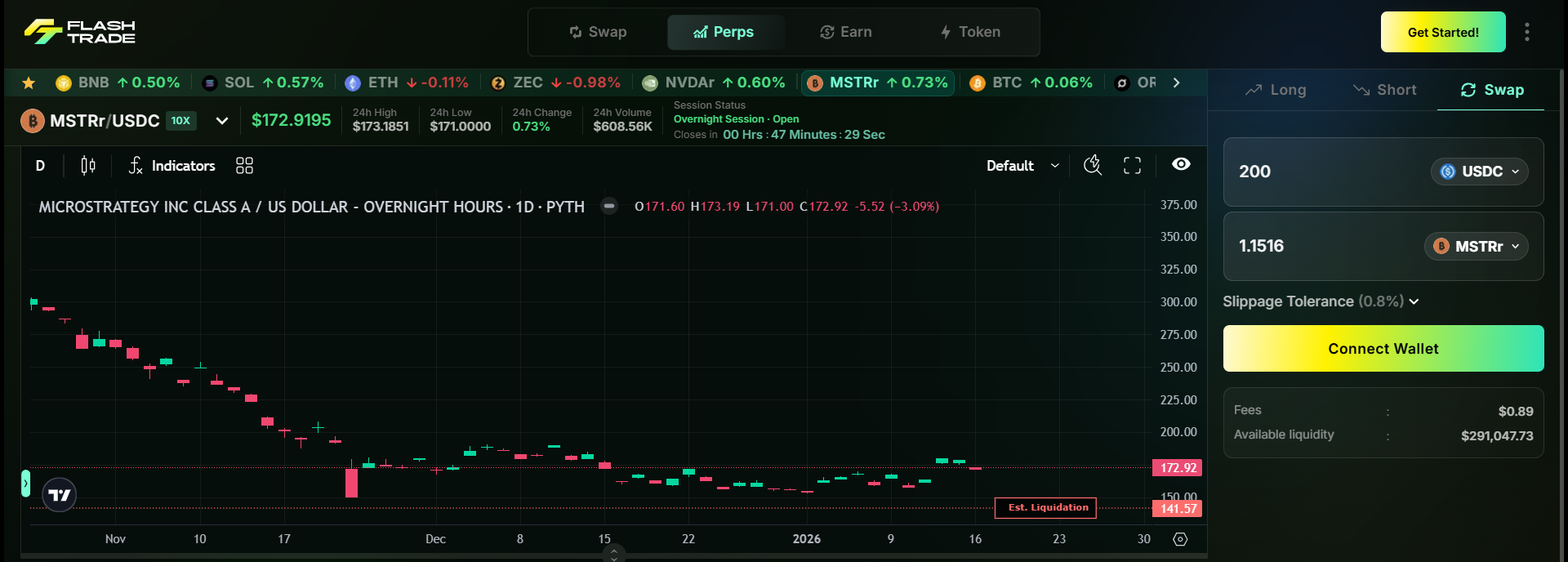
If an rStock trades at a discount onchain, a trader can buy it on a Solana DEX aggregator such as Jupiter or Titan and redeem it through Flash Trade at the NASDAQ price. If an rStock trades at a premium, a trader can buy it directly from Flash Trade at the NASDAQ price and sell it on Solana DEXs at the higher onchain price. This is made possible by Flash Trade’s oracle-based, permissionless swap pool for tokenized stocks, enabling traders to trade rStocks at NASDAQ prices.
Perpetual Trading
Perpetual leveraged trading allows users to gain amplified exposure to Remora’s tokenized assets without holding the underlying tokens. On Flash Trade, users can open long or short positions on rStocks such as $TSLAr, $NVDAr, and $CRCLr.
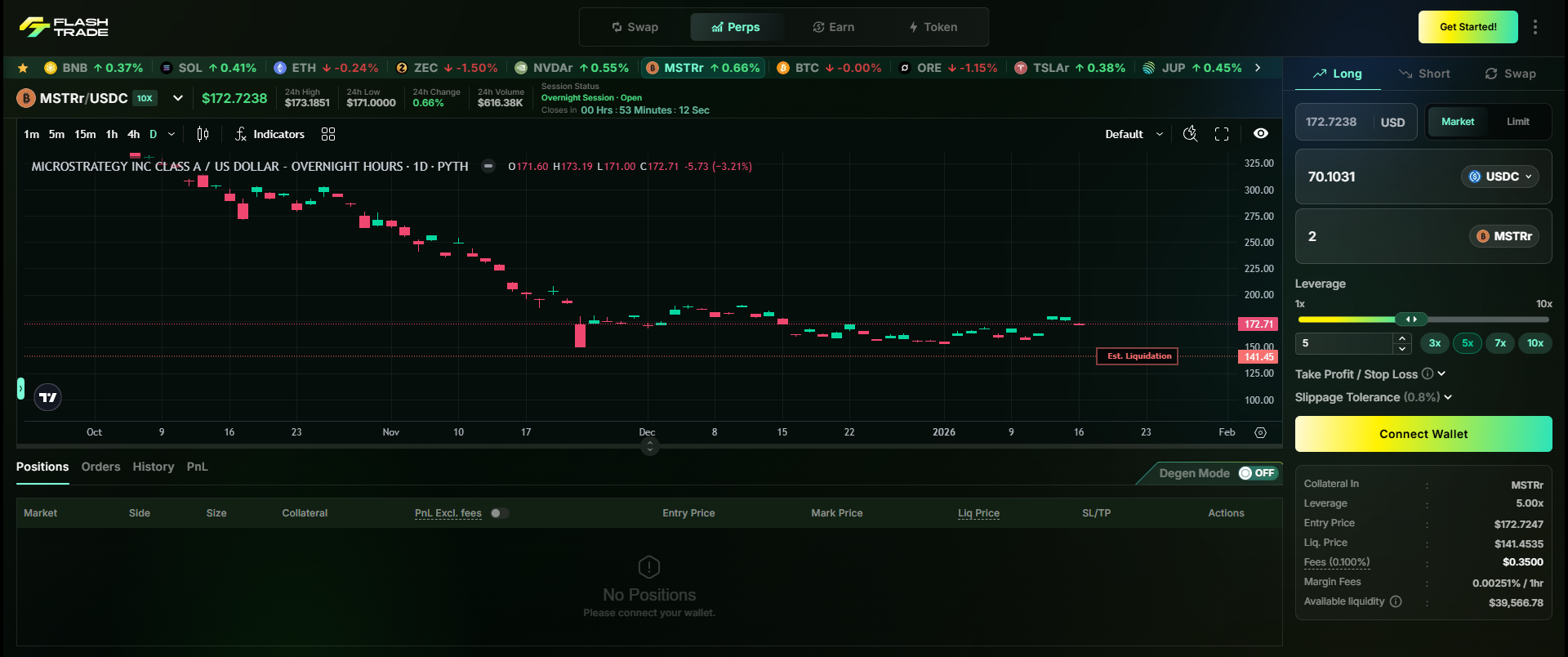
Note: Leverage enables capital-efficient exposure and directional trading, but it introduces liquidation risk and greater sensitivity to volatility. Users must manage positions carefully.
Loops
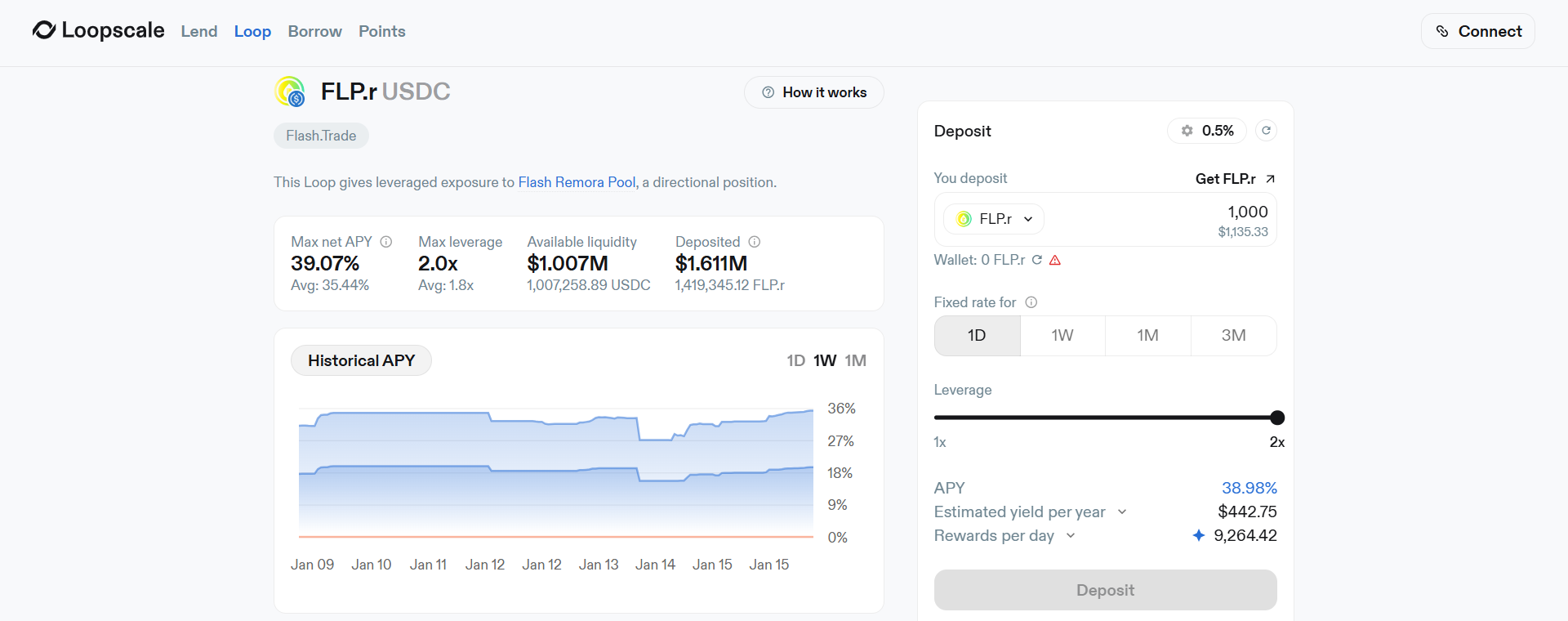
A loop is a leveraged strategy where you deposit an asset, borrow a portion of it (or a similar asset), swap the borrowed funds for more of the original asset, and redeposit it to boost yield. Individual assets or Flash Trade’s FLP.r index of 5 major Remora stocks ($TSLAr, $CRCLr, $SPYr, $MSTRr, and $NVDAr) can now be looped on platforms such as Loopscale, which handle the process automatically.
Solana’s Place in the Competitive Landscape
Despite its growth, Solana still commands only a 5% share of the global onchain RWA market. Ethereum maintains its lead through institutional familiarity, regulatory alignment, and first-mover advantage. On the surface, raw asset value suggests a large gap between the two ecosystems.
However, the total onchain asset value alone often obscures how these assets actually function. Many tokenized RWAs, particularly treasuries and funds, sit largely idle in wallets controlled by centralized issuers or custodians. In these cases, assets technically exist onchain but remain functionally disconnected from DeFi. High nominal value does not necessarily translate into real onchain usage.
A more revealing metric would be how much of that value actively moves through DeFi. By this measure, Solana stands out. Throughout 2025, Solana routinely commanded up to 95% of all tokenized stock trading volume across all chains.
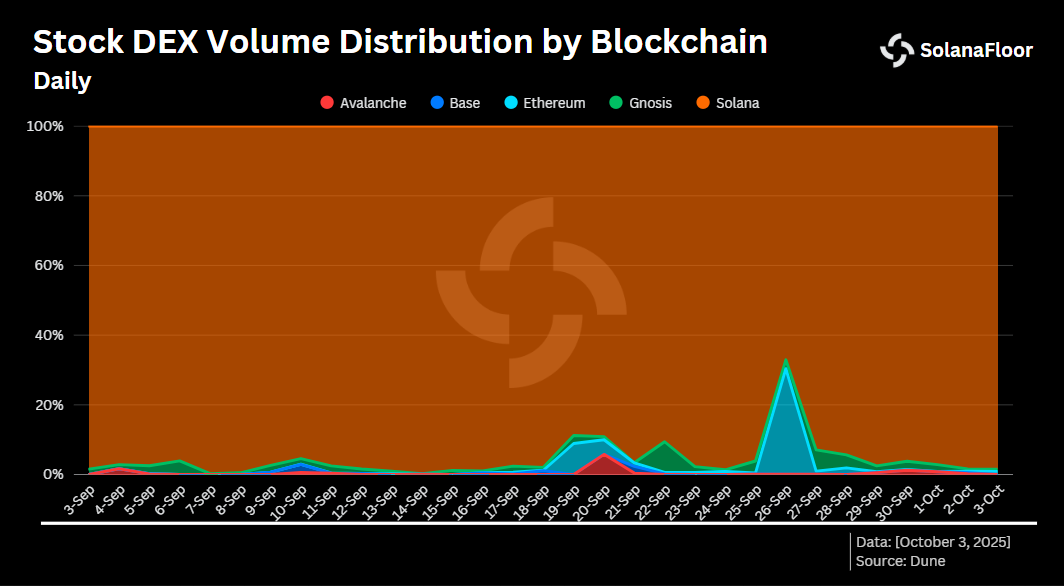
This concentration suggests that users do not simply hold assets on the network, but actively trade them, deploy them as liquidity, and integrate them into onchain strategies.
Solana’s structural advantages help explain this behavior. Low transaction fees reduce friction for frequent settlement. High throughput supports composability with decentralized exchanges and lending platforms. Deep stablecoin liquidity enables efficient movement between onchain and offchain value. Together, these factors make Solana particularly attractive for RWAs designed for active use rather than passive custody, especially at retail scale.
At this stage, Solana’s RWA market is at a crossroads. The infrastructure is in place, users have arrived, and behavior has begun to change.
Disclaimer: Remora Markets and SolanaFloor are owned and operated by Step Finance
Read More on SolanaFloor
Solana Leads All Chains in Tokenized Stock Market Size Amidst RWA-Fi Boom