For much of the last two years, AI-related tokens on Solana were often grouped with short-lived memes rather than long-term infrastructure. Many projects relied on humor, viral references, or abstract promises rather than working systems. That perception is now showing signs of change.
A new cluster of Solana-based AI coins sits at the intersection of meme culture, developer tooling, and agent orchestration. While speculation still plays a role, the underlying activity looks more grounded in real software experimentation than earlier cycles.
This shift does not suggest that Solana has suddenly solved the challenges of onchain AI. Instead, it highlights how the ecosystem has begun to blend cultural momentum with practical development. Tokens such as $GAS, $SOL, $RALPH, $KLED, and $VVM illustrate this transition clearly. They emerged from meme-driven narratives, yet now connect directly to open-source tools, developer workflows, and the growing interest in AI agent orchestration.
Solana’s Position in the AI Agent Landscape
Among major blockchains, Solana currently leads in AI agent adoption by raw numbers. An August report from Boston Consulting Group placed roughly 800 AI agents on Solana, ahead of Base with about 700.
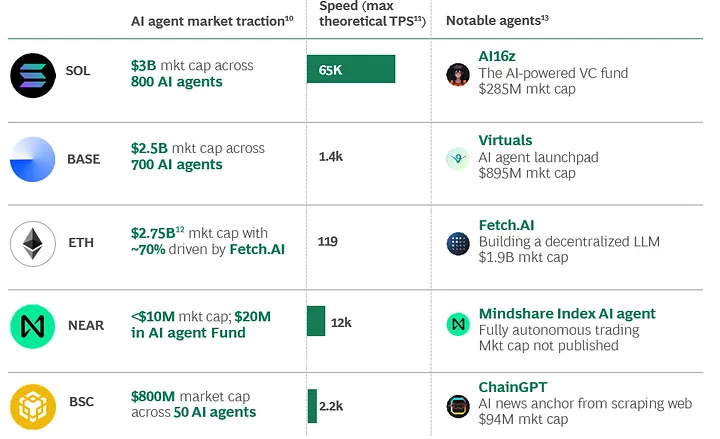
Ethereum maintains a smaller number of onchain agents but hosts several high-market-cap examples, such as Artificial Superintelligence Alliance ($FET), which drives a large share of Ethereum’s AI-related value. Other chains like NEAR and BNB Smart Chain signal interest through roadmaps and funds, yet they still host relatively few agents today.
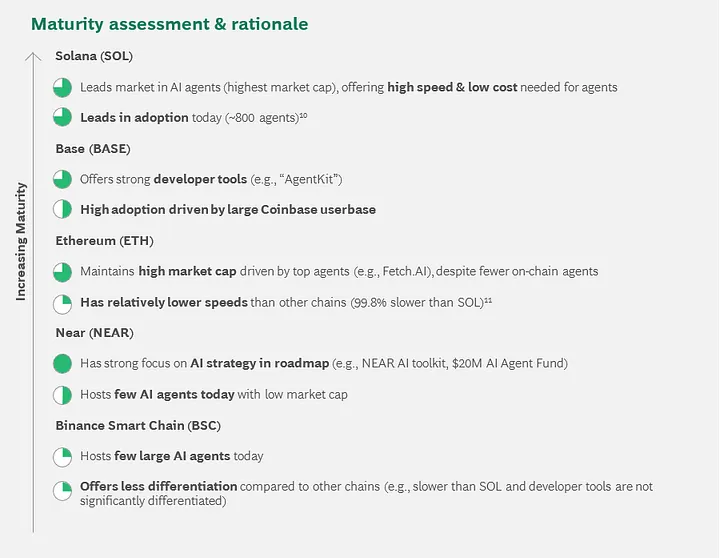
Solana’s advantage comes from speed, low transaction costs, and a mature launchpad culture. These characteristics lower friction for developers who want to experiment quickly. They also make it easier for communities to tokenize ideas before teams finalize long-term product plans. As a result, Solana became a natural home for early AI agent memes, even when those agents offered little real utility.
More Technical this Time Around?
The current wave differs from earlier meme cycles because it anchors itself in a specific technical theme. That theme is AI agent orchestration. Rather than promoting a single chatbot or novelty assistant, these projects focus on coordinating multiple AI agents to perform complex tasks.
$GAS provides the clearest example. Inspired by Gas Town, an open-source multi-agent orchestration framework created by former Google and Amazon engineer Steve Yegge, the $GAS token gained attention through a mix of technical credibility and meme energy. Gas Town frames software development as an industrial process. It allows developers to run twenty or more AI agents simultaneously without losing context or creating merge conflicts. The framework uses defined roles such as ‘Mayor’, ‘Overseer’, and ‘Crew’ to structure collaboration.
An anonymous community member later launched the $GAS token on BagsApp, a Solana-based token launchpad. The token quickly became a focal point for discussion around using crypto to fund open-source AI work, with Yegge himself publishing a blog post detailing his experience.
Trading activity surged, and the token reached a multi-million dollar market capitalization within days.
Meme Culture Still Prevalent
Cultural storytelling still plays a central role, but the current meta also reflects a shift in how tokens come to market. Ironically, this wave is not led by pump.fun, the dominant memecoin launchpad on Solana. Instead, BagsApp has emerged as the primary venue for these AI-related launches. Deployers actively scan for interesting open source or experimental AI development, launch a token around that work, and then reach out to the original developer to claim trading fees and formally associate with the project. When developers acknowledge the token or publicly discuss the underlying work, market attention often accelerates quickly.
This mechanism blends opportunism with funding experimentation. In some cases, the claimed fees provide meaningful resources for developers who were already building, effectively turning speculative trading into a form of grassroots patronage.
The pattern is not entirely new. Last year, the $WATER token on BagsApp drew widespread attention and controversy when Finn, the founder of BagsApp, faced heavy criticism for failing to convince MrBeast to endorse the project.
That episode demonstrated both the power and fragility of narrative-driven launches. Within this structure, cultural symbols still matter. The $SOL “trophy tomato” meme illustrates this clearly. Within the so-called Claude or vibe coding meta, $SOL represents persistence and aliveness, often symbolized by a trophy tomato that refuses to die. While playful, this narrative resonates with developers experimenting with Anthropic’s Claude models for long-running coding sessions.
$VVM extends this cultural layer into tooling. Described as a virtual vibe machine, it introduces a declarative language for controlling AI agents on a per-request basis. The idea reportedly draws on discussions around how developers want to guide models like Claude more intuitively. The token’s rapid price appreciation reflects both enthusiasm for the concept and speculation driven by its meme-friendly framing.
$RALPH sits between $GAS and $VVM in tone. It references the Ralph Wiggum loop, an orchestration pattern developed by Geoffrey Huntley. The technique involves repeatedly confronting the AI agent with its own output until it identifies a correct solution. The associated token routes royalties toward ongoing open research, reinforcing the link between token activity and development funding.
Alongside these projects, $KLED stands out as a notable contrast, not because it rejects speculation, but because it targets a very different problem. Kled AI is a mobile application launched in late 2025 that incentivizes users to upload personal photos, videos, and even sensitive data such as medical scans for AI training. Within two weeks of launch, the app reportedly generated around 3 million daily uploads from roughly 200,000 contributors.
The platform relies on explicit opt-in participation and positions compensation as the core incentive. Some users reportedly earn up to $6,400 per month, depending on the type and volume of data they contribute. Kled frames this model as a response to a growing data scarcity problem in AI automation, particularly for edge cases where models fail due to limited real-world context.
Taken together, these dynamics show how traders and developers continue to test new ways to align speculation with software development. No one knows how long this meta will last. What is clear is that the mechanics of token launches have evolved.
All-time High Market Caps
Onchain data shows that these tokens attract significant capital in short periods. Early buyers of $GAS recorded large unrealized gains, and trading volumes spiked sharply during peak attention. The token reached an all-time high of over $62 million in market capitalization on 16th January, but subsequently retraced below $30 million, where it is currently trading.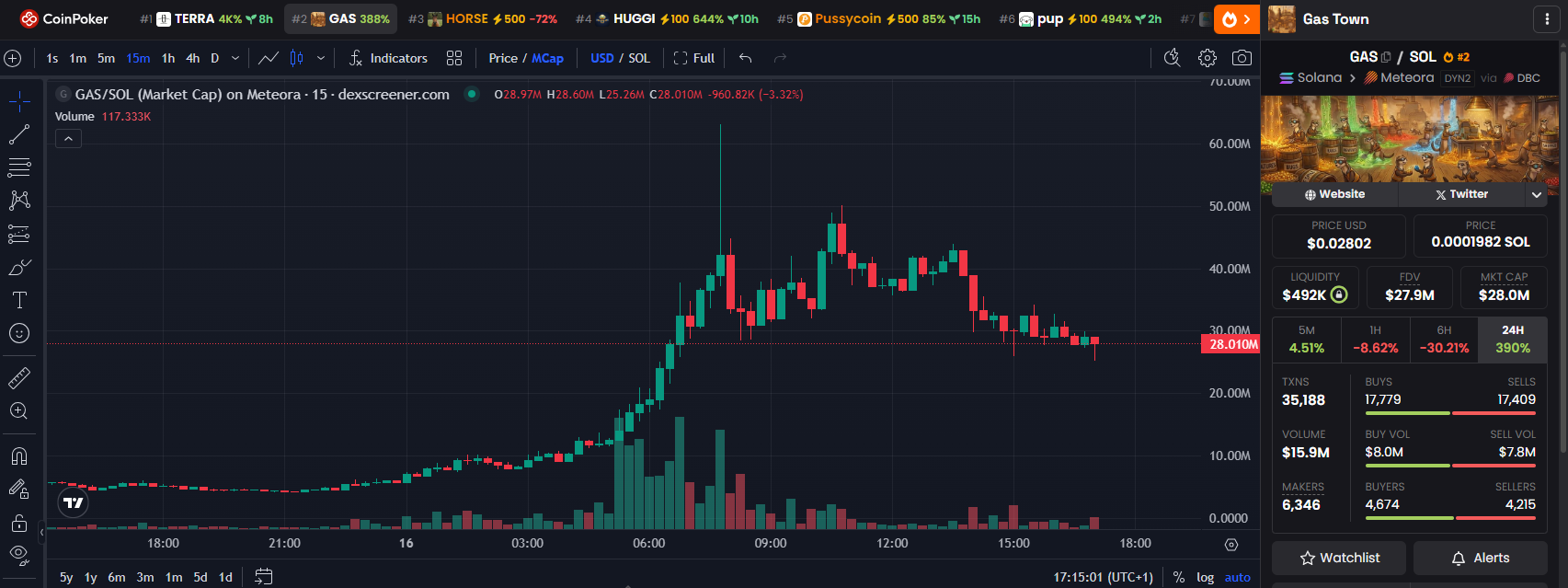
Analytics platform Lookonchain drew attention to a particular trader who managed to turn $394 into a $420,700 profit on the $GAS token.
This is in direct contrast to the sentiment in 2025, which saw both meme coins and AI narratives post negative average returns, even while remaining popular among traders, according to a CoinGecko report.
Why Does this Phase Feel Different?
Despite familiar risks, the current moment stands apart from earlier AI token cycles. Previous waves promoted infrastructure before consumer-grade applications existed. Many teams stopped shipping once prices fell. In contrast, the present orchestration-focused tokens link directly to tools that developers already use or actively explore. They also reflect a broader shift toward AI-first workflows, where humans guide intent and machines execute tasks.
Solana’s ecosystem remains far from mature in this area. Most AI agents still focus on narrow use cases, and real-world adoption remains limited. Yet the blend of memes, open-source frameworks, and tokenized incentives suggests a more experimental and arguably healthier phase.
AI coins on Solana no longer sit purely in the meme category. They still rely on cultural momentum, but they increasingly point toward practical questions about how developers coordinate agents, fund tools, and redefine software work.
Read More on SolanaFloor
Forward Industries' BisonFi Climbs Ranks in Solana Prop AMM Race
Here Is Everything You Need to Know About the $SKR Airdrop
Trump’s World Liberty Finance Goes Mainstream