Syndica'nın Solana'daki onchain faaliyetlerine ilişkin son araştırması, Solana Vakfı Delegasyon Programı'nın ağdaki rolünde keskin bir azalma olduğunu ortaya koyuyor. Geçtiğimiz yıl, programın toplam hissedeki payı %11'den %5'e düşerek 43,5 milyon $SOL'den 21,2 milyon $SOL'e geriledi.
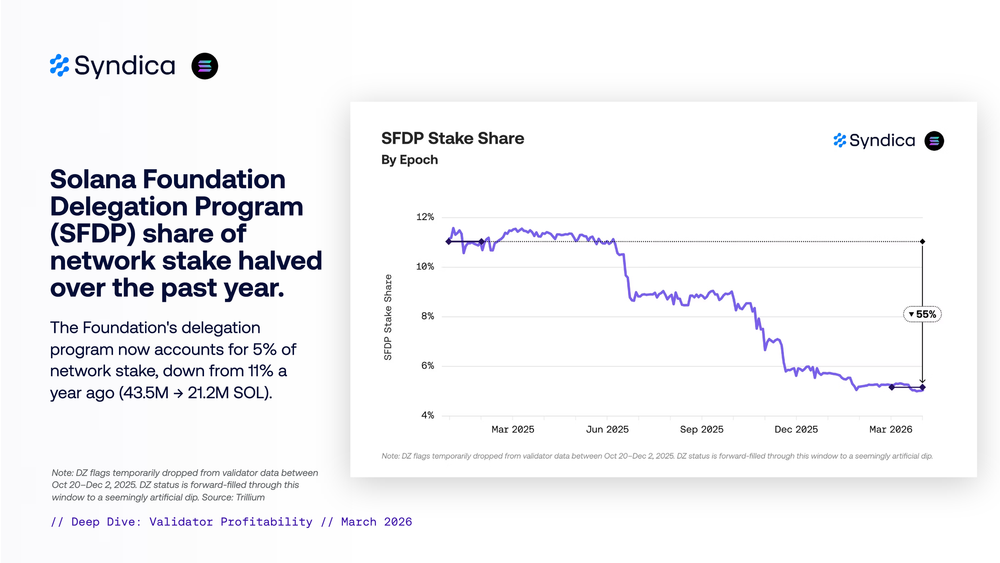
Bu değişim bilinçli bir stratejiyi yansıtmaktadır. Solana Vakfı, ağın ilk aşamasında doğrulayıcı katılımının önünü açmaya yardımcı olmak için Kasım 2020'de delegasyon programını başlattı. O dönemde, yüksek işletme maliyetleri ve sınırlı üçüncü taraf delegasyonu yeni doğrulayıcılar için engeller oluşturuyordu. Program, performansa dayalı olarak daha küçük operatörlere hisse devrederek bu boşluğu ele aldı.
Ekosistem olgunlaştıkça, dış delegasyon önemli ölçüde genişledi. SFDP dışı paylar lansmandan bu yana yaklaşık %230 oranında artarken, toplam yetkilendirilmiş pay yaklaşık %95 oranında artmıştır. Vakıf, Nisan 2024'te yaklaşımını toplam doğrulayıcı sayısından ziyade doğrulayıcı bağımsızlığına öncelik verecek şekilde değiştirdi.
Yakın zamanda Vakıf, doğrulayıcı bağımsızlığını hızlandırmayı amaçlayan politika değişiklikleri yoluyla ayak izini aktif olarak azalttı. Yeni bir kurala göre, programa eklenen her yeni doğrulayıcı için, 18 aydan uzun süredir Vakıf hissesini elinde bulunduran ve 1.000 $SOL'den daha az dış hisseye sahip olan üç doğrulayıcı programdan çıkarılmaktadır. Bu yaklaşım, doğrulayıcıları topluluk delegasyonunu çekmeye zorlar, Vakıf desteğine uzun vadeli bağımlılığı azaltır ve daha verimli ve merkezi olmayan bir doğrulayıcı setini güçlendirir.
Sonuçlar artık daha küçük ama kendi kendini idame ettiren bir doğrulayıcı setini göstermektedir. Vakıf desteği dışında en az 50.000 $SOL tutan doğrulayıcılar Nisan 2024'ten bu yana %121 oranında artmıştır. Aynı zamanda, program tarafından desteklenen doğrulayıcıların sayısı %59 oranında düşerken, desteklenmeyen doğrulayıcılar arasında sadece %8'lik bir düşüş yaşandı.
Başa Baş Eşiği Yükseldikçe Doğrulayıcı Ekonomisi Sıkılaşıyor
Doğrulayıcı kârlılığı daha zorlu hale gelmiştir. Başa baş noktasına ulaşmak için gereken minimum bahis miktarı geçtiğimiz yıl, özellikle de 2025'in başlarında keskin bir artış gösterdi.
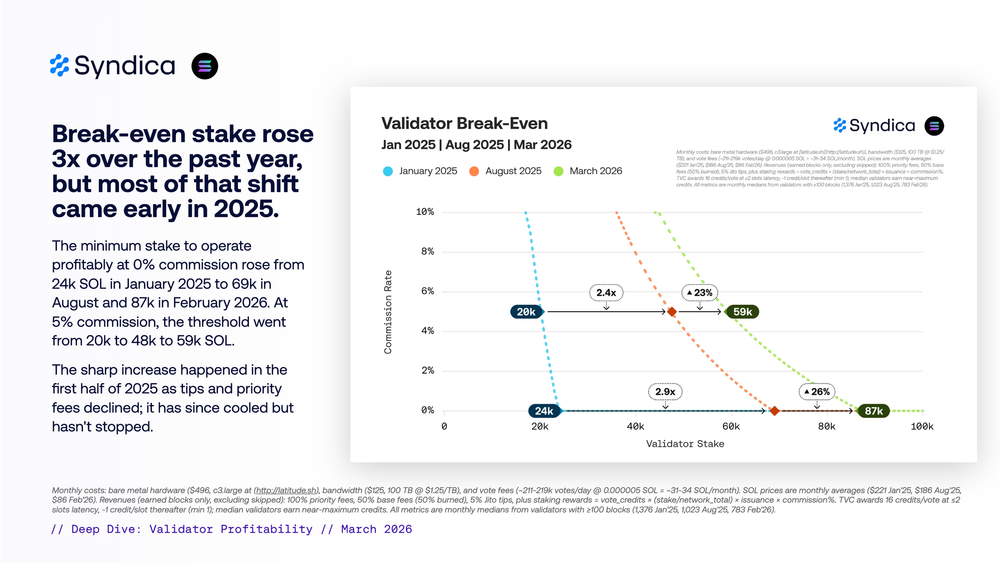
0 komisyonda, başa baş eşiği Ocak 2025'te 24.000 $SOL'den Ağustos'ta 69.000 $SOL'e ve Şubat 2026'da 87.000 $SOL'e yükselmiştir. 5 komisyonda, eşik 20.000 $SOL'den 48.000 $SOL'e ve ardından 59.000 $SOL'e yükselmiştir.
Bu artışın çoğu, azalan bahşişler ve öncelik ücretleri nedeniyle 2025'in ilk yarısında gerçekleşti. Artış hızı yavaşlamış olsa da maliyetler yüksek kalmaya devam etmektedir. Bu eğilim, daha küçük doğrulayıcıların artan mali baskıyla karşı karşıya olduğu yönündeki daha geniş ekosistem endişeleriyle uyumludur.

Doğrulayıcı setinin yapısı da değişmiştir. 2025'in başlarında, hisse dağılımı daha küçük doğrulayıcılardan oluşan uzun bir kuyruk gösteriyordu. Mart 2026 itibarıyla bu kuyruk büyük ölçüde ortadan kalkmıştır. Çoğu doğrulayıcı artık 100.000 ila 1 milyon $SOL aralığında faaliyet göstermekte ve daha orta ağırlıklı bir dağılım oluşturmaktadır. En iyi doğrulayıcılar arasındaki hisse yoğunluğu büyük ölçüde değişmemiştir.
Ağ Performansı Zirve Seviyelerine Yakın
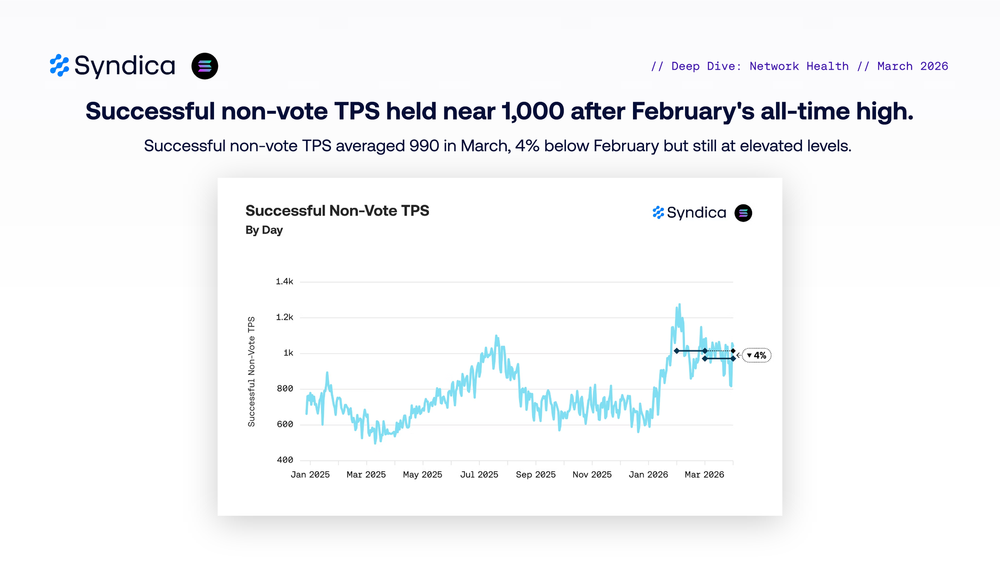
Doğrulayıcı kompozisyonundaki değişikliklere rağmen ağ performansı güçlü kalmaya devam etmektedir. Mart ayında saniyede ortalama 990 başarılı oy dışı işlem gerçekleşmiştir; bu rakam Şubat ayındaki tüm zamanların en yüksek seviyesinin sadece %4 altındadır ve hala 1.000 TPS'ye yakındır.
Oy verimliliği biraz düşmüş olsa da yüksek kalmaya devam etmiştir. Aralık ayında %97,8 olan oyların yaklaşık %94,5'i bir slotun içine düşmektedir. Bununla birlikte, oyların %99,3'ü hala iki yuva içinde yer alıyor ve bu da tutarlı bir güvenilirliğe işaret ediyor. Oylama gecikme süresi bir önceki seviyesine göre yaklaşık %5 artarak 1,08 slot seviyesine yükselmiştir. Oylama başarı oranları %99,7'nin üzerinde kalmaya devam ediyor ve yıldan yıla çok az değişiklik gösteriyor.
Bilgi işlem talebi, blok başına medyan bilgi işlem birimlerinin bir önceki aya göre %8 düşmesiyle medyan düzeyde azaldı. Ancak, en yüksek talep güçlü kalmaya devam ediyor. Yüksek yüzdeli bloklar 60 milyon hesaplama birimi sınırına yaklaşmaya devam ediyor.
Doğrulayıcı İstemci Çeşitliliği Genişliyor
Müşteri dağılımı verileri hem yoğunlaşmayı hem de çeşitlenmeyi göstermektedir. Agave şu anda toplam hissenin %86'sını destekleyerek 2025 ortasından bu yana en yüksek payına ulaşmıştır.
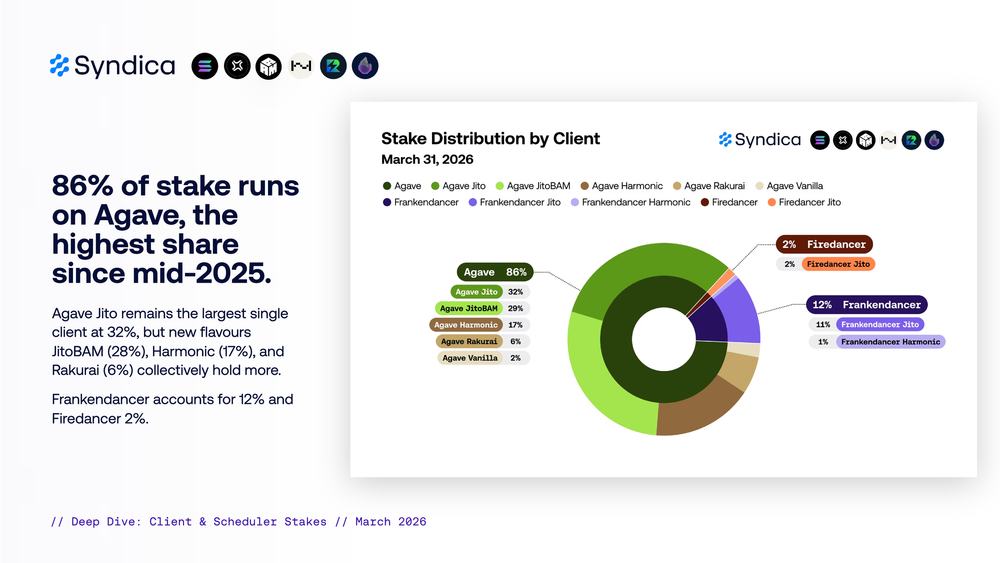
Bu ekosistem içinde Agave Jito hisselerin %32'sini oluşturuyor. Ancak, yeni müşteri varyantları toplu olarak bu payı aşıyor. JitoBAM %28, Harmonic %17 ve Rakurai %6 paya sahip. Frankendancer %12, Firedancer ise %2'lik bir paya sahip.
Zamanlayıcı kullanımı eşit olarak bölünmüş durumda. Dengeli ve Gelir Optimizasyonlu programlayıcıların her biri hisselerin %47'sini kontrol ederken, kalan pay daha küçük konfigürasyonlara dağıtılmıştır.
Artan Ademi Merkeziyetçiliği Destekleyen Topluluk
Veriler, daha az sayıda ancak ekonomik açıdan daha bağımsız doğrulayıcılara doğru evrilen bir ağa işaret ediyor ve bu değişim topluluk genelinde tepki çekti. Solana'nın kurucu ortağı Anatoly Yakovenko, SFDP'yi "şimdiye kadar kesintiye uğrayan tek hükümet programı" olarak nitelendirerek değişikliği esprili bir şekilde çerçeveledi.
SOL Strategies'in Teknoloji Direktörü Max Kaplan, Solana'nın hayatta kalmak için Vakfa bağlı olduğu söylemine doğrudan meydan okudu.

Bu tepki, Solana'nın doğrulayıcı setinin büyük ölçüde Vakıf delegasyonuna dayandığı ve merkezileşme konusunda endişelere yol açtığı yönünde uzun süredir devam eden bir eleştiriye dayanıyor. Zaman içinde SFDP hisselerindeki büyük düşüş, bu anlatıya doğrudan meydan okumaktadır.
Yasal Uyarı: SolanaFloor, Jito Vakfı'na aittir ve Jito Vakfı tarafından işletilmektedir.
SolanaFloor hakkında daha fazla bilgi edinin
SolanaŞirketi 8 Milyon Dolarlık Artışla $SOL Birikimine Dönüş Sinyali Verdi
$BNSOL, DeFi Mevduat Uçuşunun Ortasında Solana'nın LST Tacını Talep Ediyor
2026'da DeFi'ye Yönelik En Büyük Tehdit Nedir?