Solana Shrugs off 4th-Largest DDoS Attack in History
Would a higher validator count protect Solana against denial of service attacks?
- Published:
- Edited:
Solana has brushed aside a malicious DDoS (Distributed Denial of Service) attack, with the network suffering zero impact on performance.
With all eyes on Solana Breakpoint over the past week, malicious actors were convinced they had an opportune window to strike against the network. The sustained attempt ranks as the 4th-largest DDoS attack in internet history, based on tbps (terabits per second).
While Solana remained unfazed during the assault, the attempt sparked debate around whether or not an increased validator count would help to shore up defenses ahead of future attacks.
Solana Network Unfazed by 6 Tbps DDoS Attack
As the excitement from Solana Breakpoint settles, ecosystem leaders have revealed that the network was under siege from a sustained DDoS attack during the last week. Data sourced by Pipe Network, an emerging Solana DePIN protocol, suggests that the attack is the 4th-largest strike against distributed systems in internet history.
Despite the attackers’ considerable efforts, Solana shrugged off the onslaught, suffering negligible impact on network performance. Solana thought leaders and advocates have celebrated the chain’s resilience, expressing bewilderment at the fact that the “network isn’t even blinking”.
Solana Labs co-founder Anatoly Yakovenko went so far as to say that a 6 tbps DDoS was “bullish”, noting that the attackers were “spending as much revenue as the chain makes” to send bits and execute the attack.
However, some commenters have argued that people shouldn’t encourage or sensationalize would-be DDoS attackers. Anza contributor trent.sol contends that the 6 tbps figure represented the peak of a 30-second burst, rather than a prolonged effort.
Are More Validators a Good Defense?
While the Solana network was able to shrug off the attack without suffering any performance issues, rival networks haven’t fared so well. On December 14, Sui fell victim to a DDoS attack of its own, suffering widespread delays and degraded performance.
Blockchain researcher Justin Bons used the failure to suggest that Solana needs to reinforce its declining validator count, arguing that the network could suffer the same fate if the number of active nodes continues to fall.
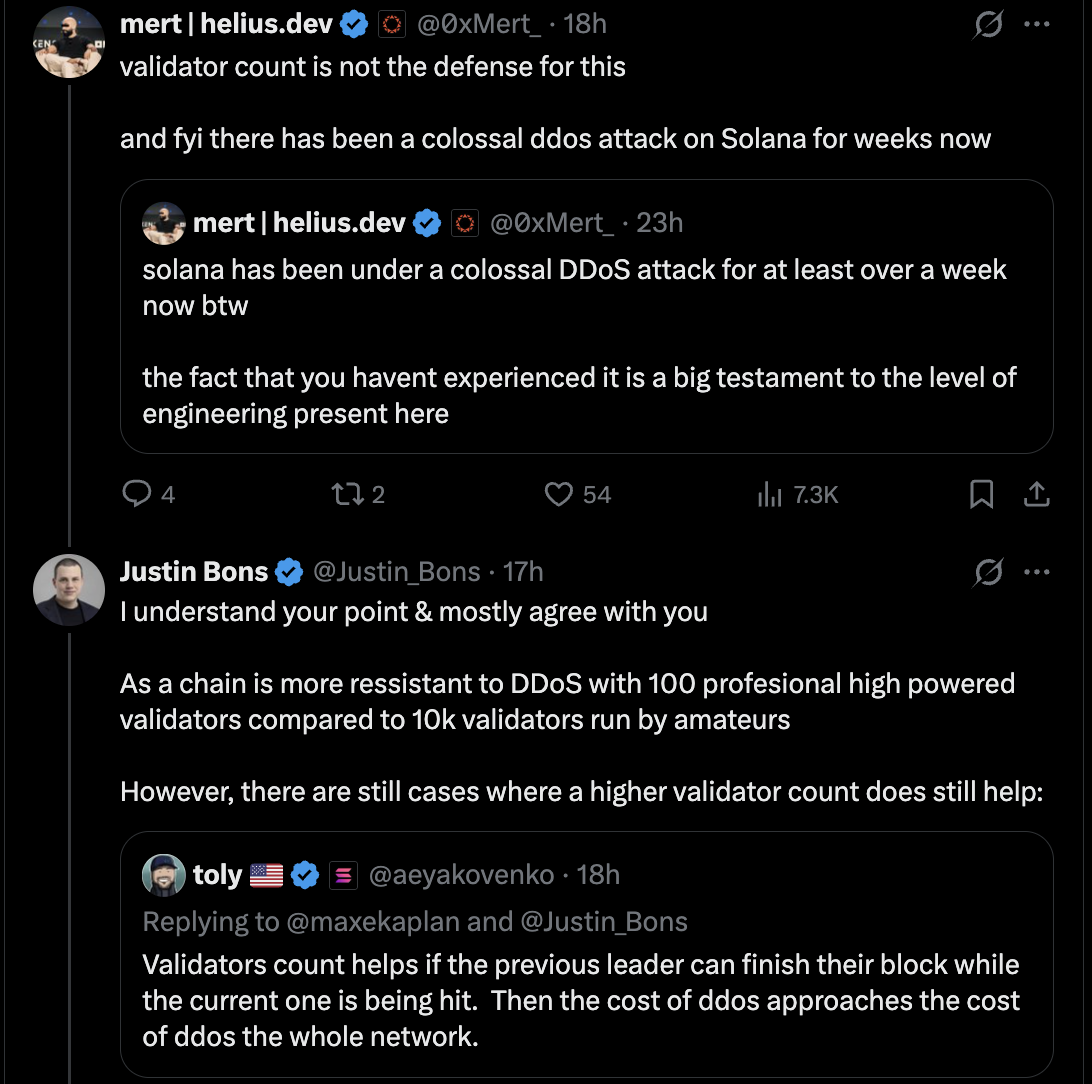
Helius CEO Mert Mumtaz rebuked Bons’ initial statement, insinuating that a higher validator count does not defend the network from attacks of this nature. Bons reiterated that while a smaller number of professional validators is preferable to a larger count of hobbyist operators, there were still some circumstances in which a higher count is advantageous.
Among Solana’s validator community, the “quality over quantity” argument is a common response to concerns over the network’s declining count.
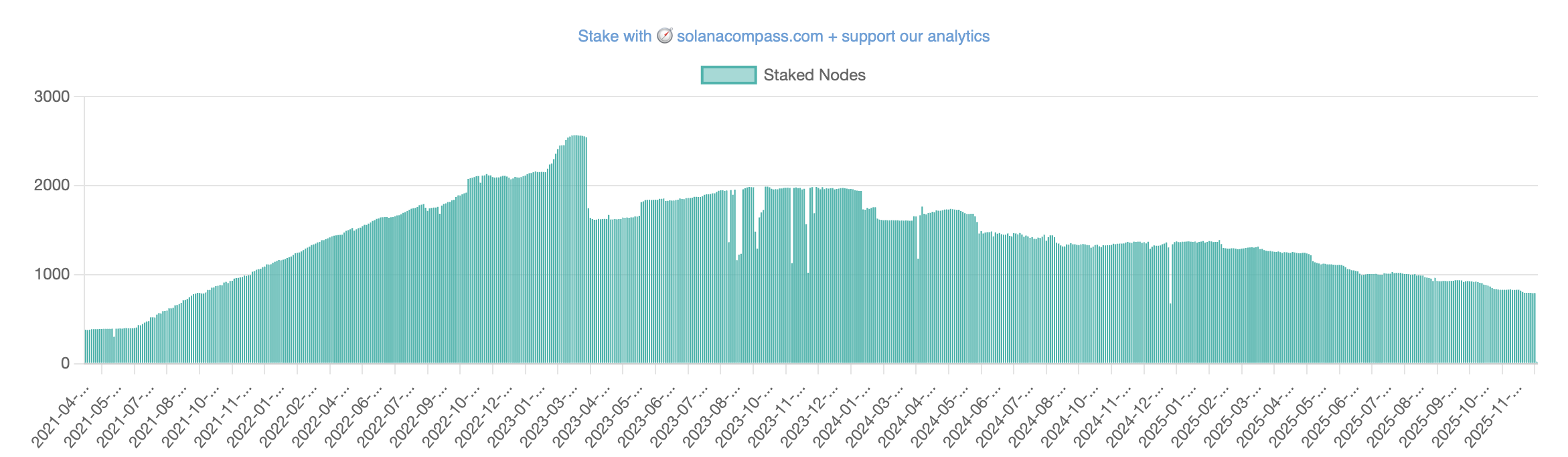
Speaking previously with SolanaFloor, SolStrategies CTO Max Kaplan asserted that one of the main reasons for the decline comes from concentrated efforts to purge malicious actors, sandwich attackers, and incentive-hungry sybils from the validator economy.
"When looking at [a declining validator count] in isolation, it can be viewed as negative. Pulling back the curtain however, you'll see that this is largely due to the fact that stake pools have managed malicious sandwichers more proactively and the Foundation has been reducing the amount of stake they delegate to validators in SFDP. If I had to choose between having a higher validator count with many sandwichers vs a lower validator count with fewer sandwichers, I'd take the latter every day." - Max Kaplan, Sol Strategies CTO
Liveness Failures a Thing of the Past
Maintaining 100% uptime in the face of the 4th-largest DDoS attack in internet history is a remarkable achievement for Solana, which has faced fierce criticism in recent years over liveness failures.
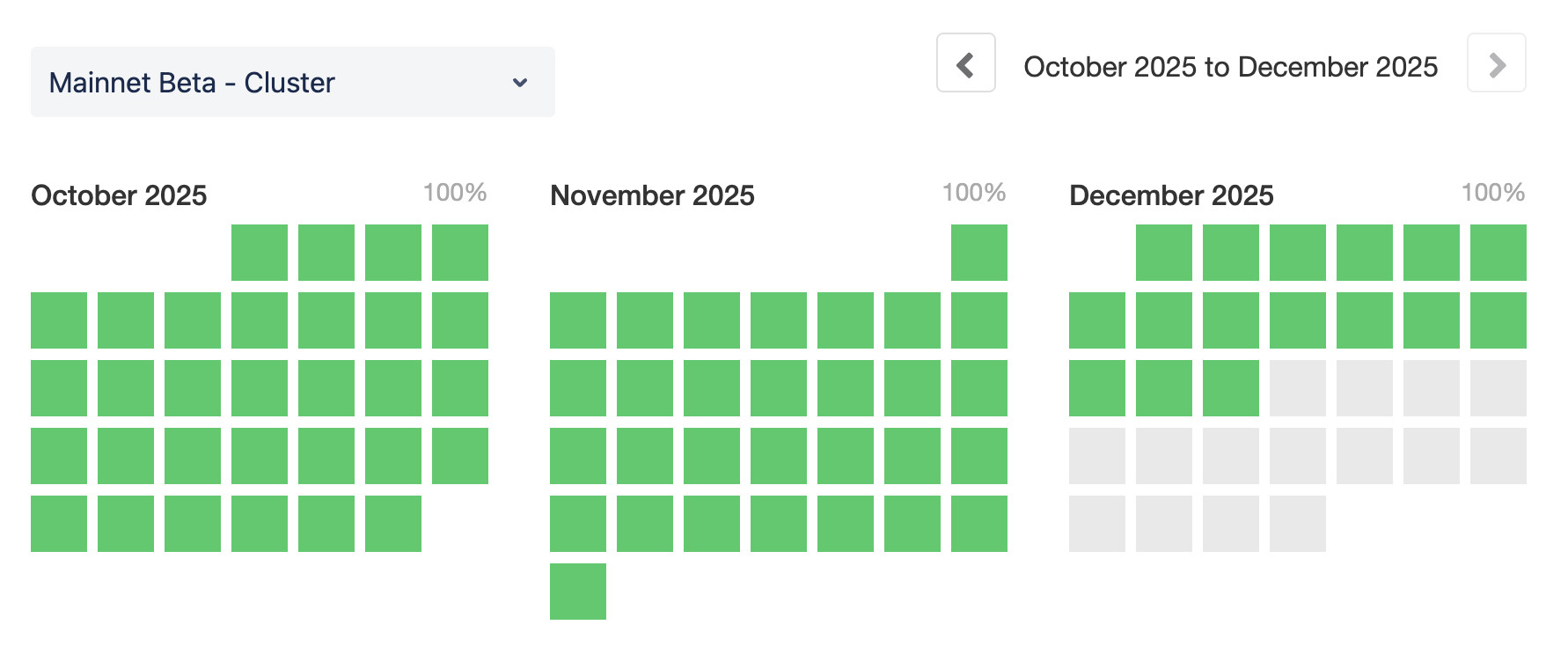
According to Solana Status, the network’s last recorded outage occurred 679 days ago on February 6, 2024. The chain’s resilience in the face of a large-scale DDoS shows how far Solana has come in a matter of years, with further improvements, like Alpenglow, expected to improve network performance and stability in 2026.
Read More on SolanaFloor
Wrapping the biggest announcements from Breakpoint Day 3
Solana Breakpoint 2025: Key Announcements and Stories from Saturday
The Truth About DATs