Solana, zincir üzerinde yönetişimi hayata geçirerek staker’lara protokol kararlarında doğrudan söz hakkı tanıyor
Yeni Solana Yönetişim Önerileri, uygun doğrulayıcıların protokol oylamalarına katılmalarına olanak tanırken, yetki devredenlerin doğrulayıcıların kararlarını geçersiz kılma imkânı elde etmelerini sağlıyor.
- Yayımlandı:
Solana Vakfı, doğrulayıcıların ve staker’ların protokolün önemli kararlarına resmi olarak katılmalarını sağlayan yeni bir zincir üstü yönetişim sistemi olan Solana Yönetişim Önerileri’ni (SGP’ler) hayata geçirdi.
Yeni çerçeveye göre, en az 100.000 $SOL delege etmiş herhangi bir doğrulayıcı bir SGP sunabilir. Oylama tamamen zincir üzerinde gerçekleşir, stake ağırlıklı oylama kullanılır ve Merkle kanıtları aracılığıyla doğrulanır. Delege edenler ayrıca, validatörlerinin oyunu geçersiz kılma veya validatörleri katılmadığında oy kullanma olanağına da sahip olurlar; bu özellik, Solana Vakfı tarafından "staker egemenliği" olarak tanımlanmaktadır.
Vakfa göre, teklifler izinsiz kalmaya devam eder, ancak oylama ancak bir teklif ağdaki stake’in en az %15’inden destek aldıktan sonra başlar. Bu eşik, validatör grubunun yalnızca topluluğun anlamlı ilgisini çeken konularda oy kullanmasını sağlarken, geliştiricilerin sık sık yapılan yönetişim oylamaları olmadan rutin protokol çalışmalarına devam etmelerine olanak tanımayı amaçlamaktadır.
Bu lansman, SIMD-0228 enflasyon azaltma önerisinin başarısız olmasının ardından, doğrulayıcıların yönetişim üzerinde orantısız bir etkiye sahip olduğu endişelerini ortaya çıkarmasının ardından, Solana’nın protokol kararlarını nasıl aldığına dair aylarca süren tartışmaların ardından gerçekleşti. Yeni sistem, delegatörlerin ağın geleceğini etkileyen oylamaları doğrudan etkilemelerine izin vererek katılımı genişletiyor.
SGP’ler ve SIMD’ler
Yeni yönetişim modeli, Solana Yönetişim Önerileri (SGP) ile Solana İyileştirme Belgeleri (SIMD) arasında ayrım yapmaktadır. Bir SGP, “Bunu yapmalı mıyız?” sorusuna yanıt verir. Ekosistemin belirli bir yönü izlemeyi destekleyip desteklemediğine dair, doğrulayıcılardan ve delege edenlerden gelen, hisse ağırlıklı bir sinyal sağlar. Bir SIMD ise farklı bir soruya yanıt verir: “Bunu tam olarak nasıl yapacağız?” Protokol değişikliklerini uygulamak için gerekli teknik şartnamelere odaklanır ve çekirdek geliştiricilerin incelemesine tabidir.
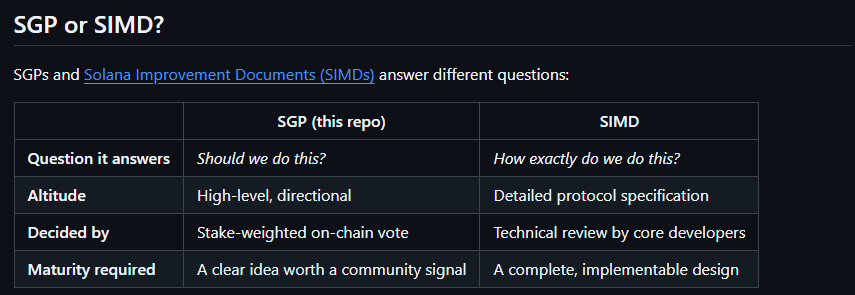
Solana Vakfı, tüm yönetişim tekliflerinin artık SGP sürecini kullanması gerektiğini, SIMD'lerin ise teknik uygulamaya odaklanmaya devam etmesi gerektiğini belirtti. Vakıf, örnek olarak Solana'nın önerilen konsensüs güncellemesi olan Alpenglow'u gösterdi. Bir SGP, bir veya daha fazla ayrıntılı SIMD'nin uygulamayı tanımlamasından önce, bu fikrin hayata geçirilmesi için topluluktan ne kadar destek olduğunu ölçebilirdi. Başarılı bir SGP, çekirdek geliştiricilere ilerlemek için net bir yetki verirken, uygulama çalışmaları SIMD süreciyle devam eder.
Oylama Süreci Nasıl İşler?
Her SGP iki bileşenden oluşur. Birincisi, öneriyi, gerekçeyi ve oylama sorusunu özetleyen halka açık bir Markdown belgesidir. İkincisi ise, svmgov programı aracılığıyla oluşturulan ve doğrudan bu belgeye bağlanan bir zincir üstü öneri hesabıdır.
Bir SGP, stake ağırlıklı topluluk girdisinden yararlanan ve zincir üzerinde ekonomik etkileri olan uzun vadeli yön belirleyici kararlar için tasarlanmıştır. Ağın stake'inin %15'inden azı oylama yapılmasını destekliyorsa, standart SIMD süreci SGP olmaksızın devam eder. %15'lik destek eşiğine ulaşıldığında, teklif stake ağırlıklı oylamaya geçer.
Bir teklifin kabul edilmesi için, katılan stake'lerin üçte ikisinin süper çoğunluğu gerekir. Çekimser oylar hesaplamaya dahil edilmez ve asgari katılım şartı yoktur.
Topluluk Üyeleri Değişikliği Memnuniyetle Karşıladı
Jito Vakfı Yönetişim BaşkanıDr. Nick Almond, bu lansmanı önemli bir dönüm noktası olarak nitelendirerek, Solana'nın şu anda kendisinin en gelişmiş merkezi olmayan yönetişim sistemi olduğuna inandığı bir sistemi işlettirdiğini belirtti.

SOL Strategies CEO'suMichael Hubbard, önceki yönetişim oylamalarının manuel olarak oylama token'larının dağıtılmasına ve sonuçların sayılmasına dayandığını belirterek, yeni sistemi önemli bir gelişme olarak nitelendirdi. Ayrıca, doğrulayıcıların kendilerine emanet edilen stake'i temsil etmelerinin, ağın ve ekosistemin uzun vadeli sağlığını ve güvenliğini güçlendirdiğini ekledi.

Marinade Labs’ın Kurucu Ortağı ve CEO’suMichael Repetný, daha önce Discord tartışmaları ve özel görüşmeler yoluyla alınan protokol kararlarının artık doğrudan zincir üzerinde önerilebileceğini, oylanabileceğini ve doğrulanabileceğini belirterek, bu sayede herkesin başkalarına güvenmek yerine sonucu bağımsız olarak doğrulayabileceğini söyledi.

Solana Neden Yönetişim Modelini Değiştirdi?
Solana Yönetişim Önerilerinin (SGP) devreye girmesi, $SOL enflasyonunu azaltacak olan SIMD-0228 önerisinin geçen yıl kabul edilememesinin ardından gerçekleşti. Oylama, tokenomik her $SOL sahibini etkilemesine rağmen yalnızca doğrulayıcıların doğrudan katılabilmesi nedeniyle Solana’nın yönetişim sürecine yönelik eleştirilere yol açtı.
Eleştirenler, enflasyonun staking ödüllerini artırdığı için doğrulayıcıların teklife karşı çıkmak konusunda finansal bir teşvike sahip olduğunu öne sürdü; bu da doğrulayıcıların çıkarlarıyla daha geniş topluluğun çıkarlarının her zaman uyumlu olmadığına dair endişeleri gündeme getirdi. Yeni SGP çerçevesi, delege edenlerin doğrulayıcılarının oyunu geçersiz kılmalarına veya doğrulayıcıları çekimser kaldığında oy kullanmalarına izin vererek bu eleştirilerin bir kısmını gideriyor.
Zamanlama önemlidir, çünkü Solana, SIMD-0228'den bu yana en büyük ekonomik politika tekliflerinden bazılarını değerlendirmeye hazırlanmaktadır. Bunlar arasında, $SOL'un ihraç modelindeki değişiklikleri yeniden ele alan yeni bir deflasyon önerisi olan SIMD-0550 ve işlemler üzerinde nihayetinde yakılacak ek bir temel ücret öneren SIMD-0553 yer almaktadır. Tahminlere göre, SIMD-0553 sayesinde günde 9.000 $SOL’a kadar yakılabilir.
Yönetişim sisteminin lansmanı, Solana Vakfı Delegasyon Programı'nın ağın toplam stake'indeki payının giderek azalmasıyla aynı zamana denk geliyor.
Blockworks verilerine göre, Vakıf Delegasyon Programı 2026 yılının ikinci çeyreğinde toplam stake edilen $SOL'un %4,92'sini oluşturdu; bu da delege edilen $SOL'da yaklaşık 1,6 milyar dolarlık bir değeri temsil ediyor.
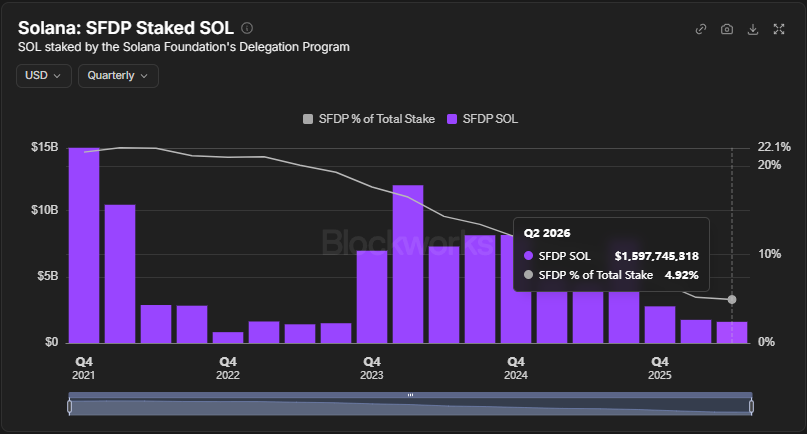
Bu, programın kayıtlara geçen en düşük çeyreklik payını oluşturuyor ve Solana’nın yeni yönetişim çerçevesinin yürürlüğe girmesiyle birlikte stake gücünün giderek artan bir kısmının artık daha geniş bir doğrulayıcı ve stake topluluğunda yer aldığını gösteriyor.
SolanaFloor'da Daha Fazlasını Okuyun
Forward Industries, Kurumsal Birikimdeki Canlanma İşaretleri Üzerine Hazinesine 500 Bin $SOL Ekledi
World, Chainlink Destekli Solana Tabanlı Tahmin Piyasasını Başlattı
Solana Vakfı CPO'su, Solana için 2026 Görünümünü Paylaştı!