
SIMD-0550: Helius Engineer Formalizes $SOL Disinflation Proposal
Solana to reach terminal emission rate almost 3 years ahead of schedule
- Published:
SIMD-0550, the successor to Helius engineer’s initial $SOL disinflation proposal, SIMD-0411, has been formalized and submitted to the trials and tribulations of public discussion.
Like the original, SIMD-0550 promises to double Solana’s disinflation rate, accelerating to speed with which $SOL inflation drops and bringing the network to its terminal emission rate three years early.
Ecosystem leaders like Solana Labs co-founder Anatoly Yakovenko have backed the proposal, which is projected to cut $1.5B in emissions.
Solana Disinflation Proposal Back Under Spotlight
First floated in November 2025, SIMD-0411 was met with near unanimous support across the Solana ecosystem, with network participants strongly in favor of reducing $SOL inflation in a bid to reinforce the asset’s market value.
Seven months later, Helius engineer lostin has formalized the proposal, updating the numbers and specifying the exact implementation that would double $SOL’s deflation rate from 15% to 30%. If approved, SIMD-0550 would bring $SOL issuance to its terminal rate of 1.5% pa in just 2.8 years, reducing emissions by $1.5B at current prices.
Solana’s leadership has demonstrated its support for the proposal, which has resurfaced amidst difficult market conditions. Critics have long argued the $SOL emission rate is too high, overinflating the supply and devaluing the base asset.
Recent price action has only exacerbated the urgency to revise and address Solana’s tokenomics. The success of rival blockchains with dedicated token value accrual mechanics has demonstrated how effective tokenomic design can be in supporting asset value, as evidenced by $HYPE recording new all-time highs in a collapsing crypto market.
Ecosystem Desperate for $SOL Tokenomics Revision
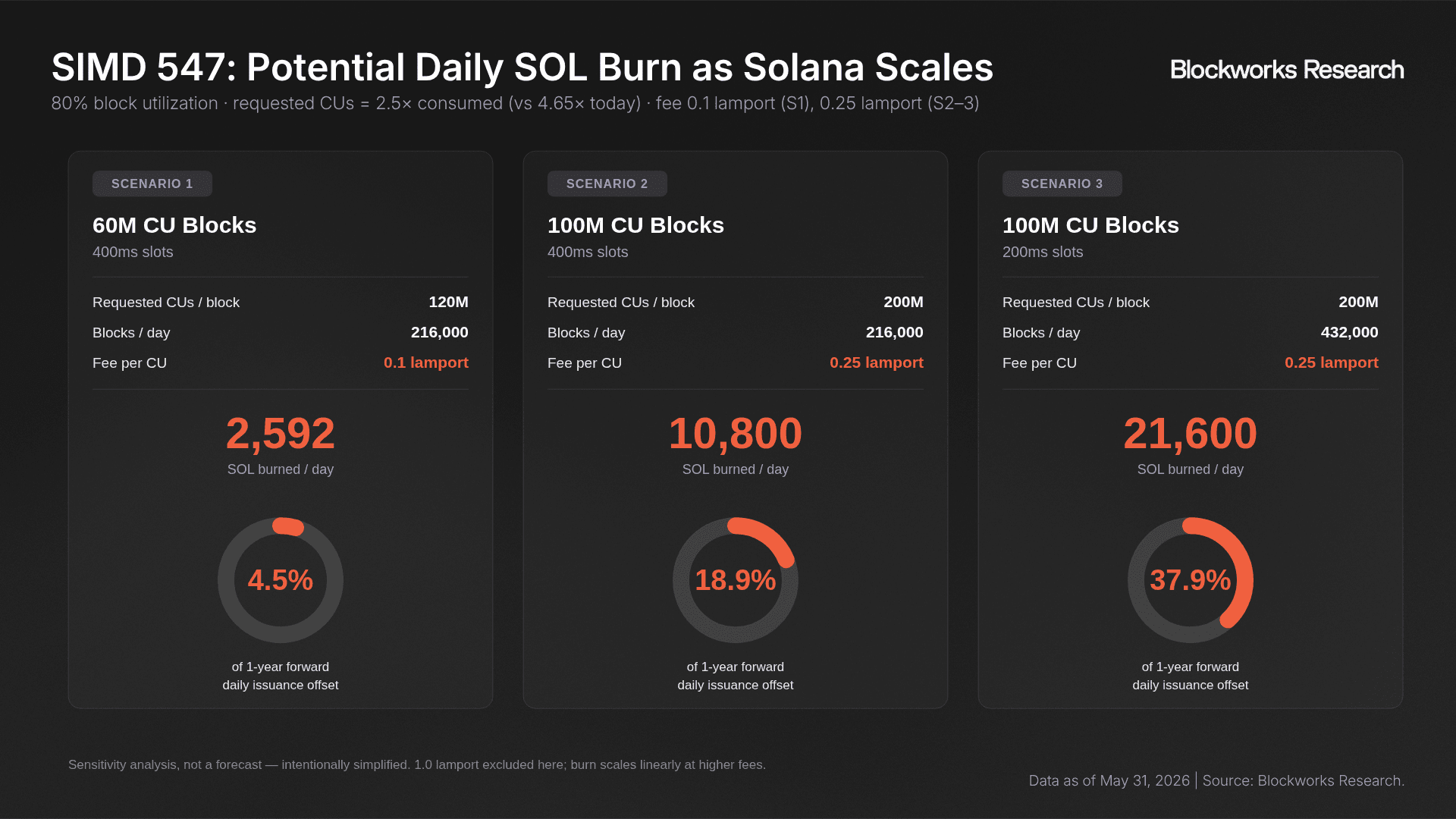
Beyond SIMD-0550, ecosystem leaders are actively exploring other potential avenues of driving value and scarcity to $SOL. Earlier this week, Temporal researcher cavemanloverboy drafted SIMD-0547, a proposal that suggested adding a base fee to transactions that scales according to their resource consumption. Early projections implied that SIMD-0547 could raise the network’s daily burn rate as high as 64,800 $SOL per day. However, recently published analysis from Blockworks suggests this figure may fall somewhere between 2,592 and 21,600 $SOL burnt per day.
While much of the Solana ecosystem has put their support behind the proposal, others like Ellipsis Labs’ Eugene Chen have called it a “pysop”.
If both SIMD-0550 and 0547 were approved, $SOL’s net inflation could theoretically flip negative, rendering the asset deflationary for the first time in history.
Stakers to Vote Directly on Upcoming Proposals?
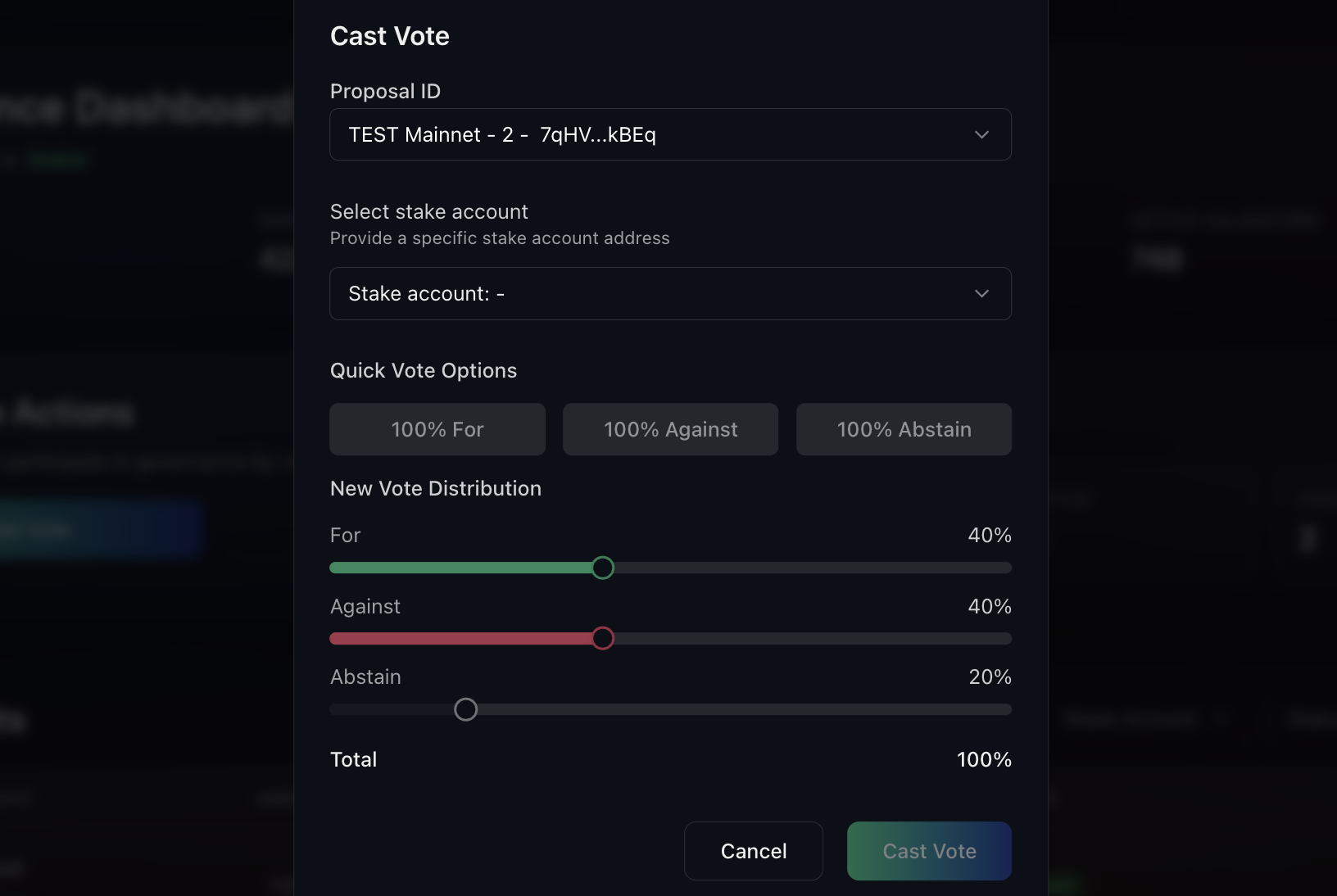
With a series of historic proposals expected to go to a vote, validators are putting the finishing touches on a new governance framework that will reimagine how stakers exercise their rights. In previous proposals, like the divisive SIMD-0228, validators voted on behalf on stakers, meaning stakers were required to shift $SOL to validators that aligned with their views.

Solana’s next great vote is expected to introduce a new mechanism, enabling stakers to vote on proposals directly, rather than relying on validators to represent them.
Currently, no formal timeline has been given for either SIMD-0550 or SIMD-0547. Meanwhile, network participants are eager to have $SOL’s prevailing tokenomics concerns addressed, so it is likely that the ecosystem may seek to push SIMD-0550 through the governance process as quickly as possible.
Read More on SolanaFloor
Noble acquires Helium Mobile, DePIN network untouched
What Happens to Crypto After the SpaceX IPO?