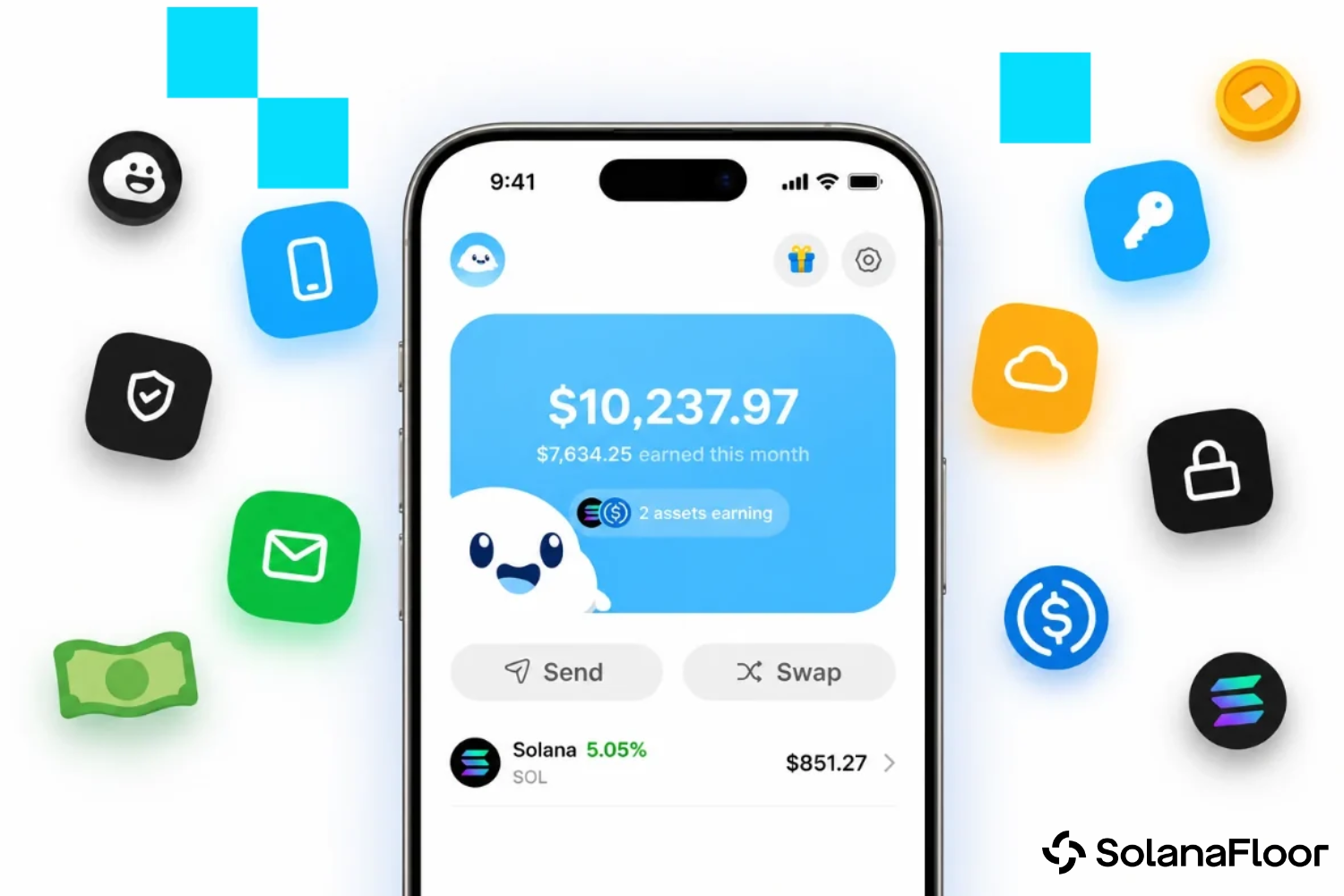
Sanctum has introduced 2-of-3 multisig security for every wallet in its mobile application, bringing a security model commonly used by institutions and crypto treasuries to individual users.
Built on the Squads Smart Account Program, the update gives every Sanctum wallet 3 cryptographic keys stored in different locations. Users need at least 2 keys to approve transactions, meaning an attacker who obtains a single key cannot independently access or drain the wallet.
The update also addresses another common problem with self-custody: losing access to a private key. Losing or exposing the only key controlling a wallet could result in permanent loss of funds. Sanctum's multisig arrangement allows users to replace a compromised or missing key using their remaining 2 keys.
According to FP Lee, Sanctum's CEO, the goal is to combine the security of institutional multisig arrangements with the convenience of an everyday hot wallet.
How Sanctum's 2-of-3 Multisig Works
Each Sanctum wallet starts with 3 keys, each stored separately and protected by a different authentication method.
The Device Key is stored on the user's phone and protected by Face ID, Touch ID, or Android biometrics. On iOS, Sanctum uses Apple's Keychain, while Android devices use the Android Keystore. The key remains on the original device and never syncs to cloud backups.
The Cloud Key is stored in the user's iCloud account on iOS or Google Drive on Android. The Sanctum application retrieves it when signing transactions. Apple and Google manage the encryption keys for their respective services, meaning they can technically access the stored key.
The Recovery Key is managed by Turnkey and held inside secure enclaves running on AWS Nitro. Users access it through a 6-digit verification code sent to their email. Each code expires after 5 minutes and allows only 3 attempts.
The Device Key and Cloud Key serve as the active signers for everyday transactions. The Recovery Key can also sign transactions, but it cannot independently propose one. Users primarily rely on it alongside their remaining active key when replacing a lost or compromised key. Sanctum says its servers never store or access any of the 3 keys.
What Happens When a Key Gets Compromised?
The arrangement distributes security across 3 independent locations. A stolen phone, compromised Apple or Google account, or phished email account should expose only 1 key, which cannot authorize transactions independently. If users lose their phones, they can sign in on a new device and generate another Device Key. Their Cloud Key and Recovery Key then approve the replacement, removing the old key from the multisig.
Users can also replace an exposed Cloud Key or Recovery Key without creating an entirely new wallet. Their remaining 2 keys approve the replacement, while their wallet address, balances, and transaction history remain unchanged.
However, the arrangement does not eliminate every security risk. An attacker who obtains 2 keys can still move funds. Sanctum recommends using a recovery email address different from the email associated with an Apple or Google account. This prevents a compromised account from exposing both the Cloud Key and Recovery Key. Users can also add a second recovery email, turning their wallet into a 2-of-4 multisig. This allows them to lose 2 keys while retaining access through the remaining 2.
Growing Crypto Hacks Raise the Stakes
Sanctum's security update arrives amid a growing number of attacks targeting cryptocurrency holders, exchanges, and even hardware wallet users. On October 29, 2026, Binance suffered approximately $6.34 billion in losses after an attacker drained funds across 10 blockchains, making it the largest cryptocurrency theft on record. Earlier, Bybit lost approximately $1.5 billion in February 2025, while Bitget suffered a $387.5 million attack in September 2026.
Individual wallet holders have also faced increasingly sophisticated threats. In October, a supply chain attack involving CryptoBilis, a Ledger reseller in Southeast Asia, reportedly compromised approximately 300 wallets and resulted in estimated losses of up to $93.2 million. Attackers allegedly embedded malicious chips in Ledger devices to extract users' seed phrases. These incidents highlight the limitations of relying on a single private key, even when users store it in a hardware wallet.
Sanctum believes multisig security offers a stronger alternative by removing the single point of failure that makes traditional wallets vulnerable. The company now wants to extend its existing focus on secure Solana yield to crypto custody.
The updated Sanctum Wallet is available on iOS, Android, and Solana Seeker devices.
Read More on SolanaFloor
Bitcoin Falls Below $76,000 & $SOL Hits $90 as $1.27B Liquidations Wipe Out Post-Election Rally
Solana Labs’ Leap Launches High-Performance Mobile Trading App
The Solana Trader’s Secret Weapon