
Crypto payments giant MoonPay launched PayBox, a non-custodial wallet and payment vault that enables AI agents to securely transact across the open internet.
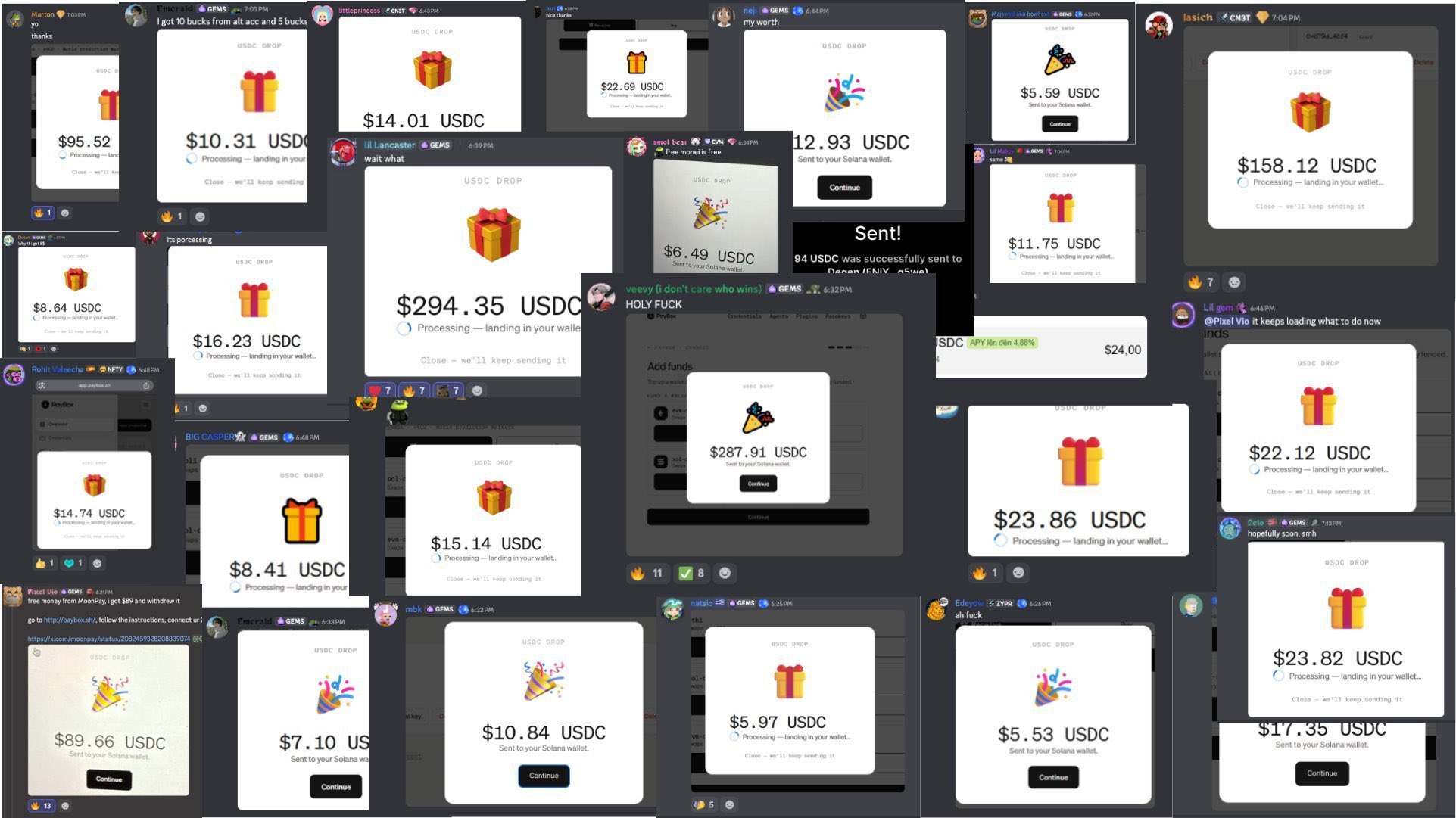
While the product introduced a new way to interact with crypto through ChatGPT and Claude, much of the community focused on something else. MoonPay rewarded early users with one-time $USDC allocations that ranged from a few dollars to as much as $1,000, according to reports shared across social media.
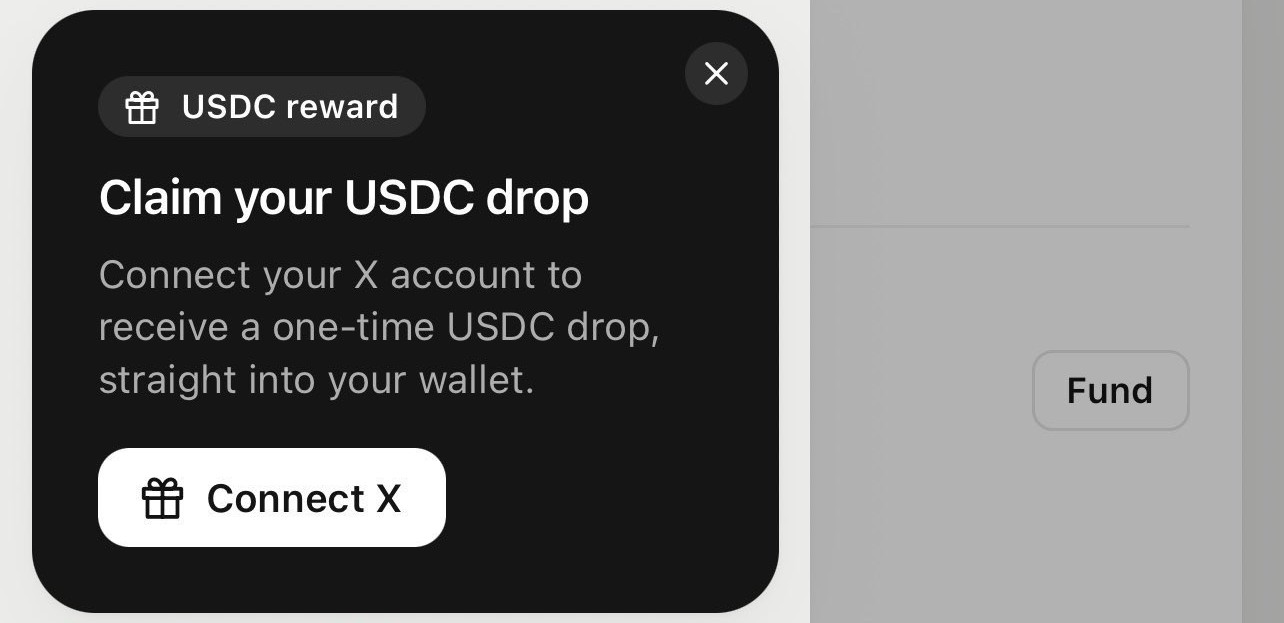
To qualify, users created a PayBox account, connected it to ChatGPT or Claude, created a wallet, linked their X account, and claimed rewards through a faucet.
Community members posted screenshots showing rewards of $5, $380, $500, $600, and even $1,000. Many also confirmed successful withdrawals before MoonPay temporarily paused the faucet, saying it would return at “an undisclosed time” on July 30 with "more surprises for PayBox users."
The campaign quickly became one of the most viral crypto marketing efforts in recent months. MoonPay later revealed that it had gained 35,000 new followers on X within a day of the launch.
Turning Conversations Into Transactions
Beyond the giveaway, PayBox introduces a different way to interact with digital assets. Users connect the wallet to ChatGPT or Claude through a custom connector, then describe what they want in natural language.
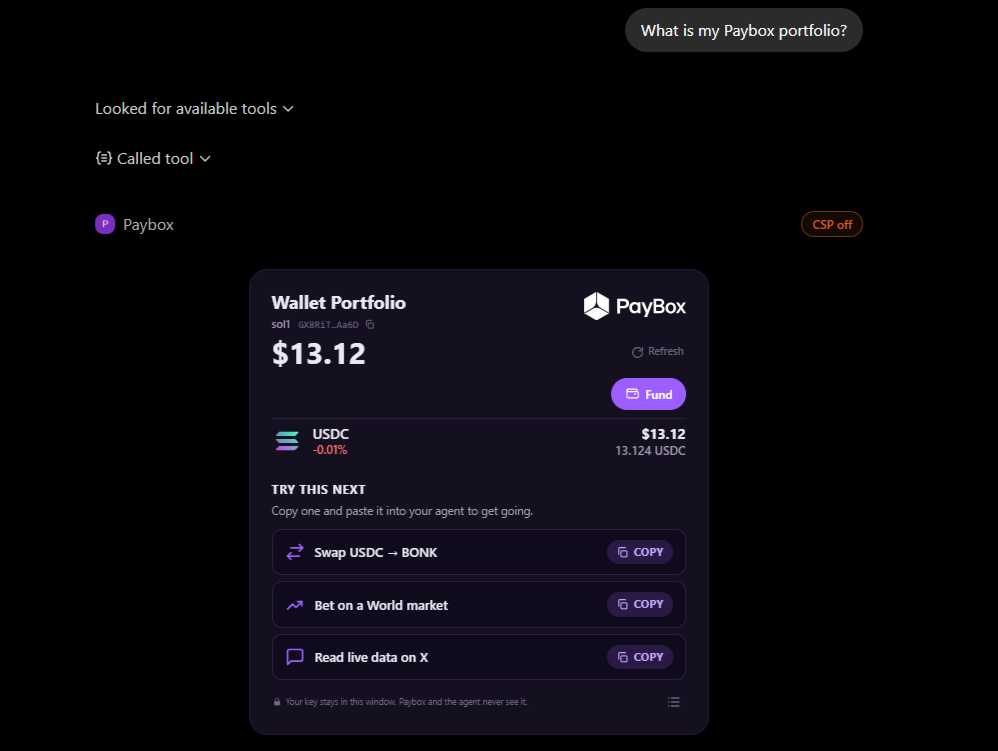
Examples include onramping funds into stablecoins, swapping tokens on Solana, bridging assets across supported blockchains, maximizing DeFi yield, booking flights, making restaurant reservations, and shopping online. The AI prepares each transaction, while the user authorizes it with a passkey before funds move.
PayBox launches with support for Solana and several EVM-compatible networks, including Ethereum, Base, Arbitrum, Polygon, Hyperliquid, Tempo, and Robinhood Chain.
Privacy Concerns Sparked Debate
The generous $USDC rewards also triggered debate within the community. Some participants viewed the campaign as a customer acquisition strategy rather than a traditional crypto airdrop, while others questioned whether connecting accounts created privacy risks.
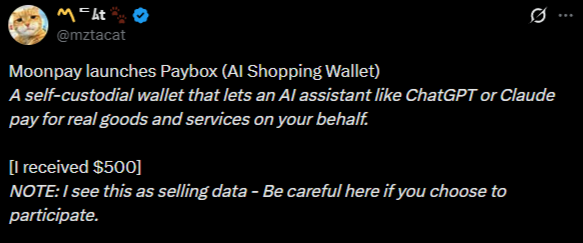
MoonPay responded directly, stating that PayBox never accesses users' chat history or wallet private keys.
Neeraj Prasad, Chief Engineer of MoonPay Labs and founder of Dawn Labs, also explained that the wallet operates through embedded cryptographic infrastructure and that only tool call arguments pass through the connector, not conversation history.
A Non-Custodial Approach to AI Payments
MoonPay designed PayBox so AI agents never take custody of user funds. The system stores wallet keys using multi-party computation and trusted execution environments, preventing any single party, including MoonPay or the AI assistant, from accessing the complete private key.
Users can choose between 2 permission models. "Always Ask" requires passkey approval for every transaction, while "Autonomous" lets AI operate within limits defined by the user. Every authorization applies to a single action and expires after use.
The infrastructure comes from Sodot, the cryptography company MoonPay acquired earlier this year, building on a broader wave of MoonPay AI initiatives including the acquisition of Entendre, the launch of MoonPay Agents and the acquisition of AI trading startup Dawn Labs founded by Prasad. According to MoonPay, that technology already secures more than $50 billion in assets across over 10 million wallets.
More Than a Crypto Wallet
PayBox supports much more than token transfers. Users can create wallets, manage credentials, track portfolio balances, perform cross-chain swaps, sign blockchain transactions, retrieve stored secrets with approval, and monitor pending requests.
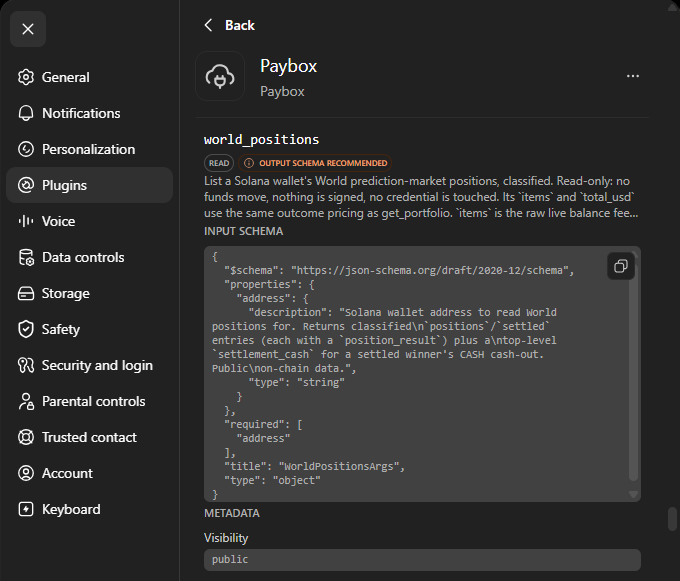
The platform also supports x402-powered commerce, allowing AI agents to pay for APIs, travel bookings, shopping, digital services, and other internet-based transactions. It also integrates World prediction markets, enabling users to browse events, review market data, trade positions, and redeem settled markets.
MoonPay plans to expand PayBox further into DeFi, adding support for perpetual futures, liquidity management, and additional AI platforms.
Read More on SolanaFloor
CLARITY Act Odds Crash to 27% as Senate Focus Turns Elsewhere
Morgan Stanley's $MSOL Debuts With $19M Trading Volume as Solana ETF Fee War Heats Up
Seeker Quietly Airdropped 25M $SKR - And 3 Rounds Are Still Live!