Le probabilità di approvazione del CLARITY Act crollano al 27% mentre l'attenzione del Senato si sposta altrove
Il rinvio del voto al Senato ha sollevato nuovi dubbi sulla possibilità che il Congresso riesca ad approvare quest'anno una legge storica sulla struttura del mercato delle criptovalute.
- Pubblicato:
Lo slancio a favore del CLARITY Act si è affievolito dopo che il leader della maggioranza al Senato John Thune ha rinviato l’esame del disegno di legge sulla struttura del mercato delle criptovalute, mentre i legislatori si sono concentrati sulla legislazione relativa alle sanzioni contro la Russia e sulle nomine federali. Il 28 luglio il Senato ha portato avanti il pacchetto di sanzioni, lasciando a disposizione un numero ridotto di giorni legislativi prima della pausa estiva dell’8 agosto per esaminare il disegno di legge sulle criptovalute.
Tuttavia, i negoziati sono proseguiti dietro le quinte e ora è emersa una bozza rivista del CLARITY Act, frutto di un continuo scambio di opinioni tra i legislatori repubblicani e democratici. Secondo quanto riferito, la proposta aggiornata ha ottenuto un sostegno iniziale da parte dei democratici, tra cui la senatrice Catherine Cortez Masto, che ha manifestato il proprio consenso all’ultima versione inviata alla Casa Bianca, affermando: «Siamo ottimisti riguardo alla possibilità di risolvere questa questione una volta per tutte».
I gruppi di settore hanno esortato Thune ad avviare la procedura di chiusura del dibattito prima che i legislatori lascino Washington, anche se il Senato non dovesse riuscire a portare a termine la votazione finale. Una votazione procedurale rivelerebbe se la legge gode di un sostegno bipartisan sufficiente per andare avanti entro la fine dell’anno.
«Vedremo come si distribuiranno i voti», ha affermato Thune quando gli è stato chiesto delle prospettive del disegno di legge.
Il ritardo ha accresciuto i timori che i legislatori possano rimanere a corto di tempo prima che l’attenzione si sposti sulle elezioni di medio termine di novembre, lasciando poco spazio per l’approvazione di leggi controverse.
Perché il CLARITY Act è importante
Il CLARITY Act mira a stabilire un quadro normativo completo per gli asset digitali negli Stati Uniti. Regole chiare darebbero alle aziende del settore delle criptovalute maggiore fiducia per espandere le proprie operazioni, investire sul territorio nazionale e servire gli investitori americani senza temere che future amministrazioni possano invertire la rotta della politica normativa.
La normativa definirebbe inoltre le responsabilità tra la Securities and Exchange Commission (SEC) e la Commodity Futures Trading Commission (CFTC), attribuendo alla CFTC la giurisdizione sui mercati a pronti delle materie prime digitali.
Molte società del settore delle criptovalute hanno trasferito la propria attività all’estero durante la campagna di applicazione della legge condotta dall’ex presidente della SEC Gary Gensler. Sebbene l’attuale SEC abbia ritirato diverse cause legali e adottato un approccio più favorevole, molti operatori del settore sostengono che la politica dell’agenzia da sola non garantisca certezza a lungo termine.
Il settore bancario sostiene il disegno di legge con modifiche limitate
Anche il settore bancario ha espresso il proprio sostegno alla proposta di legge, pur richiedendo alcune revisioni mirate. In un’intervista alla CNBC, Rob Nichols, amministratore delegato dell’American Bankers Association, ha affermato che l’organizzazione sostiene un quadro normativo per gli asset digitali e ritiene che gli Stati Uniti possano diventare la «capitale mondiale delle criptovalute».
Tuttavia, ha aggiunto che il settore bancario sta sollecitando i legislatori ad apportare piccole modifiche «mirate» per garantire che le stablecoin di pagamento fruttifere non possano sottrarre depositi alle banche e alle cooperative di credito, riducendo potenzialmente l’attività creditizia. Secondo Nichols, le modifiche proposte riguardano solo 2 paragrafi del disegno di legge, che conta circa 600 pagine.
La SEC prepara un piano di riserva
Se il Congresso non dovesse intervenire, il presidente della SEC Paul Atkins ha dichiarato che l’agenzia è pronta a emanare norme sul mercato delle criptovalute avvalendosi dei propri poteri esistenti.
Atkins ha dichiarato alla CNBC che la SEC è «pronta, disposta e in grado» di redigere norme che coprano molte delle stesse questioni affrontate dal CLARITY Act. Tuttavia, ha sottolineato che la legislazione rimane la soluzione migliore poiché le leggi offrono maggiore certezza rispetto ai regolamenti delle agenzie, che le future amministrazioni potrebbero modificare.
Il quadro normativo proposto dalla SEC potrebbe chiarire il trattamento dei token digitali, delle piattaforme di trading e dei titoli tokenizzati. Tuttavia, non risolverebbe in modo definitivo la questione della giurisdizione tra la SEC e la CFTC.
I mercati delle previsioni riflettono crescenti dubbi
Il ritardo del Senato ha influito sulle aspettative di mercato. Nella giornata odierna, 29 luglio, le quote di Polymarket riflettevano solo il 27% di probabilità che il CLARITY Act diventi legge nel 2026, la probabilità più bassa mai registrata per questa normativa.
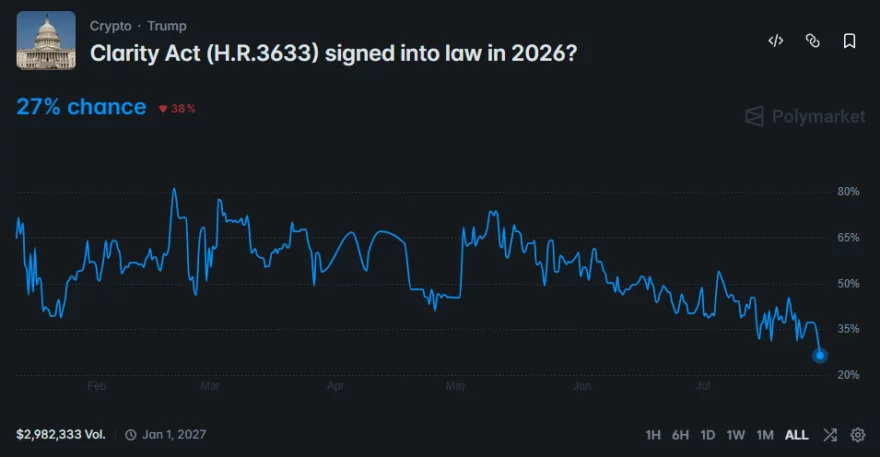
Nonostante questa battuta d’arresto, Faryar Shirzad, Chief Policy Officer di Coinbase, rimane ottimista. Ha sottolineato che la Camera ha approvato la legge con un ampio sostegno bipartisan e ha affermato che le recenti revisioni del Senato hanno incorporato numerose priorità dei Democratici, tra cui disposizioni rafforzate in materia di applicazione della legge e tutela dei consumatori.
Shirzad ha aggiunto di continuare a sperare che il Senato possa procedere alla votazione già il 3 agosto, consentendo ai legislatori di approvare il disegno di legge prima dell’inizio della pausa estiva di agosto.
Anche se la SEC dovesse procedere con il proprio quadro normativo, solo una legge può garantire la certezza giuridica a lungo termine necessaria affinché il settore delle criptovalute statunitense possa pianificare gli investimenti e la crescita futuri.
Per saperne di più su SolanaFloor
Il titolo $MSOL di Morgan Stanley debutta con un volume di scambi di 19 milioni di dollari mentre si infiamma la guerra sulle commissioni degli ETF su Solana
La capacità di blocco di Solana aumenta del 66% in seguito all’attivazione di SIMD-0286
Cosa succederà alle criptovalute se CLARITY fallisse?