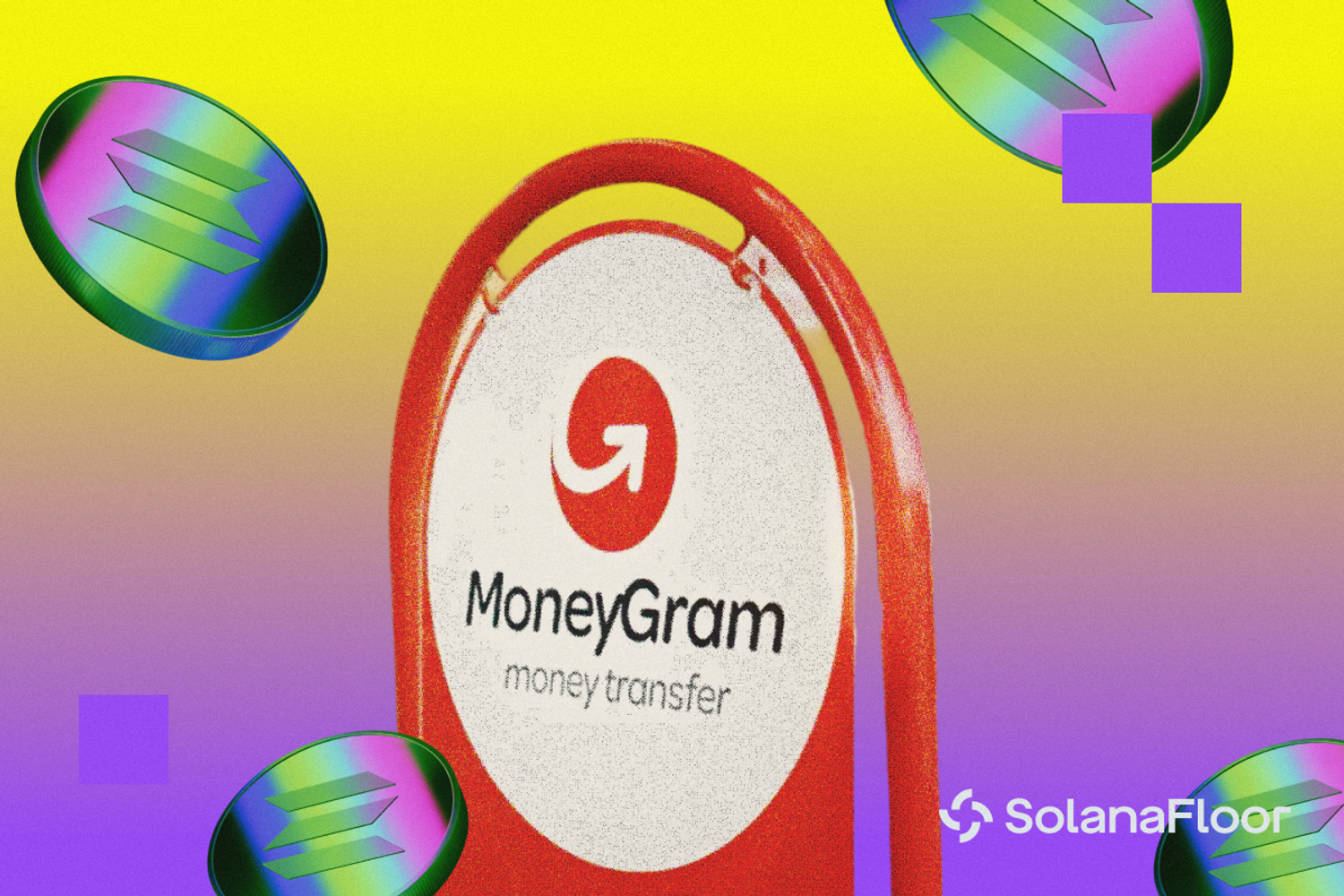
MoneyGram has taken another step in its blockchain strategy by becoming an active validator on the Solana network and joining the Solana Developer Platform (SDP), a move that places the global payments company deeper within the infrastructure powering digital asset transactions.
The announcement marks the beginning of MoneyGram's formal participation in the Solana ecosystem at the protocol level. Rather than simply building products on blockchain networks, the company will now contribute directly to the security, performance, and operation of one of the industry's largest Proof of Stake blockchains.
The development comes as traditional payments companies, banks, and fintech firms increasingly explore stablecoins and blockchain-based settlement systems as alternatives or complements to conventional financial infrastructure.
From Blockchain User to Network Operator
MoneyGram's new role as a Solana validator marks a significant evolution in its involvement in blockchain. Validators play a critical role in Proof of Stake networks. They stake native tokens, process transactions, validate blocks, and help maintain network security.
"We stake $SOL, process transaction blocks, and help secure the network at the protocol level. We help run the rails we move money on. At the same time, as part of the Solana Developer Platform, we’re actively innovating to make money movement seamless wherever the users are and in whatever form of money it may be." - Luke Tuttle, Chief Product and Technology Officer at MoneyGram
The move builds on more than five years of blockchain integration across MoneyGram's operations. The company says blockchain technology and stablecoin infrastructure already support treasury functions, product development initiatives, and payment operations throughout its global network. MoneyGram describes the validator launch as a “natural extension of over five years of building crypto into the core of its global payments platform”.
Joining the Solana Developer Platform
Alongside its validator role, MoneyGram has also joined the Solana Developer Platform, an API-driven development environment designed to help institutions build financial products on Solana.
Launched in March by the Solana Foundation, the platform aims to simplify blockchain development by providing enterprises with access to a unified set of tools and infrastructure services. The platform is designed to be AI-ready and aggregates services from more than 20 infrastructure partners across the Solana ecosystem.
MoneyGram joins a growing list of major financial and payments firms participating in the platform. Early builders include Mastercard, Western Union, and Worldpay, all of which are exploring blockchain-based payment and settlement systems on Solana.
Stablecoins Become Central to MoneyGram's Strategy
The announcement follows another major blockchain initiative from MoneyGram earlier this month. On June 2, the company unveiled its own U.S. dollar-backed stablecoin, $MGUSD, on the Stellar blockchain. The launch placed MoneyGram among a growing group of financial institutions and payment providers creating proprietary digital dollar products.
MoneyGram plans to integrate $MGUSD directly into its mobile application. Users will be able to hold dollar-denominated balances in self-custodial wallets and transfer funds through the company's global payments network.
Taken together, the stablecoin launch and Solana validator announcement suggest that MoneyGram increasingly views blockchain infrastructure as a core component of its future business strategy rather than a supplementary technology and suggest that we may be seeing $MGUSD on Solana soon.
“We believe the future of global money movement will be built on open, interoperable stablecoin rails that anyone, anywhere can access. Building that future requires compliance, regulatory clarity, and operational scale. MoneyGram brings all three. We’re helping make blockchain infrastructure a core part of global money movement." - Anthony Soohoo, Chairman and CEO, MoneyGram.
A Broader Industry Shift
MoneyGram's expansion into blockchain infrastructure reflects a wider trend across the payments sector. Several major financial and payments companies have launched blockchain initiatives in recent years as stablecoins gain traction for cross-border transfers and settlement.
In May, Western Union officially launched its $USDPT stablecoin on Solana. In March, Mastercard introduced the Crypto Partner Program, with Solana as a participant, and acquired the stablecoin infrastructure firm BVNK for $1.8 billion a few days later. PayPal introduced its Paxos-issued $PYUSD stablecoin in 2023 and integrated the asset into its remittance service, Xoom. Meanwhile, Zepz, the parent company of WorldRemit and Sendwave, launched the Sendwave Wallet using Solana and Circle's $USDC stablecoin to facilitate transfers across more than 100 countries. Zelle has also announced plans to support international payments through stablecoin-based infrastructure.
These developments indicate that competition among payment providers is increasingly extending beyond consumer-facing applications and into the underlying infrastructure that moves money globally.
What It Means for Solana
MoneyGram serves more than 60 million active customers worldwide through nearly 500,000 retail locations and a growing digital ecosystem. For Solana, attracting institutions such as MoneyGram to operate validators may strengthen confidence in the network's long-term role in financial services. Given Western Union’s prior involvement with the network, MoneyGram’s announcement means the two largest remittance companies are now actively using the Solana blockchain.
Validator participation from established global companies can diversify network operators and increase institutional engagement with blockchain infrastructure. MoneyGram’s decision to participate directly in Solana's validator set highlights how traditional financial firms are becoming more deeply involved in blockchain networks rather than simply building services on top of them.
Read More on SolanaFloor
Drift’s $DFX Allocation Checker Goes Live, Giving Exploit Victims Their First Look at Recovery
Kraken Brings Solana DEX Trading to Its 10M Users
Collector Crypt Crossed $1B in Trading Volume