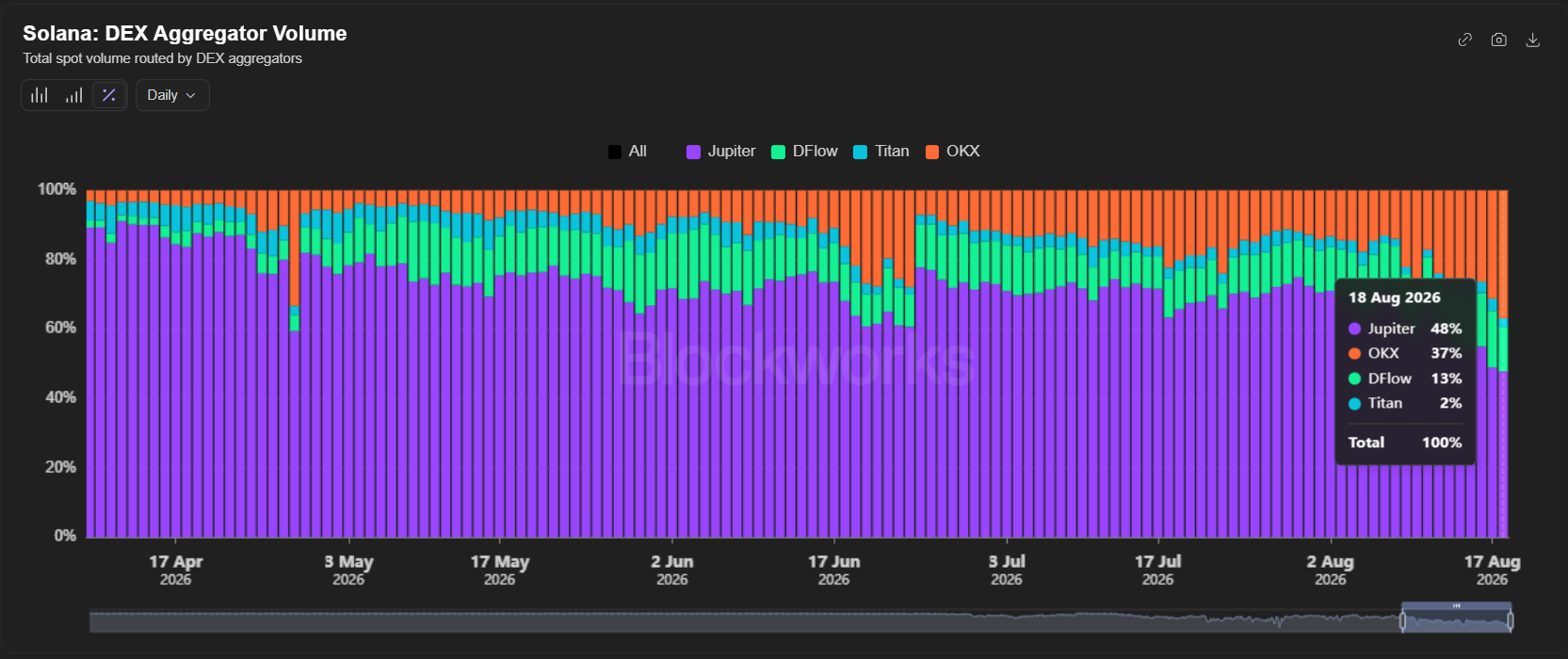
Jupiter’s dominance of Solana’s DEX aggregator market has reached a new low. According to Blockworks data, Jupiter accounted for 48% of Solana DEX aggregator volume on August 18, marking the first time its daily share has fallen below 50% since launch. OKX captured 37%, while DFlow and Titan accounted for 13% and 2%, respectively.
The latest figures extend a decline that has accelerated over the past several months. In early April, Jupiter controlled about 90% of weekly aggregator volume. By Aug. 1, that figure had fallen to 71%, representing a roughly 20% decline in 4 months.
OKX and DFlow have captured much of the share Jupiter has lost. OKX held 13% of daily volume on Aug. 1, while DFlow accounted for 11%.

Jupiter Continues Expanding As Revenue Declines
Jupiter’s declining aggregator share comes as the company continues to expand its broader DeFi ecosystem.
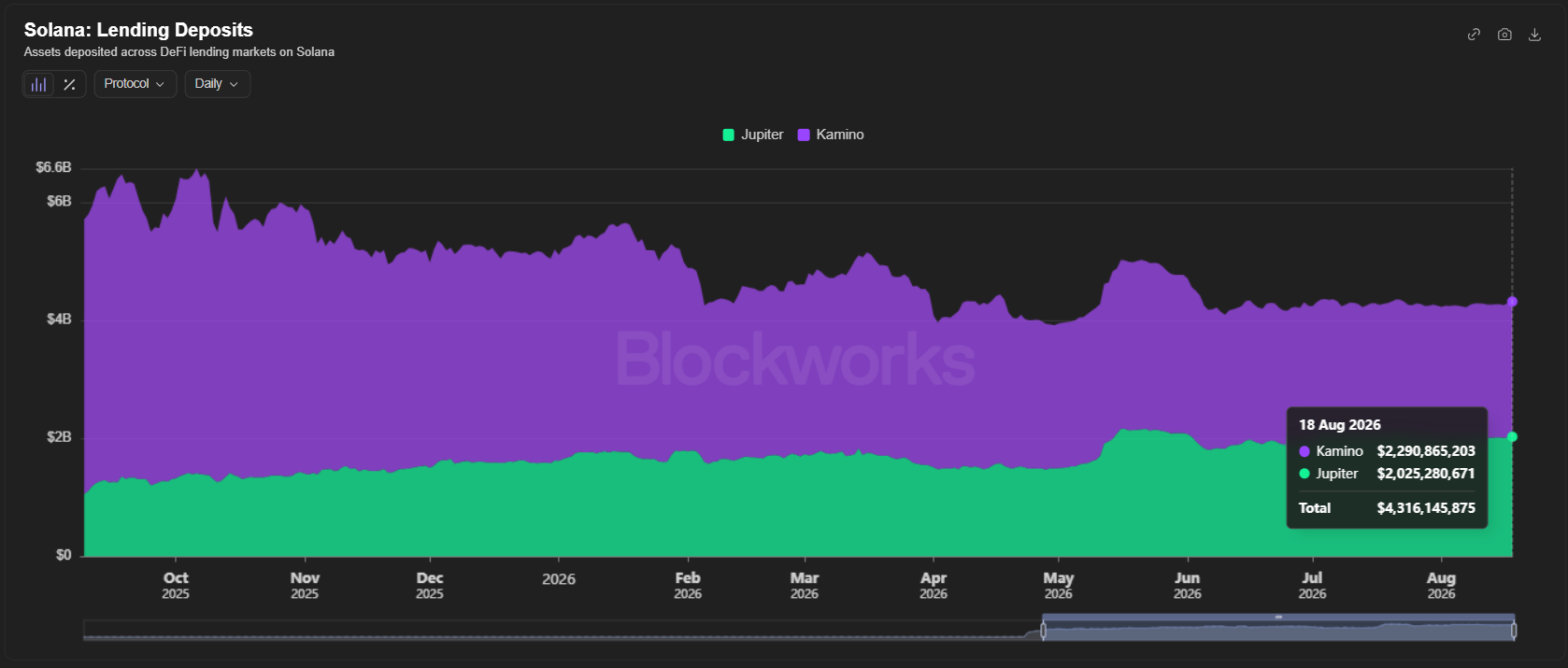
Jupiter Lend has steadily gained ground against competitors such as Kamino in recent weeks. Its Gacha product also attracted more than $27 million in user spending within 3 weeks of its launch.

On Aug. 10, Jupiter launched Lend v2, which introduced Smart Collateral and Smart Debt. The optional features allow deposited and borrowed assets to also provide DEX liquidity, giving users the potential to earn lending yield alongside trading fees and, where applicable, staking rewards.
The additional yield depends on actual trading activity through the associated liquidity pools, linking Lend v2's performance partly to Jupiter’s routing activity.
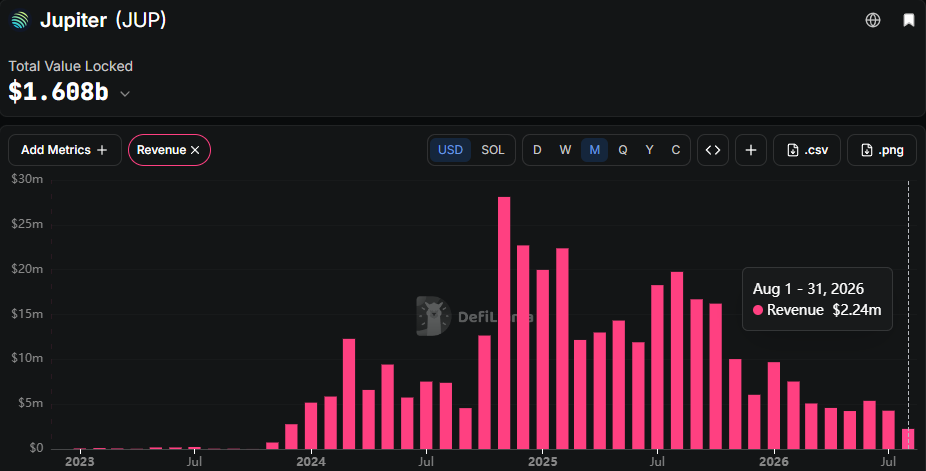
Jupiter’s falling market share also comes against a backdrop of declining revenue. DefiLlama data indicates that Jupiter generated about $2.24 million in revenue so far in August. That figure puts the platform on pace for another relatively weak month if the current trend continues.

The decline looks more significant when compared with Jupiter’s 2024 and 2025 performance.
Monthly revenue surged throughout 2024 and peaked at over $28 million in late 2024. Several months in 2025 also generated more than $10 million, with some approaching or exceeding $20 million.
Revenue has since fallen considerably. Recent monthly figures have fallen to their lowest levels in roughly two years, highlighting the pressure facing its core business as trading activity and aggregator share change.
OKX Gains While Titan Fades
OKX has emerged as Jupiter’s most significant challenger in the aggregator market. Incentivized trading campaigns may have contributed to its rising share.
Titan, meanwhile, has fallen from being Solana’s second-largest aggregator to just 2% of daily volume according to Blockworks data. Titan operates as a meta-aggregator, meaning its quotes can include routing through other aggregators. That structure can cause some of its flow to appear in competing venues.
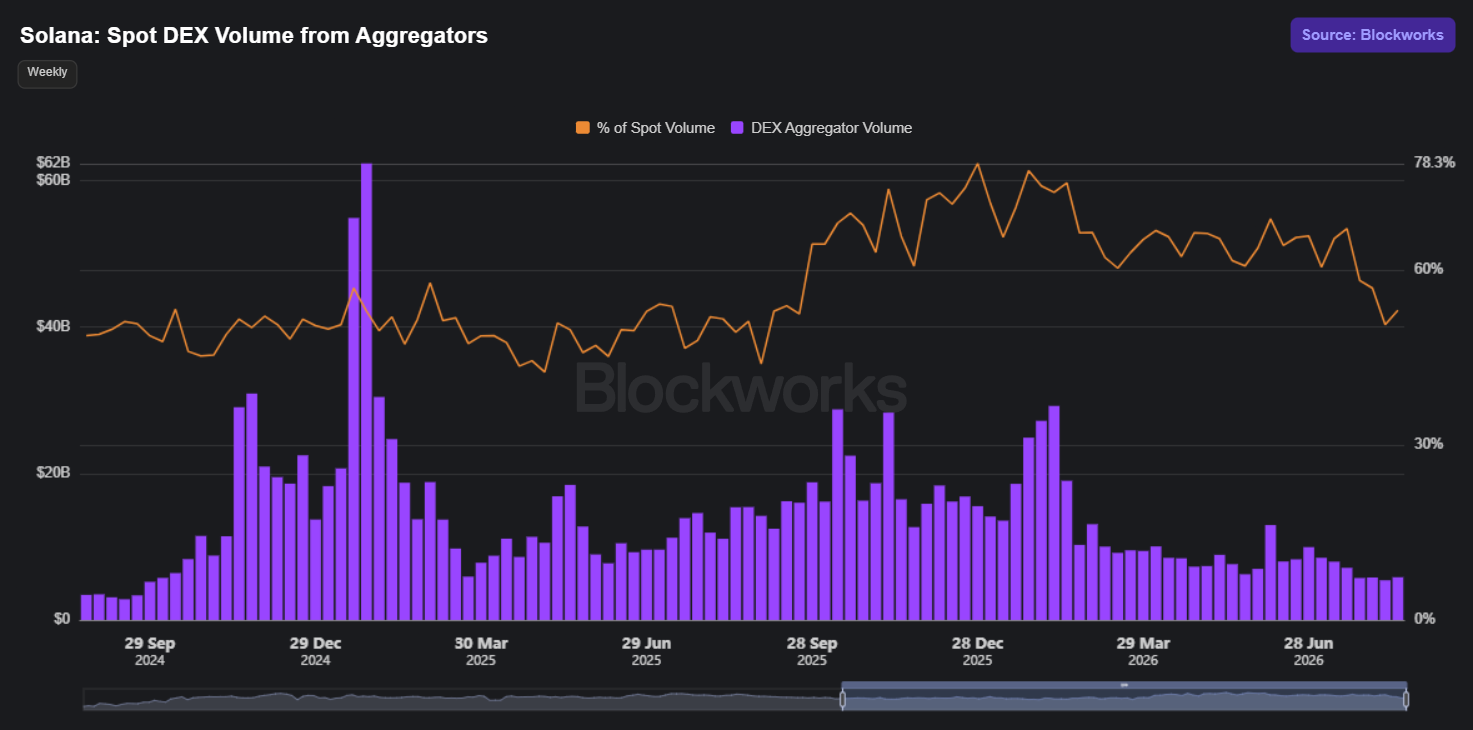
Despite weaker overall onchain activity during the crypto bear market, DEX aggregators remain important to Solana traders even as DEX aggregator share of spot volume has dropped to its lowest level in months.

Jupiter’s fall below 50% therefore marks more than a change in one platform’s market share. It signals a more competitive Solana trading market, with OKX and DFlow increasingly challenging the dominance Jupiter held for years.
Read More on SolanaFloor
Solana Embraces 12.5% Speed Boost with Slot Times Dropping in Next 48 Hours
SEC Unveils ‘Regulation Crypto Assets’ Framework for Crypto Startups to Raise Money
The Case for $900 - $2000 $SOL