
Die Staatsanleihen für digitale Vermögenswerte standen zu Beginn des Jahres 2026 unter akutem Stress, nachdem ein starker Marktrückgang Bitcoin und Ethereum innerhalb einer einzigen Woche um fast 30 % fallen ließ. Artemis-Daten zufolge wurden dadurch schätzungsweise 25 Mrd. USD an nicht realisiertem Wert in den öffentlichen Krypto-Bilanzen vernichtet, und die Anleger waren gezwungen, die Tragfähigkeit von Treasury-first-Unternehmensstrategien neu zu bewerten.
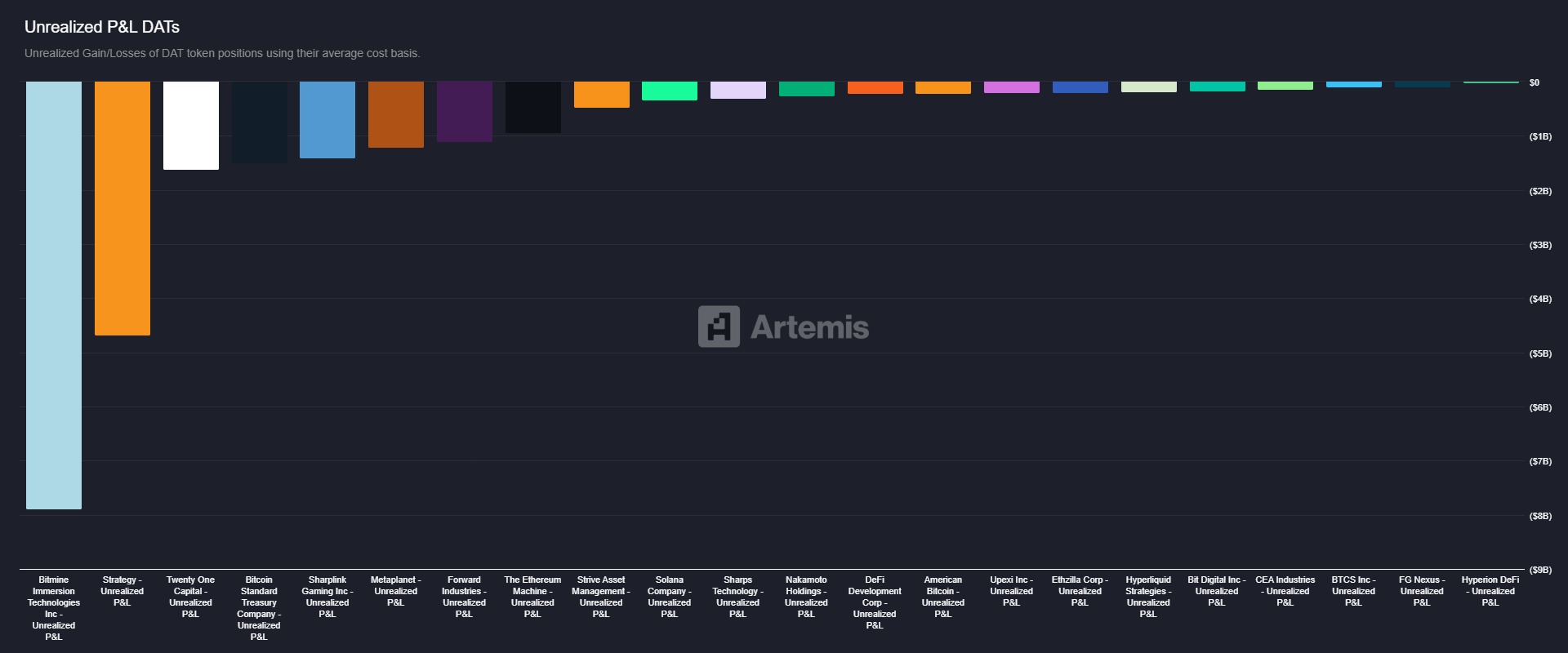
Der Rückgang hat fast den gesamten Sektor gleichzeitig in die Verlustzone getrieben und den Marktfokus von der Akkumulation auf Solvenz- und Liquiditätsrisiken verlagert.
Die Verluste bleiben unrealisiert, aber ihr Ausmaß ist wichtig. Die Bilanzen schwächten sich rasch ab, die Aktienbewertungen sanken, und das Vertrauen der Anleger schwand. Unternehmen, die einst von steigenden Token-Preisen profitierten, sehen sich nun mit der Frage nach dem Zugang zu Kapital und dem langfristigen Bestehen in einem angespannteren finanziellen Umfeld konfrontiert.
Die Märkte preisen das Überlebensrisiko ein
Einer der deutlichsten Indikatoren für Stress ist der Nettoinventarwert des Marktes (mNAV). Diese Kennzahl vergleicht die Aktienbewertung eines Unternehmens mit dem Marktwert seiner Kryptobestände. Während der Haussephase wurden viele DATs weit über einem mNAV von 1 gehandelt, was es ihnen ermöglichte, effizient Eigenkapital zu beschaffen und ihre Bestände zu erweitern. Diese Dynamik hat sich abrupt umgekehrt.
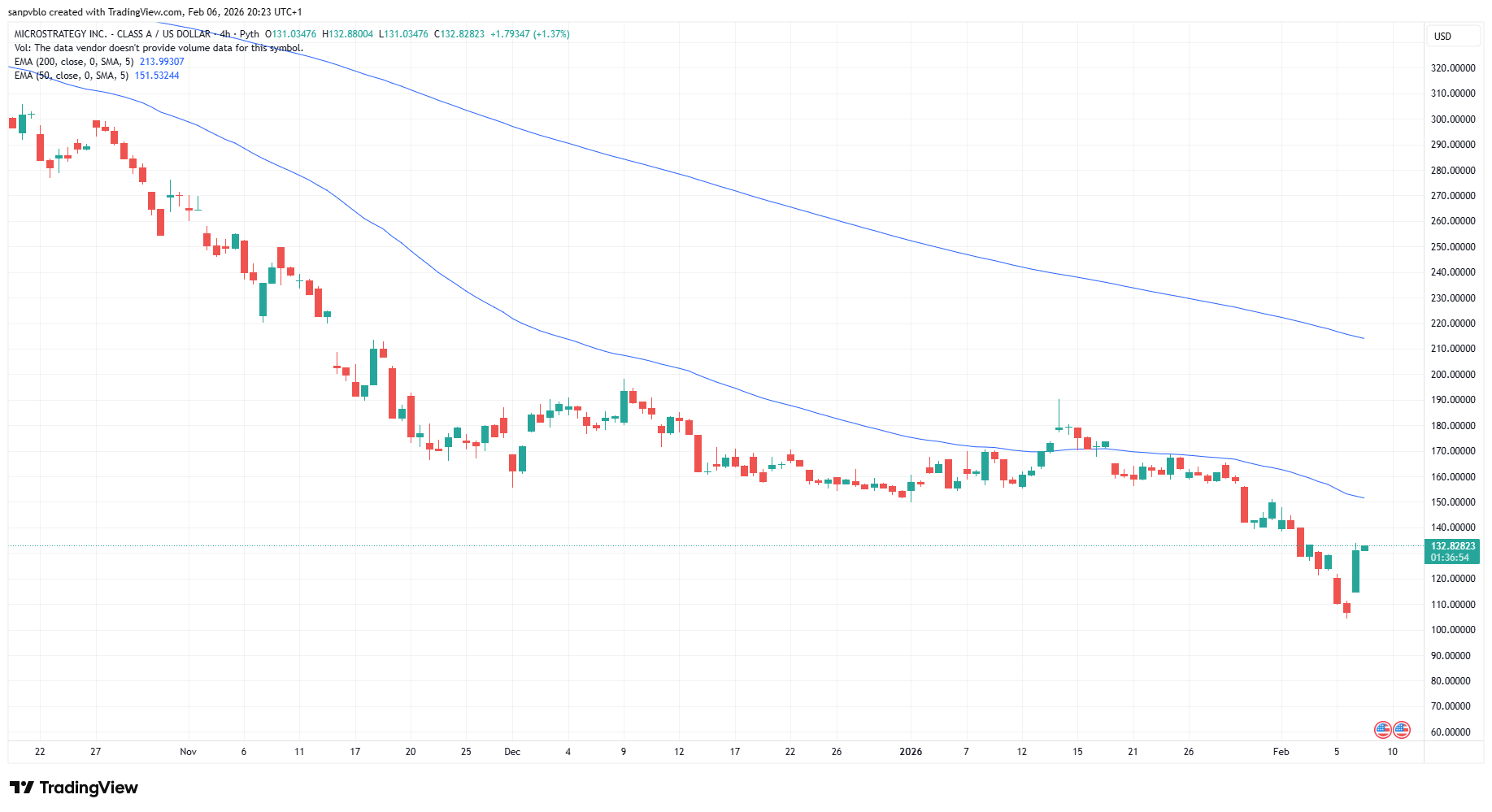
Die meisten großen Krypto-Treasuries werden jetzt unter einem mNAV von 1 gehandelt, was bedeutet, dass die Märkte ihr Eigenkapital mit einem Abschlag auf ihre zugrunde liegenden Vermögenswerte bewerten. Strategy, der größte Bitcoin-Inhaber unter den Unternehmen, hat erlebt, wie seine Aktien in nur einem Monat um 45 % von 240 Dollar auf 132 Dollar gefallen sind. Obwohl das Unternehmen mehrere Milliarden Dollar in Bitcoin hält, werden seine Aktien derzeit unter dem Wert seiner Krypto-Assets gehandelt.
Das Risiko steigt, wenn sich fallende Preise mit der Verschuldung, der Fälligkeit von Schulden oder einem anhaltenden Cash-Burn überschneiden. Bergbauunternehmen und Treasury-Vehikel, die auf externe Finanzierung angewiesen sind, sind am stärksten gefährdet. Niedrigere Vermögenspreise verringern den Wert des Eigenkapitals, beschränken den Zugang zu Kapital und erhöhen den Druck auf die Bilanzen. Diese Dynamik schafft eine Rückkopplungsschleife, die den Stress noch verstärken kann, wenn die Preise weiterhin gedrückt bleiben.
Im Moment sind die meisten DATs noch zahlungsfähig. Allerdings ist der Spielraum für Fehler jetzt so eng wie nie zuvor.
Keine rosigen Aussichten für Bitcoin-Treasuries
Schatzanweisungen für digitale Vermögenswerte bringen einen volatilen Vermögenswert in die Unternehmensbilanzen und finanzieren ein weiteres Engagement über die Kapitalmärkte. Die entscheidende Frage ist, ob die Finanzierungsmechanismen lange genug bestehen können, damit sich die Volatilität umkehren kann.
Da sich der Bitcoin-Preis derzeit um 70.500 $ bewegt, weichen die Bilanzen je nach Einstiegspunkt stark voneinander ab. Strategy hält 713.502 $BTC zu einem Durchschnittspreis von etwa 76.047 $, was zu unrealisierten Verlusten von etwa 4 Mrd. $ führt. Tesla hält 11.509 $BTC zu einem Durchschnittspreis von 33.539 $, mit etwa 425 Millionen $ an Papiergewinnen. Coinbase hält 14.548 BTC zu 71.465 $ und liegt damit etwa 14 Mio. $ im grünen Bereich.
Andere sitzen tief unter Wasser. Metaplanet hält 35.102 BTC zu 107.716 $, was ungefähr 1,3 Milliarden $ an Verlusten bedeutet. Trump Media hält 11.542 BTC zu 118.529 $ und liegt damit rund 554 Millionen $ unter Wasser. Diese Unterschiede verdeutlichen, dass Timing, Hebelwirkung und Finanzierungsstruktur heute wichtiger sind als das Schlagzeilenrisiko.
Da Bitcoin keine Rendite abwirft, stehen die schwächeren DATs vor schwierigen Entscheidungen. Einige haben mit dem Verkauf von Kryptowährungen begonnen, um Rückkäufe zu finanzieren oder Schulden zu bedienen. Empery Digital begann mit dem Verkauf von Bitcoin, um Aktienrückkäufe zu finanzieren. Handlungen, die einst als undenkbar galten, erscheinen nun pragmatisch.
Solana-Treasuries fallen schwer
Der Stress geht über Bitcoin und Ethereum hinaus. Ein etwa 40-prozentiger Rückgang von $SOL in den letzten 30 Tagen hat die Solana-Treasury-Unternehmen tief in die roten Zahlen gedrückt. Der Wert der $SOL-Bestände fiel laut Blockworks-Daten bei mehreren Unternehmen. Sharps Technology verzeichnete mit etwa 68 % den größten Rückgang, dicht gefolgt von Solana Company mit etwa 65 % und Forward Industries mit etwa 64 %. Upexi verzeichnete ebenfalls einen erheblichen Rückgang von etwa 47 %, während die Bestände von DeFi Development Corp um etwa 42 % sanken.
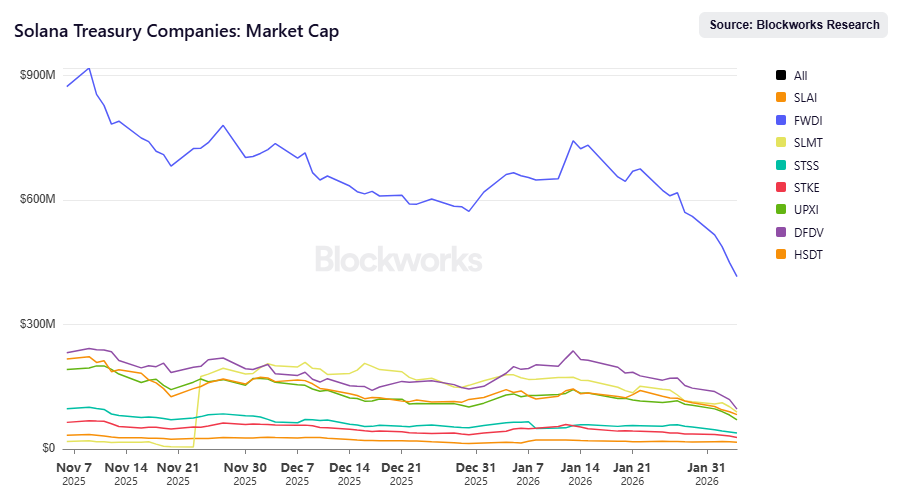
Forward Industries, das größte börsennotierte Solana-Treasury-Unternehmen, rückte 2025 in den Mittelpunkt, nachdem es sich in einer öffentlichen Kapitalrunde eine private Investition in Höhe von 1,65 Mrd. USD gesichert hatte, um das Unternehmen auf eine Solana-zentrierte Treasury-Strategie auszurichten, wobei Multicoin-Mitbegründer Kyle Samani zum Vorsitzenden ernannt wurde.
Der Zeitpunkt von Samanis Ankündigung, dass er sich aus dem Tagesgeschäft von Multicoin zurückziehen würde, wurde genau unter die Lupe genommen, da der Preis von $SOL in den letzten Monaten deutlich gesunken ist und einige Beobachter behaupten, dass der Hauptzweck des Pivotings von Forward Industries in erster Linie eine Ausstiegsstrategie und ein Mittel zum Verkauf von $SOL zu günstigeren Preisen war.
Wann hört das Halten von Kryptowährungen auf, ein tragfähiges Geschäftsmodell zu sein?
Der Druck konzentriert sich nun auf Strategy selbst, die ursprüngliche und größte Schatzkammer für digitale Vermögenswerte, deren Ansatz die Blaupause für fast alle nachfolgenden DATs wurde. Strategy baute sein Modell auf einer kontinuierlichen Bitcoin-Akkumulation auf, die über die Kapitalmärkte finanziert wurde, und Dutzende anderer Treasury-Unternehmen starteten in seinem Kielwasser, wobei sie von einem ähnlichen Zugang zu Liquidität und einer ähnlichen Toleranz der Anleger gegenüber Volatilität ausgingen. Diese Annahme wird nun zum ersten Mal nachhaltig auf die Probe gestellt, da Bitcoin unter dem durchschnittlichen Einstiegspreis für viele spätere Anleger gehandelt wird.
Auf der jüngsten Gewinnmitteilung erklärte der CEO von Strategy, Phong Le, dass das Unternehmen einen Fall von Bitcoin auf 8.000 US-Dollar und ein Verbleiben in diesem Bereich für sechs Jahre verkraften könnte, ohne dass es zu einer Liquidation gezwungen wäre, was den Umfang seiner USD-Reserven unterstreicht. Die meisten neueren Schatzämter verfügen nicht über diese Widerstandsfähigkeit.
Mit dünneren Bilanzen, höherer Verschuldung und weniger Finanzierungsmöglichkeiten könnten viele von ihnen schnell in Bedrängnis geraten, wenn die Preise gedrückt bleiben. Wenn diese Unternehmen beginnen, Positionen aufzulösen, um ihren Verpflichtungen nachzukommen, würde der Verkaufsdruck wahrscheinlich auf das gesamte Ökosystem übergreifen, was das Risiko erhöht, dass ein Ausfall der Staatskasse und nicht nur der Spotmärkte zum wahren Kapitulationsereignis für Altcoins wird.
Lesen Sie mehr auf SolanaFloor
2,6 Milliarden Dollar werden liquidiert, als Bitcoin unter 60.000 Dollar fällt und Solana 68 Dollar erreicht - Globale Märkte gehen in den Risk-Off-Modus
Moving Forward? - Kyle Samani zieht sich von Multicoin zurück und wechselt in eine Beraterrolle
Bitwise CIO Matt Hougan über das große Bild