Helium Mobile, la red inalámbrica descentralizada construida sobre Solana, alcanzó un nuevo hito el 14 de febrero de 2026, al registrar 3.394.901 usuarios activos diarios. Esta cifra representa un máximo histórico para la red y refleja un crecimiento sostenido en la adopción en el mundo real. Los usuarios activos diarios se sitúan actualmente en 2.473.730, lo que indica una fortaleza continuada incluso después del pico.
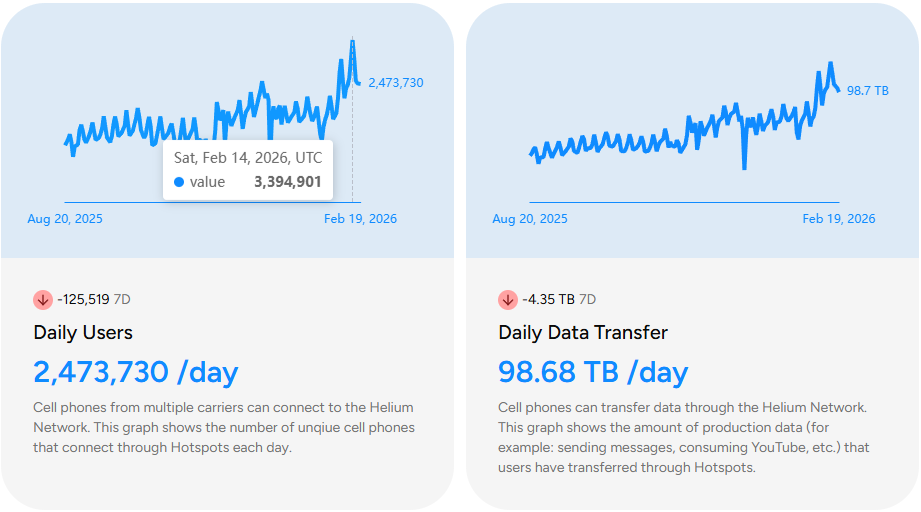
Ese mismo día, los volúmenes de Carrier Offload alcanzaron la cifra récord de 126 terabytes, marcando un nuevo máximo histórico de datos transferidos a través de la infraestructura de Helium. El aumento simultáneo de la actividad de los usuarios y del tráfico de datos al por mayor pone de manifiesto el papel cada vez más importante que desempeña Helium en el ecosistema de las telecomunicaciones.
Expansión de la red
Helium Mobile da servicio a casi 2,5 millones de usuarios diarios a través de una red de 126.713 puntos de acceso comunitarios. Estos nodos, gestionados por particulares y empresas, ofrecen una cobertura que permite a los operadores descargar el tráfico de datos móviles de forma más eficiente.
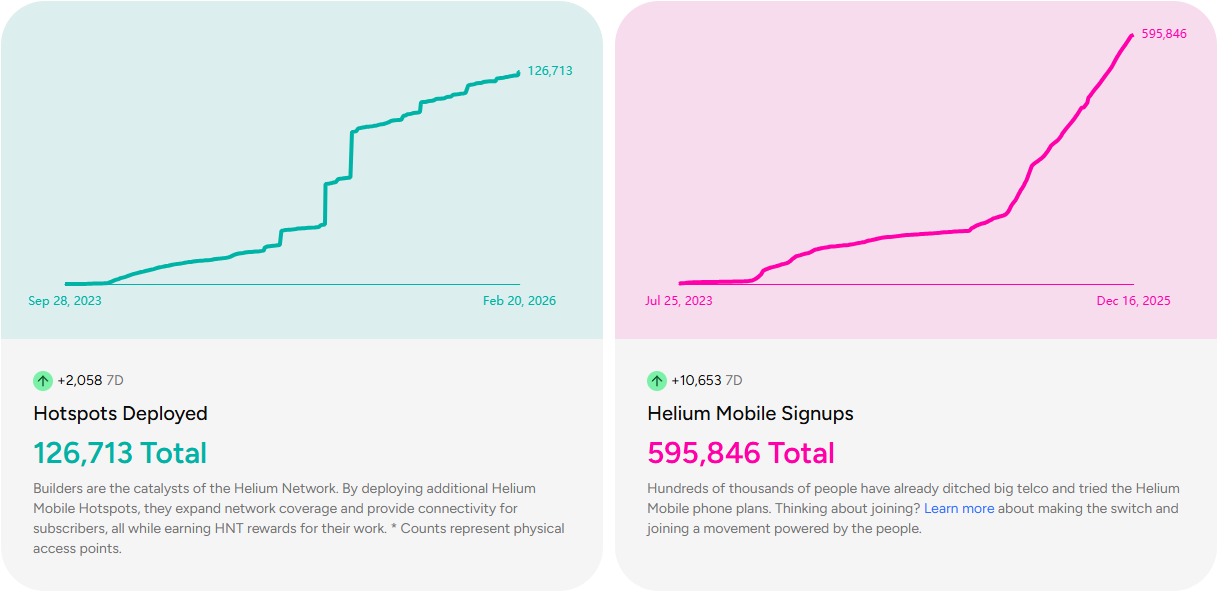
Esta semana, Helium Mobile ha alcanzado un total de 595.846 suscripciones, lo que supone duplicar la base de abonados desde que la red superó los 300.000 usuarios en junio. La expansión demuestra la creciente demanda de los consumidores de modelos alternativos de servicios móviles que combinen infraestructuras descentralizadas con asociaciones tradicionales de operadores.
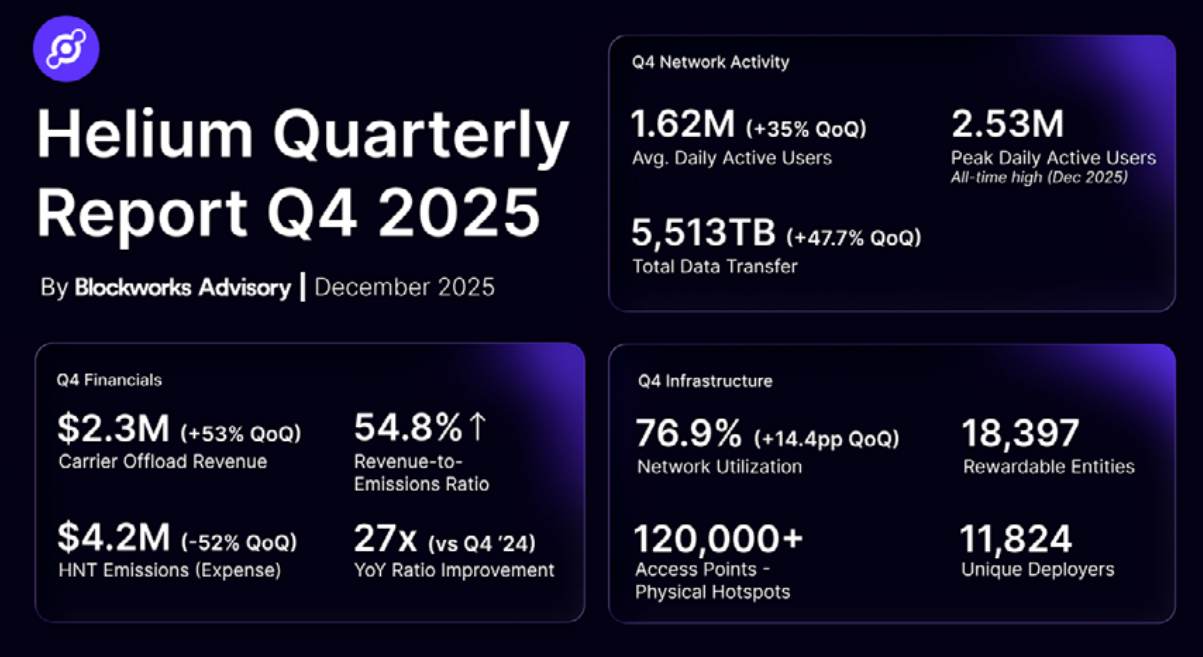
El crecimiento de la infraestructura de hotspots se ha moderado con respecto a periodos anteriores, pero su utilización ha aumentado significativamente. Según el Informe de Tokenholders del 4.º trimestre de 2025 de Helium, el consumo de crédito de datos (CD) procedente de Carrier Offload y de un uso más amplio de la red ascendió a 2,3 millones de dólares en el 4.º trimestre de 2025, un 53% más que en el trimestre anterior, y la utilización de la red aumentó al 76,9% desde el 62,5% del 3.er trimestre, lo que significa que más de tres cuartas partes de las entidades recompensables sirvieron datos activamente.
Este cambio indica que el crecimiento de la demanda absorbe ahora la infraestructura existente de manera más eficiente, mejorando la economía de la red sin requerir una expansión proporcional del capital.
Ingresos impulsados por el uso, no por la especulación
El modelo económico de Helium se centra en los créditos de datos, que los usuarios y los operadores asociados queman para acceder a los servicios de red. Según los datos de Blockworks, el consumo diario de créditos de datos alcanza sistemáticamente los 40.000 dólares. El 14 de febrero, los créditos de datos quemados superaron los 56.000 dólares, lo que refleja una mayor actividad en los canales minorista y de operador.
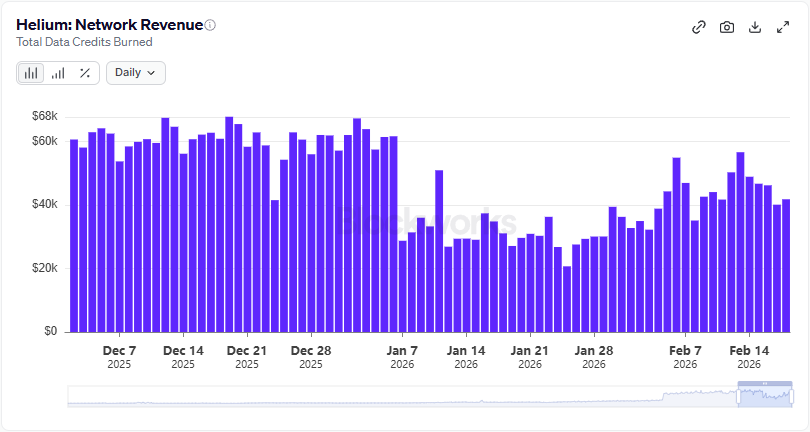
Carrier Offload sigue funcionando como el principal motor de ingresos mayoristas de la red. En el cuarto trimestre de 2025, el consumo de crédito de datos de descarga de operador alcanzó los 2,3 millones de dólares. El volumen total de transferencia de datos aumentó a 5.513 terabytes, un 47,7% más que en el trimestre anterior.
El tráfico de proveedores de servicios de Helium Mobile aportó ingresos adicionales, mientras que los ingresos por suscripciones proporcionaron una estabilidad básica recurrente. Combinados, estos canales produjeron 5,2 millones de dólares en ingresos totales durante el trimestre, aunque 2,9 millones de esa cifra procedían de un programa de quema discrecional ya finalizado. Excluyendo las quemas discrecionales, los ingresos sostenibles de Carrier Offload cubrieron el 54,8% de las emisiones de HNT, una notable mejora frente al 17% del trimestre anterior y apenas el 1,9% un año antes.
Esta progresión ilustra una reducción de la brecha entre las emisiones del protocolo y los ingresos orgánicos de la red. El flujo de caja operativo sostenible mejoró de -5,9 millones de dólares en el trimestre anterior a -1,9 millones de dólares, lo que refleja la disciplinada reducción de emisiones y una mayor utilización de las aerolíneas.
El 2 de enero, el fundador y consejero delegado de Helium , Amir Haleem, anunció que el protocolo DePIN, basado en Solana, dejaría de destinar los ingresos del protocolo a la recompra de $HNT.
Aunque aclaró que los créditos de datos seguirían destinándose a la descarga de portadoras, Haleem afirmó que la red había vertido sus ingresos "en un agujero". La decisión marcó un cambio en la estrategia de asignación de capital y subrayó el enfoque de la dirección en el fortalecimiento de la economía sostenible, impulsada por el uso, en lugar de confiar en los mecanismos de recompra.
A diferencia de muchas plataformas de criptomonedas que dependen de la actividad comercial especulativa, Helium genera ingresos a partir del uso real de las telecomunicaciones. Mientras los abonados realicen llamadas, transmitan contenido multimedia y utilicen datos móviles, la red registra el consumo de créditos de datos. Esta dinámica proporciona un flujo de ingresos relativamente estable que no depende directamente de la revalorización del precio del token o del volumen de operaciones.
DePIN en un entorno de mercado difícil
Los mercados de criptomonedas más amplios han experimentado una volatilidad significativa, y muchos tokens permanecen muy por debajo de los máximos anteriores. El informe State of DePIN 2025 de Messari señala que los tokens de proyectos DePIN anteriores de 2018 a 2022 disminuyeron entre un 94% y un 99% desde sus máximos históricos. Sin embargo, el mismo informe destaca que los inversores a menudo se basan en datos obsoletos al evaluar las redes DePIN.
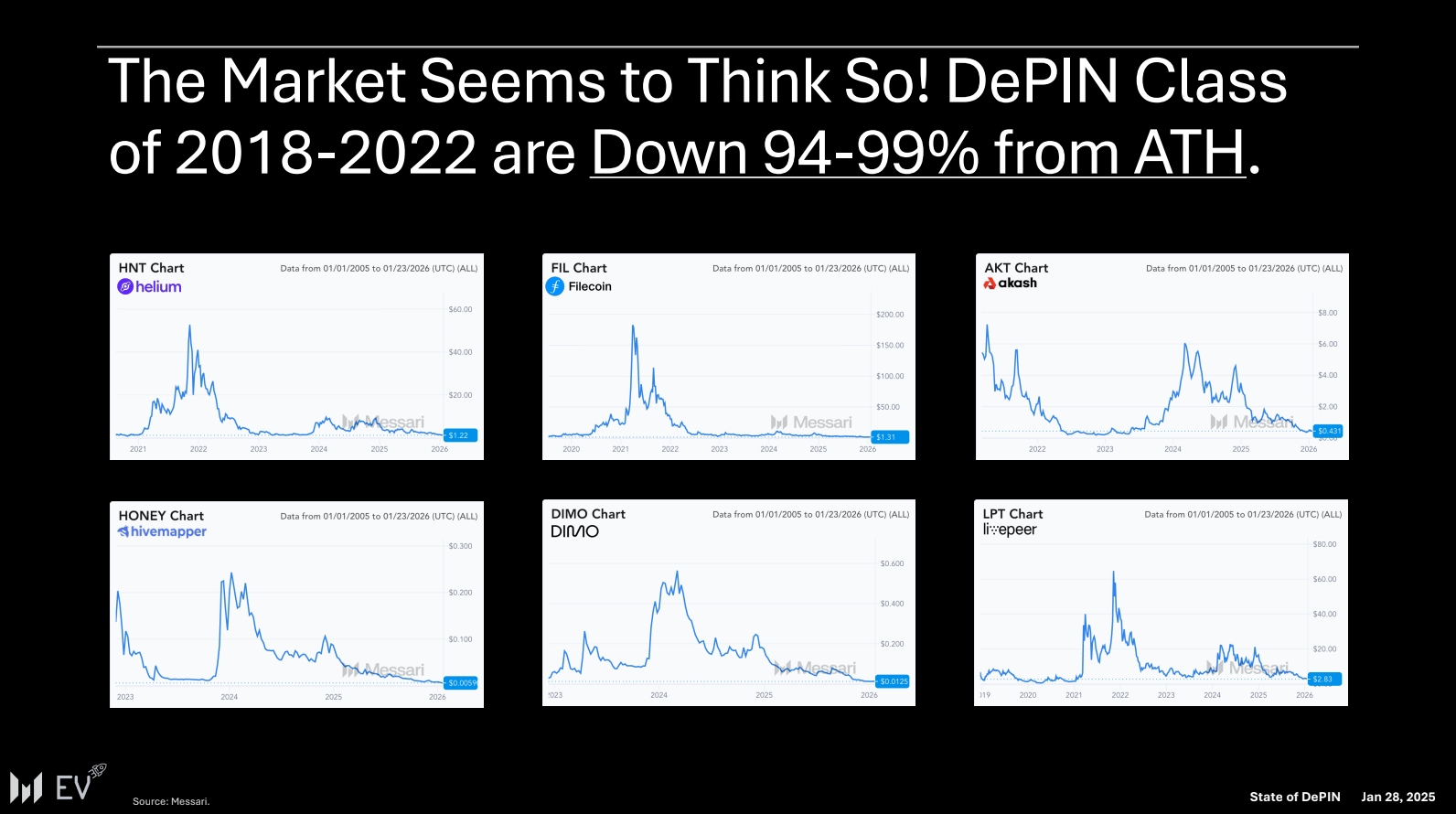
En 2021, muchos proyectos DePIN generaron ingresos mínimos y dependieron en gran medida de los incentivos inflacionarios de tokens. Por el contrario, la cohorte de redes DePIN de 2025 genera ingresos significativos en la cadena, opera con calendarios de emisiones más sostenibles y crece gracias a la utilidad y no a las subvenciones.
El informe observa además que el crecimiento de los ingresos de DePIN ha demostrado ser más resistente que los protocolos DeFi y Layer 1 durante los mercados bajistas.
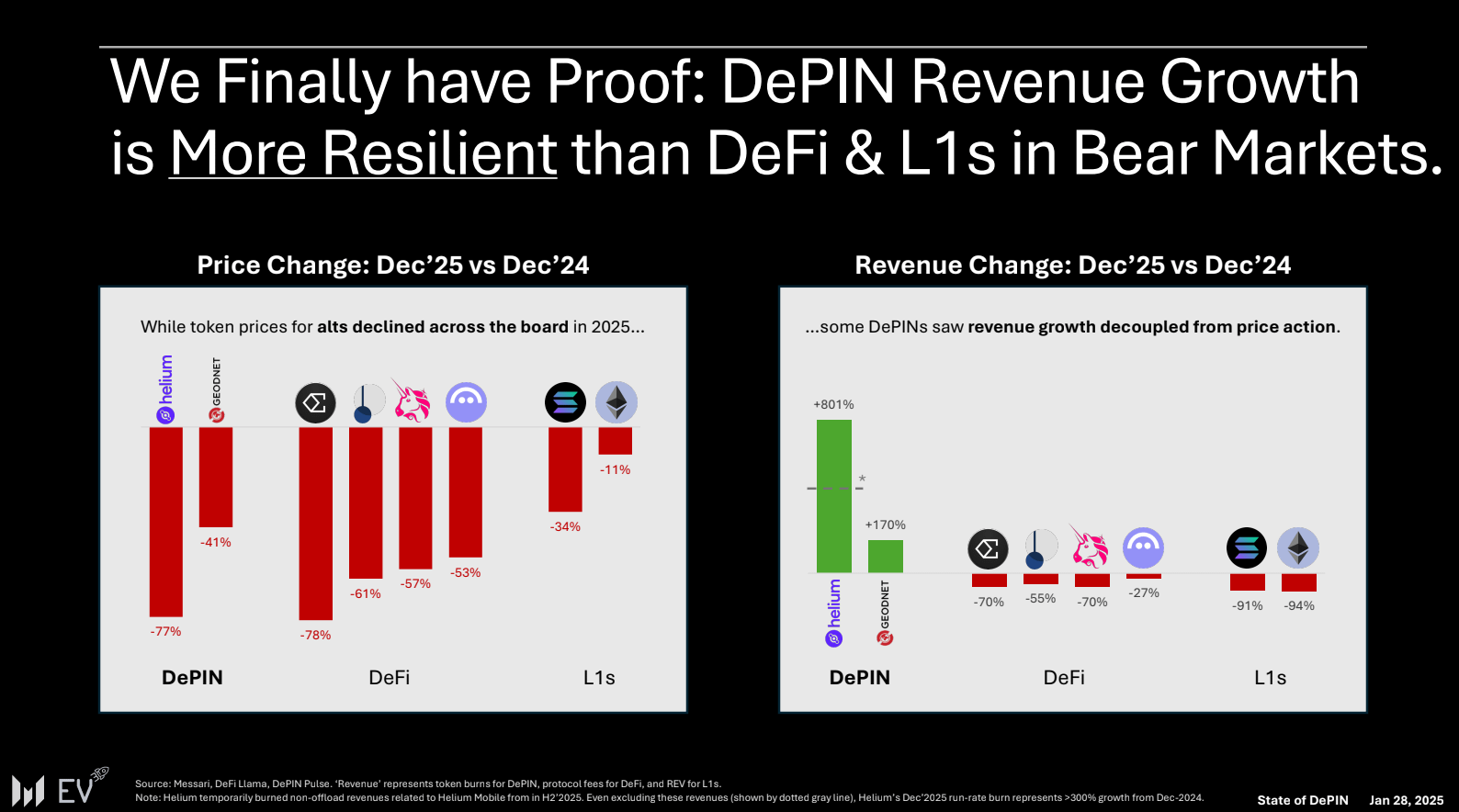
Mientras que los precios de los tokens disminuyeron de forma generalizada en todos los sectores, algunas redes DePIN mostraron una expansión de los ingresos que se desacopló de la evolución de los precios. Esta divergencia apoya el argumento de que las redes orientadas a la infraestructura pueden sostener la actividad económica incluso cuando el capital especulativo se retira.
Los resultados recientes de Helium concuerdan con esta tesis. Los usuarios activos diarios alcanzaron niveles récord, los volúmenes de Carrier Offload alcanzaron nuevos máximos, y las quemas de Data Credit se mantuvieron elevadas a pesar de la incertidumbre general del mercado. La red sigue funcionando como un componente de producción de la infraestructura del operador y no como un activo puramente especulativo.
Eficiencia estructural en telecomunicaciones
Helium aborda las ineficiencias estructurales del sector de las telecomunicaciones. Los operadores tradicionales tienen que hacer frente a crecientes gastos de capital y explotación para ampliar la cobertura, sobre todo en entornos interiores densos como centros comerciales, nudos de comunicaciones y lugares de ocio. Aprovechando una base distribuida de puntos de acceso comunitarios, Helium permite a los operadores ampliar la cobertura por una fracción de los costes históricos.
Los hotspots proporcionan métricas detalladas de calidad de servicio y telemetría de cobertura que los operadores a menudo tienen dificultades para obtener en interiores. Estos datos mejoran las decisiones de enrutamiento y la asignación de capital, convirtiendo la red en una capa de inteligencia que complementa el espectro bajo licencia y la infraestructura existente.
A medida que los operadores adoptan cada vez más modelos operativos multirred, las redes inalámbricas descentralizadas ofrecen una vía alternativa para ampliar la cobertura sin concentrar el capital en infraestructuras propias. Los últimos máximos históricos de Helium en usuarios y volumen de descarga demuestran que este modelo puede funcionar a escala.
Más información sobre SolanaFloor
Más del 81% del peso votante de Whale apoya las emisiones cero en la votación de Jupiter DAO
¿A la tercera va la vencida? - La Casa Blanca acoge la tercera reunión de Stablecoin mientras las probabilidades de la Ley CLARITY aumentan en los mercados de predicción
La verdad tras el próximo movimiento de las criptomonedas en The Big Picture