솔라나 검증자는 무엇입니까?
TL;DR
- 솔라나 검증자는 거래를 처리하고 보안을 유지함으로써 솔라나 블록체인을 유지하는 컴퓨터입니다
- 검증자는 솔라나의 보안, 속도 및 탈중앙화에서 중요한 역할을 합니다. 그들은 담보로 SOL 토큰을 스테이킹하고 그들의 작업에 대한 보상을 얻습니다
- 누구나 검증자가 되거나 기존 검증자에게 SOL을 위임하여 참여할 수 있습니다
- Step Finance와 같은 서비스를 통해 SOL을 스테이킹하는 것은 네트워크를 지원하고 보상을 얻는 쉬운 방법입니다
Solana validators are the global network of computers that play a critical role in maintaining the Solana blockchain. They're the backbone of the network, ensuring its security, speed, and reliability. Whether you're considering becoming a validator yourself or just curious about how web3 works under the hood, understanding their function is essential to appreciating Solana's approach to blockchain technology.
Before diving into Solana validators, though, we should readdress some fundamental blockchain concepts:
A blockchain is a distributed ledger that records transactions across a global network of computers. Blockchains are decentralized, which means that no single entity controls the entire network. This decentralization is one of the core traits of web3, because it helps provide a version of the internet that’s open, fair, and transparent.
Need to brush up on the basics? Here’s a Guide to Crypto for Beginners
Blockchains achieve decentralization through what’s called a consensus mechanism, which is how all the participant computers that make up the network agree on all the data that’s transacted on the network. Solana, for example, achieves this through its unique consensus mechanism called Proof of Stake (PoS) which uses its network of validators to achieve consensus.
On Solana, a validator is a computer — referred to as a ‘node’ — that’s run by an individual, organization, and service that participates in the network by staking tokens, verifying and processing transactions, maintaining the blockchain's integrity, and securing the network. There are over 4000 Solana validator nodes spread between 45 countries, 230 cities, and over 500 data centers, and together, they have a number of essential functions:
Transaction Processing: Validators receive, verify, and process transactions submitted by users on the Solana network. They ensure that each transaction is valid and follows the network's rules.
Block Production: Validators take turns producing new blocks of transactions to be added to the blockchain. This process helps maintain an up-to-date and accurate record of all network activities.
Consensus Participation: Validators work together to reach consensus on the state of the blockchain. They vote on proposed blocks and help determine which version of the ledger is considered the truth.
Network Security: By staking SOL tokens (Solana's native cryptocurrency) and participating in consensus, validators help secure the network against potential attacks or malicious activities.
How Do Solana Validators Work?
Solana validators are busy machines. Here's a simplified explanation of key elements of the validator remit:
-
Hardware and Software Setup: Validators run specialized software called Validator Clients on powerful computer hardware. This setup allows them to process transactions quickly and participate in network consensus. The collective effort of all validators and the hardware they run on enables Solana to achieve its high transaction speeds and low costs.
-
Staking and Rewards: To become a validator, an individual or entity must "stake" a certain amount of SOL tokens. This stake serves as collateral and demonstrates the validator's commitment to the network. Validators stake their own tokens, creating a financial incentive to act honestly. This helps protect the network from attacks and ensures its security. Validators earn rewards in SOL tokens for their participation in maintaining the network. These rewards come from transaction fees and token inflation.
-
Transaction Processing: When users submit transactions, validators verify their validity by checking signatures, account balances, and other parameters. By distributing the responsibility of maintaining the network across many validators, Solana achieves a high degree of decentralization, making it resistant to censorship and control by any single entity.
-
Block Production: Validators take turns being the "leader" who proposes new blocks of transactions. Other validators then vote on the proposed blocks the software has decided are most accurate.
-
Consensus: Through a voting process, validators reach agreement on which blocks should be added to the blockchain, ensuring a consistent state across the network.
-
Governance: Validators often participate in network governance, voting on proposed changes and upgrades to the Solana protocol.
Becoming a Solana Validator
Anyone can become a Solana validator, but it does require some technical knowledge, hardware resources, and a substantial stake of SOL tokens. Many individuals choose to participate in the Solana network by delegating their SOL tokens to existing validators instead of running their own validator nodes.
Read through our How to Stake SOL guide to learn more about how you can participate as a Solana validator by using a staking pool or service — and earn rewards for your contributions to the network. In fact, the average reward for participants in staking services can be over 7%. It’s a great way to earn passive income while doing your part to support the Solana network. And it’s easy!
Here’s a quick overview of how you can stake SOL via Step Finance, a popular wallet dashboard that’s easy to use and secure. The process is very simple.
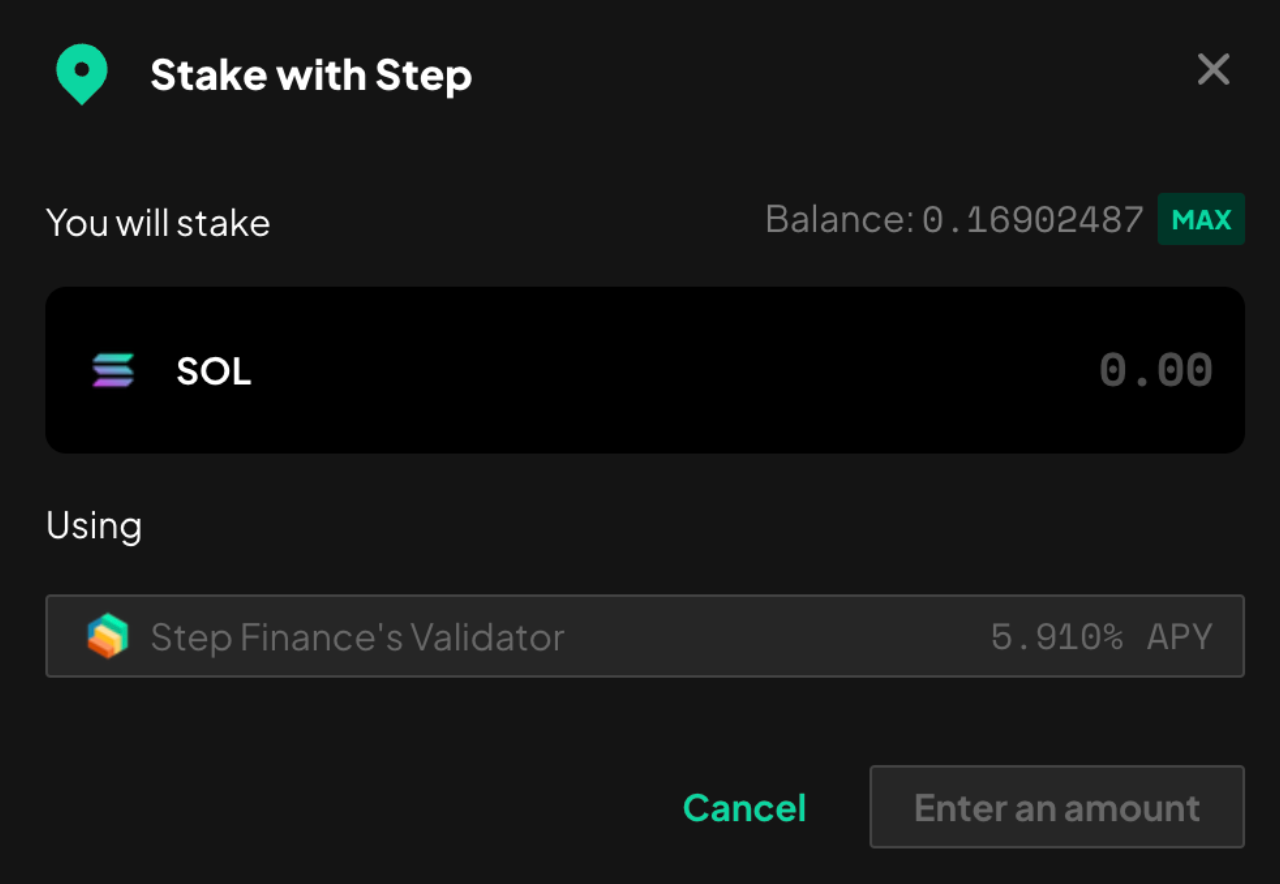
Step 1: Make sure you have SOL in your wallet.
Step 2: Click on Stake SOL. Then you’ll be asked the amount of SOL you’d like to stake, and see the expected APY — which is the percentage of yield you can expect to make annually on your staked SOL.
That’s it! You’re now staking SOL, earning rewards on your crypto, and taking part in the Solana network.
Unstaking your SOL is just as easy, but you should remember that unstaking is subject to lock-up phases and cooldown periods that can take up to a couple of days to expire.