솔라나 유동 스테이킹 토큰에 대한 심층 분석
TL;DR
솔라나에서 스테이킹하는 것은 SOL 보유량에 대한 보상을 얻는 좋은 방법이지만, 유동 스테이킹은 스테이킹에 DeFi를 도입하여 한 단계 더 나아갑니다. 이 설명서에서는 다음과 같은 유동 스테이킹 토큰의 기본 사항을 다룰 것입니다:
- 솔라나의 네이티브 스테이킹: 전통적인 스테이킹은 보상을 위해 SOL 토큰을 잠그지만 DeFi 생태계 내에서의 활용도를 제한합니다.
- 유동 스테이킹 개요: 유동 스테이킹은 SOL 보유자가 자산의 유동성을 유지하면서 보상을 Earn할 수 있게 하며, DeFi를 통해 거래하고 유동 스테이킹 토큰 (LST)으로 사용의 유연성을 제공합니다.
- 톱 솔라나 유동 스테이킹 제공업체: Sanctum, Jito, Marinade Finance 및 SolBlaze와 같은.
- 위험 및 고려사항: 유동 스테이킹에는 주의해야 할 잠재적 위험이 있습니다.
If you’re already familiar with how staking on Solana works, liquid staking is a way to maximize rewards even more, and get involved with more advanced DeFi practices. Here, we’ll explain how liquid staking works, the magic behind LST tokens, and the top protocols and providers in the Solana ecosystem.
Staking on Solana
Solana, like many other blockchains, uses a Proof of Stake (PoS) consensus mechanism to secure its network. This system allows SOL holders to stake tokens towards a network validator to help keep the network running, and to earn SOL rewards in return.
Staking is an essential part of web3. If you need a refresher, the basics are covered in our guide How to Stake SOL.
Traditional staking, or “native staking”, is very useful for earning passive rewards, but participating requires locking up your assets. This limits the ability to utilize your staked SOL throughout the DeFi ecosystem while it’s committed to the protocol.
Liquid Staking: Maximizing staking rewards with DeFi
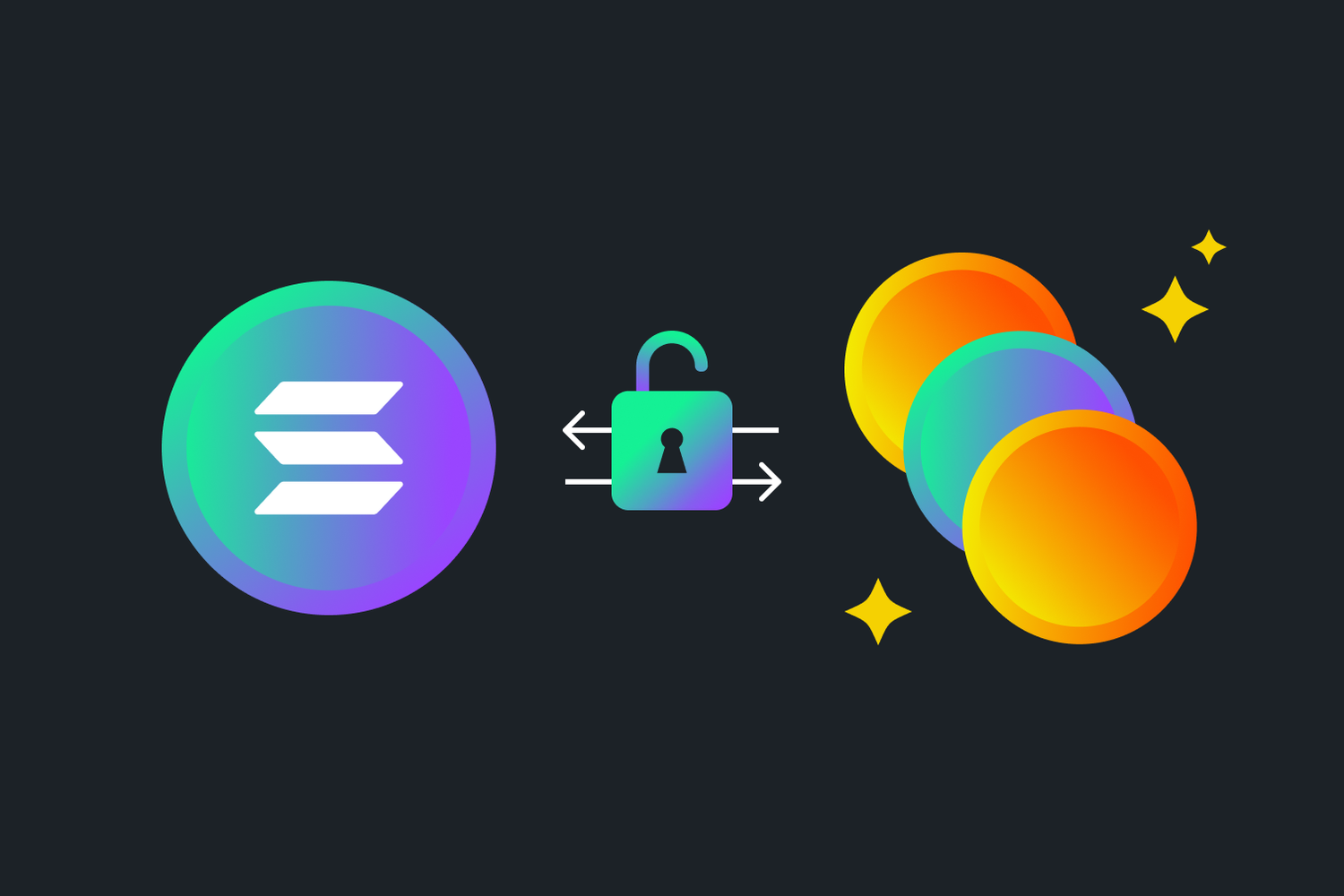
Enter liquid staking, a solution that offers the best of both worlds. Liquid staking is named as such because it allows you to stake your SOL while maintaining liquidity.
Here’s how it works: Instead of staking tokens directly with validators which has a two day warm up/cool down period, you can immediately gain access to those tokens by staking through an LST provider’s pool. In return, you receive Liquid Staking Tokens (LSTs) representing your staked SOL. These LSTs can be traded, used in DeFi applications, or transferred while your SOL continues to earn staking rewards. In addition to providing more utility than native staking, liquid staking often provides slightly higher yields.
Solana Liquid Staking Providers
When you deposit your SOL into liquid staking platforms, they enter a pool of staked tokens, and you receive an equivalent value of that platform’s liquid staking token, or LSTs, in return.
Here’s a quick list of the top liquid staking providers on Solana today:
- Sanctum - Offers 50+ different LST options including stepSOL from Step Finance
- Jito — A Solana staking platform that offers innovative ways to boost yield via its JitoSOL LST.
- Marinade Finance — A non-custodial, automated Solana staking and liquid staking platform that offers the mSOL LST.
- SolBlaze — A Solana staking platform with a bSOL LST.
How to Liquid Stake with Sanctum and Step Finance.
While liquid staking is a little more advanced than native staking, it can be a very straightforward process to initiate.
Let’s take a look at how liquid staking works on Sanctum as an example:
- Head to Sanctum.so and connect your wallet. Select the Step Finance LST, stepSOL. Staking with Step Finance receives the StepSOL LST in return
- Enter the amount of SOL you wish to stake
- Review and confirm the transaction in your wallet
- Once confirmed, you'll receive StepSOL tokens in exchange for your staked SOL.
While your staked SOL is automatically delegated to the Solana network via Step, your StepSOL can be used in various DeFi protocols across the Solana network, and is eligible for reward options in STEP.
What you Can Do with LSTs
Each LST will come with its own advantages, and you should make sure to browse and research your options. Here are some examples of what you can do:
- Provide liquidity in LST/SOL pairs on DEXs
- Use as collateral for borrowing on lending platforms
- Stake in yield farming protocols for additional rewards
- Some liquid staking protocols incorporate governance features for LST holders, giving stakeholders a say in the protocol's future.
When you decide to unstake your SOL, the process typically involves converting your LSTs back to SOL. This can be done instantly through a swap on a DEX. Alternatively, most protocols offer a native unstaking option that takes a few days, but avoids any fees or slippage.
Liquid Staking Considerations
While liquid staking is a simple process, there are potential risks you should consider. For example: if your holdings of LSTs diminish, so will the amount of SOL you receive in exchange when you trade or decide to unstake and redeem your LST for SOL.
In periods of extreme market volatility, market conditions may cause the de-pegging of LSTs from SOL value. Under normal circumstances, LSTs are designed to maintain a 1:1 value ratio with the staked SOL they represent. However, various factors can disrupt this, leading to a loss of value for an LST. Additionally, in some jurisdictions receiving LSTs in exchange for your SOL might be considered a taxable event.
Want to learn more about advanced DeFi? Read our Intermediate Guide to Decentralized Finance to learn all about DEXes, margin trading, and synthetic assets.