$KRWQ lleva el won coreano a Solana y el mercado de stablecoins no denominadas en USD alcanza los 180 millones de dólares
La stablecoin del won coreano se adentra en las divisas onchain, las perpetuas y la negociación institucional.
- Publicado:
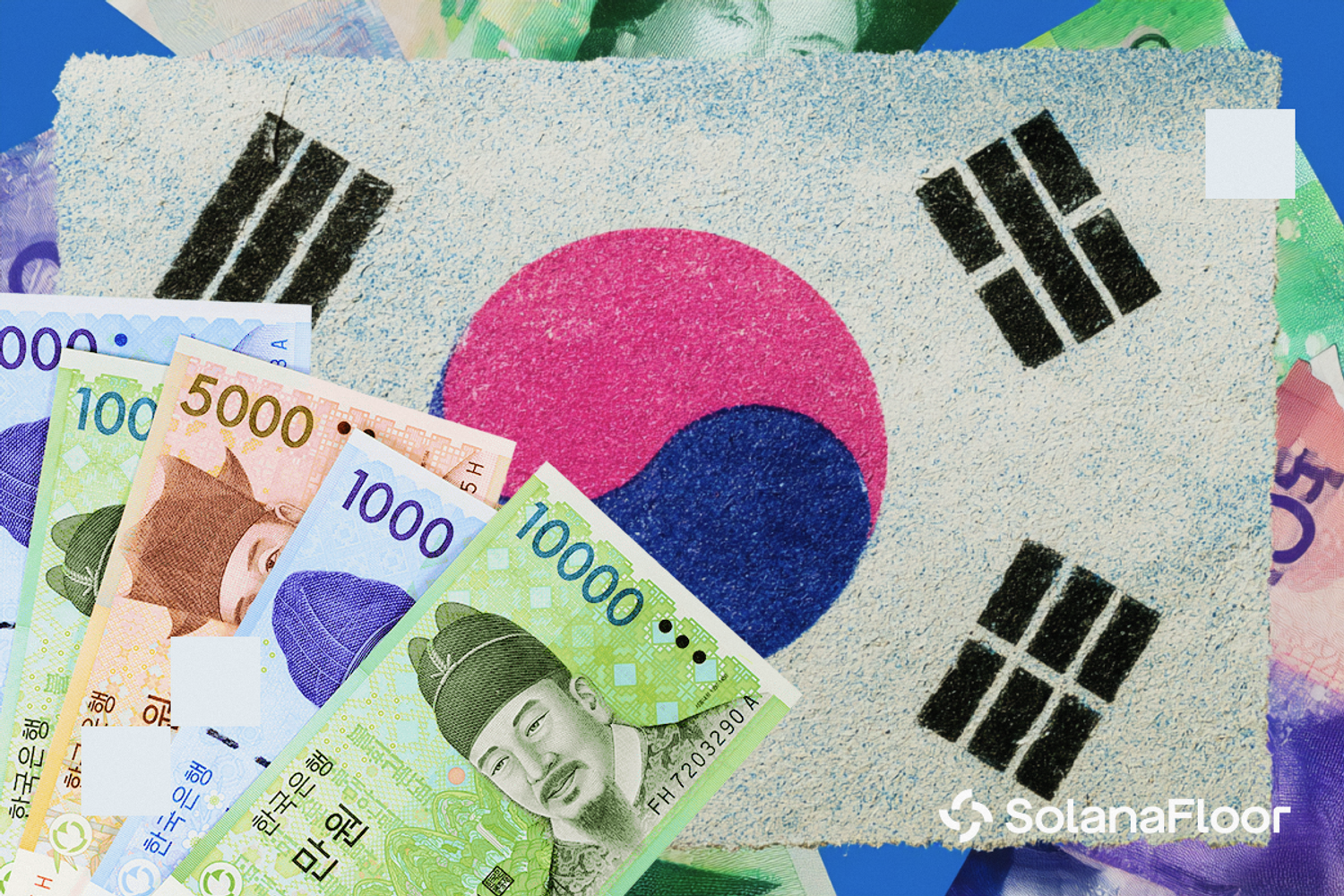
$KRWQ, una stablecoin vinculada al won surcoreano, se está expandiendo a Solana, ya que el proyecto pretende llevar la liquidez del won coreano a los sistemas de negociación de criptomonedas nativas. La medida se produce después de que KRWQ cotizara en marzo en EDX Markets y señala un esfuerzo más amplio para posicionar la stablecoin como un activo de liquidación para la actividad de negociación del won coreano en los mercados descentralizados e institucionales.
IQ, la empresa que está detrás de KRWQ en asociación con Frax, dijo que el despliegue permitirá a los operadores e instituciones acceder a la liquidez del won coreano directamente onchain. El won coreano sigue siendo una de las divisas más negociadas del mundo en los mercados de derivados extraterritoriales, pero la criptoinfraestructura ha ofrecido históricamente un acceso directo limitado a la liquidez denominada en KRW.
Según el equipo, el despliegue de Solana admitirá una serie de aplicaciones de negociación, incluidos futuros perpetuos, mercados de divisas onchain, estrategias de arbitraje y negociación de márgenes cruzados entre stablecoins en KRW y USD. La infraestructura también se dirige a sistemas de negociación institucionales y algorítmicos que requieren una ejecución de baja latencia y gran liquidez.
"Solana ofrece el rendimiento y la profundidad de ecosistema necesarios para ampliar la liquidez en KRW onchain. Estamos observando una clara demanda de pares de negociación distintos del USD, especialmente en derivados." - Dave Shin, director de operaciones de KRWQ.
El mercado de stablecoins no denominados en USD de Solana sigue creciendo
La expansión de KRWQ llega mientras el ecosistema de stablecoins no denominadas en USD de Solana sigue ganando tracción. Según datos de Dune Analytics, la capitalización de mercado de las stablecoins emergentes de Solana ha superado ya los 180 millones de dólares. El sector ha sumado aproximadamente 3,84 millones de dólares desde abril de 2026, lo que representa un aumento de alrededor del 2,2%.
Uno de los mayores contribuyentes a ese crecimiento ha sido $BRZ, una stablecoin real brasileña que aumentó un 5,8% durante el mismo período para alcanzar una capitalización de mercado de 40,8 millones de dólares.
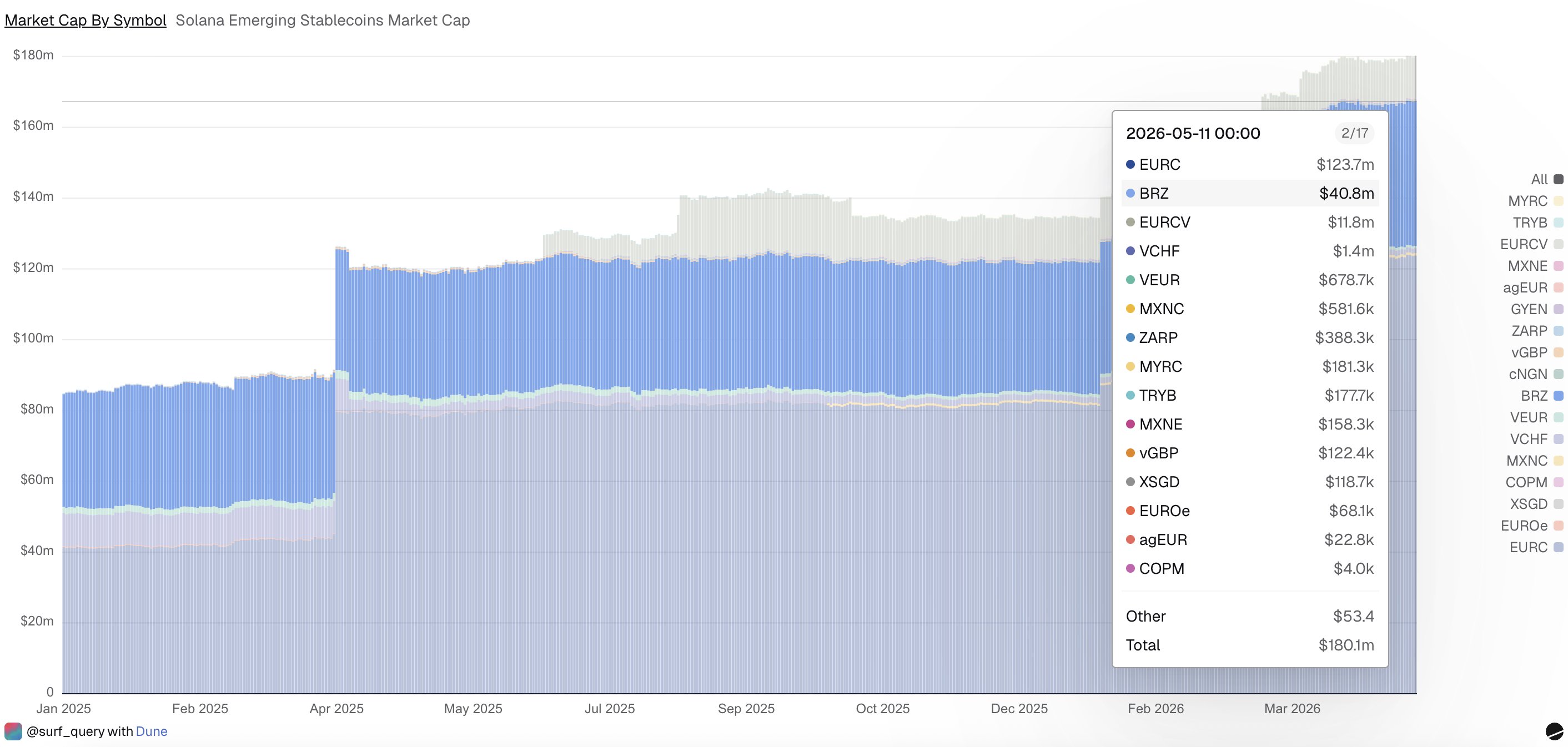
Actualmente, $EURC de Circle lidera la categoría con una capitalización de mercado de aproximadamente 123,7 millones de dólares.
La expansión de las stablecoins no denominadas en USD en Solana refleja el creciente interés por la liquidez localizada y las aplicaciones de divisas en los mercados de criptomonedas. Las stablecoins vinculadas a monedas regionales apoyan cada vez más los pagos, el comercio, la liquidación y la actividad de cobertura en todos los ecosistemas DeFi.
KRWQ refuerza su presencia en EDX Markets
El traslado de KRWQ a Solana se produce tras una expansión estratégica a los mercados de derivados institucionales a principios de este año. En marzo, KRWQ se asoció con EDXM International y Spark Systems para lanzar lo que las empresas describieron como el primer producto de futuros perpetuos de stablecoin de won coreano del mundo.
El equipo detrás de KRWQ dijo que el proyecto busca unificar aproximadamente 40.000 millones de dólares en volumen diario de operaciones al contado en won coreano con los aproximadamente 60.000 millones de dólares del mercado a plazo no entregable de won coreano en una estructura transparente en la cadena.
El debate sobre la regulación de las stablecoin se intensifica en Corea del Sur
La expansión de Solana de KRWQ se produce cuando Corea del Sur intensifica sus esfuerzos por establecer un marco jurídico para los activos digitales y las stablecoins. El 8 de abril, el gobernante Partido Democrático propuso una Ley Básica de Activos Digitales que regularía la emisión, negociación, custodia, divulgación y conducta en el mercado de las empresas de activos digitales, al tiempo que exigiría el respaldo de reservas y obligaciones de reembolso para las stablecoins vinculadas al fiat.
La propuesta se produjo tras los desacuerdos entre el Banco de Corea y la Comisión de Servicios Financieros sobre quién debería emitir las stablecoins vinculadas al won, ya que los funcionarios del banco central favorecían la emisión por parte de los bancos, mientras que los reguladores financieros advertían contra la restricción de la innovación. Al mismo tiempo, las autoridades surcoreanas introdujeron requisitos más estrictos sobre los plazos de retirada de las criptobolsas locales para combatir las estafas de phishing de voz.
En este contexto, $KRWQ continúa su expansión fuera de Corea del Sur, donde actualmente no se comercializa entre los inversores nacionales. El traslado del proyecto a Solana también refleja un impulso más amplio de las stablecoins no denominadas en USD, ya que los activos respaldados por divisas regionales se dirigen cada vez más al comercio de divisas, la liquidación transfronteriza, las operaciones de tesorería institucional y las aplicaciones DeFi. La rica cultura onchain de Solana y su sólida base de usuarios han ayudado a posicionar la red como un centro creciente para estos mercados emergentes de stablecoins.
Más información sobre SolanaFloor
Sanctum $SOL-Denominated TVL and Revenue Undaunted by 2026 Market Decline
Magic Eden Bets $75M on Dicey Following Wallet Shutdown and EVM Exit
¿Pueden los ordenadores cuánticos piratear tus criptomonedas?